

Adverse Drug Reaction (ADR) reporting plays a vital role in pharmacovigilance and patient safety. This review synthesizes published Indian studies examining the Knowledge, Attitude, and Practice (KAP) of community pharmacists regarding ADR reporting and their role within the Pharmacovigilance Programme of India (PvPI). While pharmacists generally acknowledge the importance of ADR reporting and express positive attitudes toward participating, significant gaps remain in knowledge of pharmacovigilance systems and actual reporting practices. Barriers such as limited awareness, inadequate training, perceived time constraints, and fear of legal consequences persist. Evidence from educational interventions suggests that structured training significantly improves knowledge and willingness to report. Strengthening training systems, simplifying reporting processes, and enhancing collaborative structures between community pharmacies and PvPI are essential to improving ADR reporting practices. Overall, empowering community pharmacists can enhance postmarketing drug safety surveillance and reduce preventable medication-related harm.
Abstract
Share on Mobile
Scan to access on mobile
Keywords
ADR Reporting
Community Pharmacists
KAP
Pharmacovigilance
PvPI
INTRODUCTION
According to the World Health Organization (WHO), pharmaceutical companies are legally required in all countries to test their drugs on both healthy volunteers and patients before making them widely available. These clinical trials determine the efficacy of a drug for a specific disease and assess potential harms; however, such trials offer limited information about broader, untested populations that may differ in age, gender, health status, or ethnic background.
WHO further emphasizes that, especially for complex medicinal products, safety monitoring must continue beyond the manufacturing phase. Ongoing medicine safety requires systematic patient monitoring and continued scientific data collection, a process referred to as postmarketing surveillance. The organization notes that the effectiveness of national postmarketing surveillance systems is critically dependent on the active participation of healthcare professionals. Since physicians, pharmacists, nurses, and dentists are uniquely positioned to observe patients in routine care, WHO recommends that they report all suspected Adverse Drug Reactions (ADRs) even when uncertainty exists regarding the causal relationship between the drug and the reaction (World Health Organization).
Pharmacovigilance, defined as the science and practice of detecting, assessing, understanding, and preventing adverse effects or other medicine or vaccine-related problems, is a vital component of modern healthcare systems (World Health Organization, n.d.). Healthcare professionals occupy a pivotal position in pharmacovigilance by detecting, documenting, and reporting adverse drug reactions, educating patients, ensuring data quality, and contributing to risk communication and policy development. Their active engagement is indispensable for strengthening drug safety surveillance and ensuring patient protection.
The Pharmacovigilance Programme of India (PvPI) is India’s national drug safety monitoring program, launched in 2010 by the Ministry of Health and Family Welfare, to collect and analyze reports of ADRs and medication safety issues to protect patient safety and welfare (Pharmacovigilance Programme of India, n.d.).
In many countries, including India, the scope of ADR reporting has been expanded beyond physicians to include hospital pharmacists, community pharmacists, nurses, and even patients, in an effort to enhance reporting rates. Given their frequent interactions with the public and their involvement in dispensing over-the-counter medications, community pharmacists are well-positioned to identify potential ADRs. Consequently, they can play a pivotal role in the detection, management, and reporting of ADRs, thereby making a significant contribution to the PvPI (Selvam et al., 2024).
Despite many initiatives aimed at strengthening pharmacovigilance, underreporting of ADRs continues to pose a significant global challenge. In the context of community pharmacy practice, underreporting is frequently linked to a poor understanding of the concept and procedures of ADR reporting, which limits pharmacists’ active participation in the pharmacovigilance systems. Lack of adequate training, uncertainty regarding the causal relationship between a drug and a reaction, and limited awareness of reporting mechanisms further contribute to this problem (M S and R, 2018).
Specifically, this review aims to identify the current level of awareness and understanding of ADR reporting among community pharmacists, assess their attitudes toward pharmacovigilance activities, and examine their reporting practices. Furthermore, the review seeks to highlight the barriers and challenges that hinder effective ADR reporting and to explore the potential role of community pharmacists in strengthening the PvPI. As a final step, this review intends to provide evidence-based recommendations to enhance the participation of community pharmacists in ADR reporting, thereby contributing to the overall improvement of drug safety in the country.
This review adopted a narrative approach, synthesizing published studies found in electronic databases such as PubMed and Google Scholar, covering the period between 2012 and 2025. The selection criteria focused on studies specifically assessing the knowledge, attitude, and/or practice of ADR reporting among community pharmacists in India. Eight articles were selected, published between 2012 and 2024 (Table 1). Six studies were cross-sectional questionnaire-based surveys, while two studies used interventional approaches to assess the impact of education on awareness and practices. The total number of pharmacists participating across all included studies was 3,417, with individual study sample sizes varying significantly from 49 to 2,205 participants. Diploma in Pharmacy (DPharm) holders consistently represented most participants across most studies, with proportions ranging from 78% to nearly 98%.
Knowledge of Community Pharmacists Regarding ADR Reporting
Knowledge levels were found to be variable and often inadequate, as illustrated in Figure 1 and Table 2.
ADR Definition and Drug Safety
While a high proportion of pharmacists in one study (Article 7) reported knowing what an ADR is (91.4%), the ability to correctly define it was low in others (e.g., 37.5% in Article 4 and 14.7% in Article 3). Furthermore, a substantial percentage in some studies (e.g., 58.6% in Article 7) incorrectly believed that all dispensed or marketed drugs are completely safe, highlighting a fundamental misconception about the need for pharmacovigilance.
Table 1: Study characteristics of included articles.
| ART | Study design | Study place | Duration |
|---|---|---|---|
| Article 1 | Cross-sectional questionnaire-based study (Prakasam et al., 2012). | Hyderabad, India | 9 months (August 2011 to April 2012) |
| Article 2 | Cross-sectional survey (Ahmad et al., 2013). | Nationwide (India) | 3 months (May 2012 to July 2012) |
| Article 3 | Prospective and questionnaire-based survey (Ravinandan et al., 2015). | Davangere city, Karnataka | 6 months (December 2013 to May 2014) |
| Article 4 | Prospective cross-sectional study (Srikanth et al., 2015). | NA | NA |
| Article 5 | Cross-sectional questionnaire-based study (Sah et al., 2017). | West Delhi, India | 4 months (June 2016 to September 2016) |
| Article 6 | Interventional study (M S and R, 2018). | Rural areas of Mysuru district, Karnataka | NA |
| Article 7 | Single-group, pre–post interventional trial | Anantapur district, Andhra Pradesh | NA |
| Article 8 | Cross-sectional observational study (Selvam et al., 2024). | Nationwide (India) | 10 months (May 2021 – February 2022) |
Table 2: Topics and sample questions used to assess knowledge of community pharmacists on Adverse Drug Reaction (ADR) reporting.
| Sl. No. | Topics | Questions |
|---|---|---|
| 1 | ADR | Do you know what ADRS are? Do you think reporting of ADR is necessary? |
| 2 | pharmacovigilance | What is pharmacovigilance and its main purpose? |
| 3 | PvPI | Are you aware of the PvPI? |
| 4 | ADR Monitoring Centres | Do you know where the nearest ADR Monitoring Centre is located? |
| 5 | ADR reporting forms | Are you aware of the ADR reporting form used in India? |
| 6 | Eligibility to Report | Who can report ADRS? |
| 7 | Reporting Procedure | Do you know how to fill out and submit an ADR reporting form? |
| 8 | Information Required to Report an ADR | What details are essential in an ADR report? |
| 9 | International PV System | Are you aware of the international ADR monitoring system (WHO–UMC, Sweden)? |
| 10 | Safety of Marketed Drugs | Are all marketed drugs completely safe, or can they still cause ADRS? |
Table 3: Topics and sample questions used to assess the attitude of Community Pharmacists toward Adverse Drug Reaction (ADR) reporting.
| Sl. No. | Topics | Questions |
|---|---|---|
| 1 | Role of Pharmacists in ADR Reporting | Is ADR reporting an essential role of the pharmacist? |
| 2 | Impact of ADR reporting | Will ADR reporting benefit the patient? How does ADR reporting benefit patients? |
| 3 | Legal Concerns in ADR Reporting | Do you worry about legal issues when considering ADR reporting? |
| 4 | Time Constraints in ADR Reporting | Do you think the ADR reporting process is time-consuming? |
| 5 | Importance of Training | Do you think pharmacovigilance should be taught in detail to community pharmacists? |
| 6 | Inclusion of Pharmacovigilance in Pharmacy Curriculum | Do you think pharmacovigilance must be taught as part of pharmacy education? |
| 7 | Encouraging Pharmacists and Financial Incentives to Report ADRS | Do you think incentives or recognition programs would increase ADR reporting among pharmacists? |
Table 4: Topics and sample questions used to assess the Adverse Drug Reaction (ADR) reporting practices of Community Pharmacists.
| Sl. No. | Topics | Questions |
|---|---|---|
| 1 | Observation of ADR Cases | Did you observe any ADR cases in your practice? |
| 2 | Availability of the ADR Reporting System | Is the ADR reporting form available at your workplace? |
| 3 | Experience with ADR Reporting | Have you ever reported an ADR to the pharmacovigilance center? |
| 4 | Documentation of ADR | Do you keep records of ADR? |
| 5 | Knowledge of the ADR Reporting Process | Do you know how to report ADR? |
| 6 | Awareness of Training in Pharmacovigilance | Do you feel that you are adequately trained in ADR reporting? |
Table 5: Key barriers to Adverse Drug Reaction (ADR) reporting identified in included studies.
| Sl. No. | Barriers reported | Articles |
|---|---|---|
| 1 | Lack of Information Provided by the patient | Article 2 |
| 2 | Lack of Time | Article 7, Articles 1, 2, 3 |
| 3 | Unaware of the Existence of a National ADR Reporting System | Articles 2, 3, 6, Articles 7, 8 |
| 4 | Unaware of the need to Report an ADR | Articles 1, 2 |
| 5 | ADR Reporting is not Widely Promoted by the Relevant Authorities | Articles 2, 6 |
| 6 | Fear of Facing Legal Problems | Articles 2, 3, 5 |
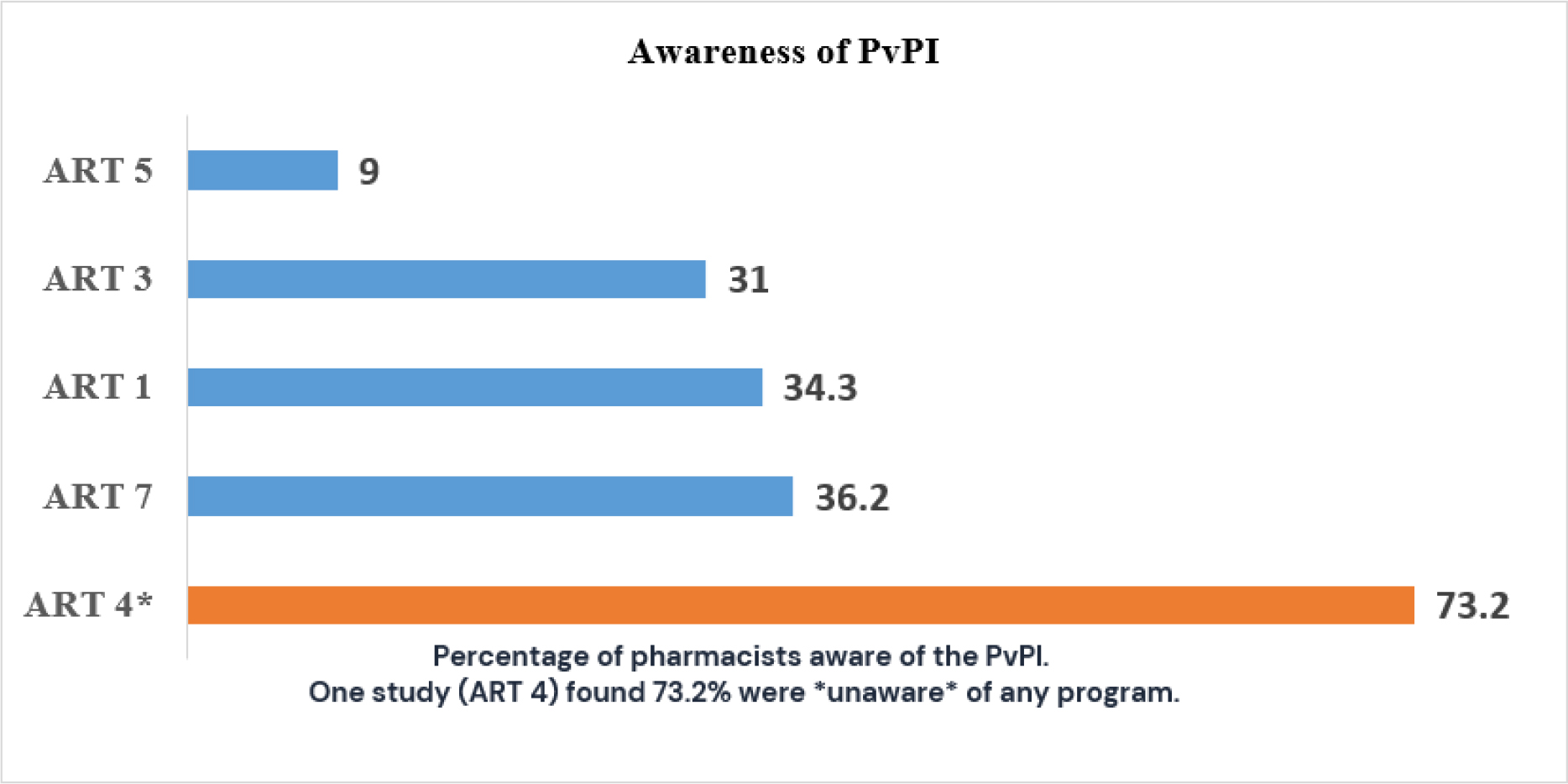
Figure 1:
Knowledge of Community Pharmacists on Adverse Drug Reaction (ADR) reporting.
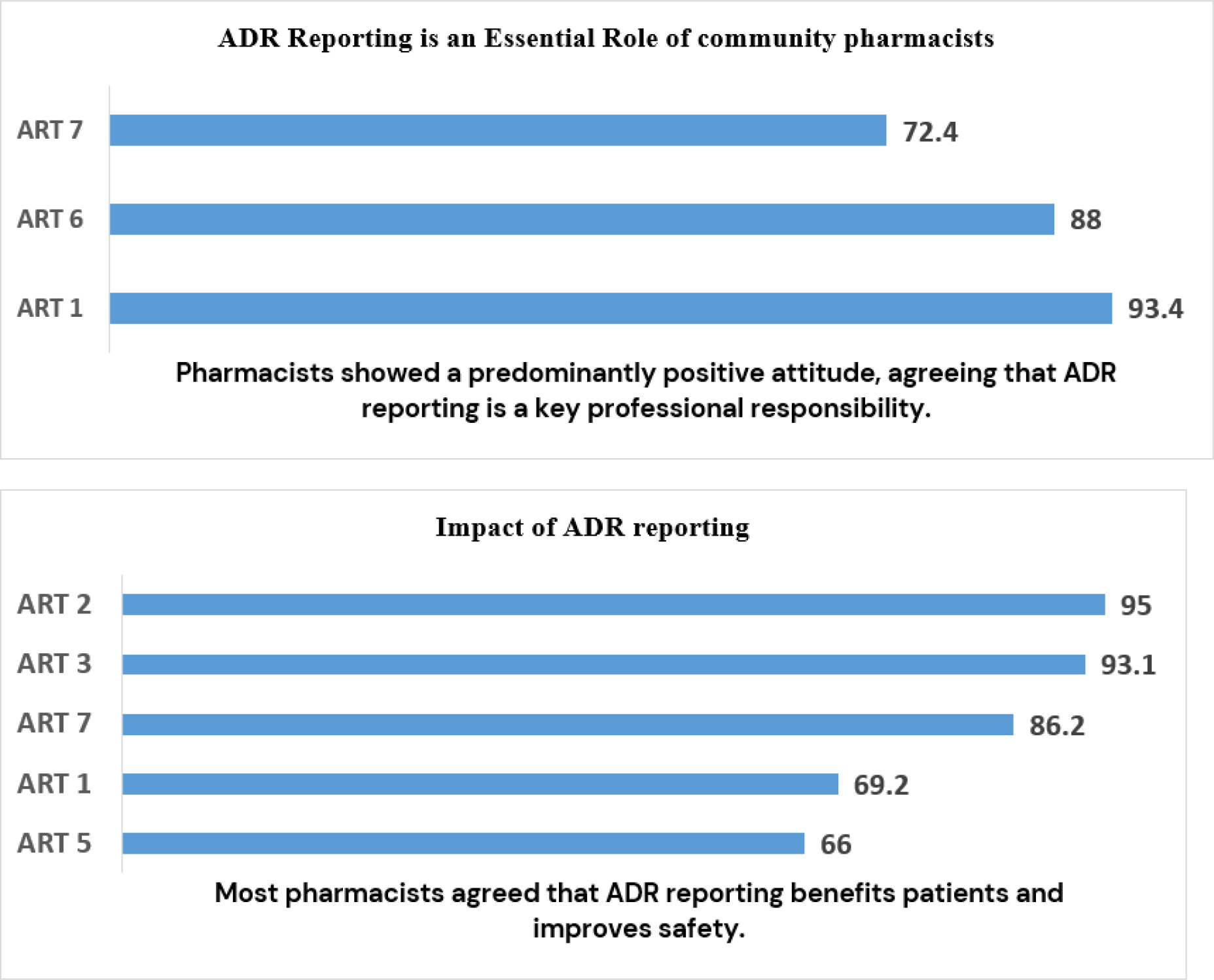
Figure 2:
Attitude of Community Pharmacists toward Adverse Drug Reaction (ADR) reporting.
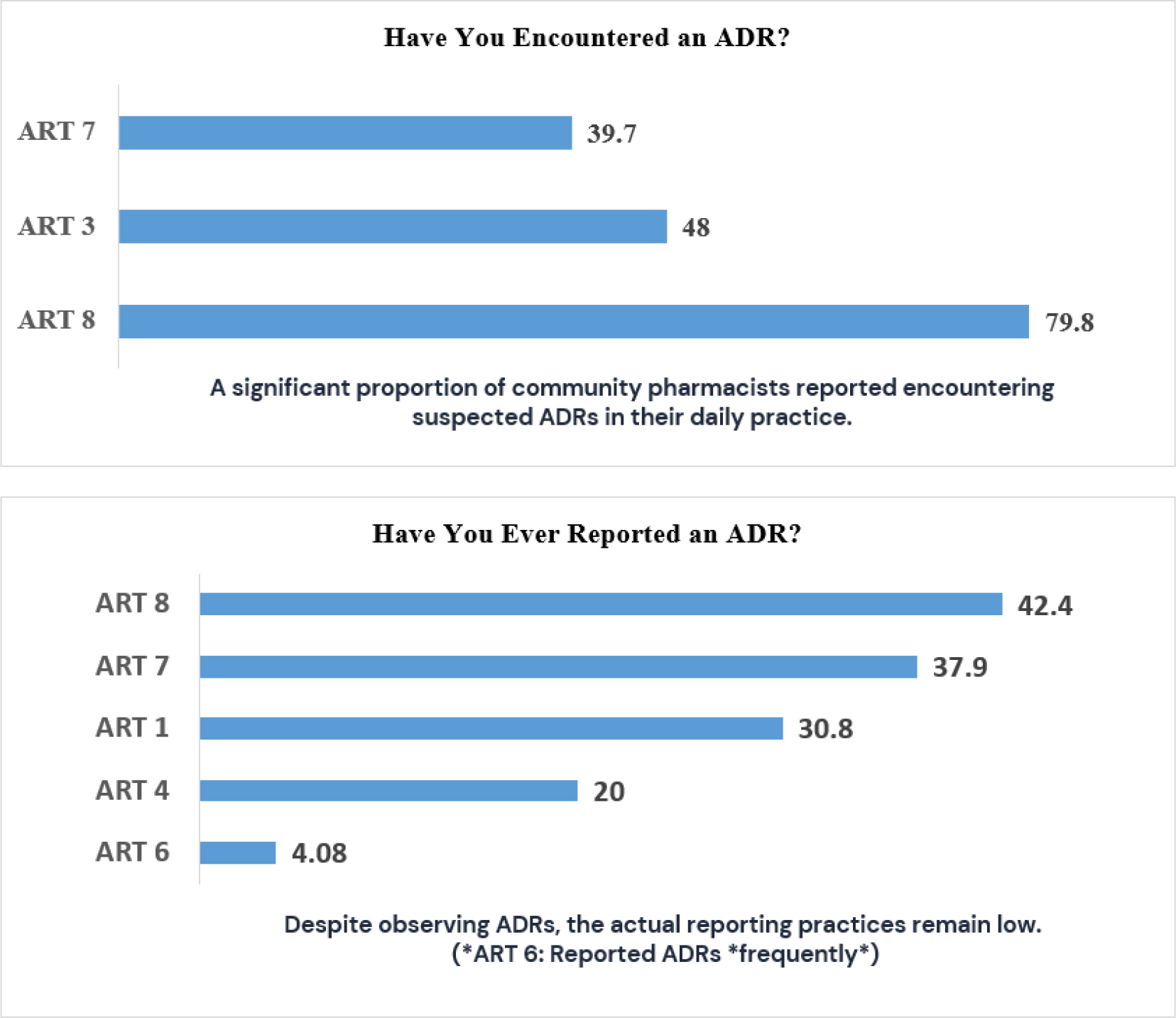
Figure 3:
Practice of Community Pharmacists toward Adverse Drug Reaction (ADR) reporting.
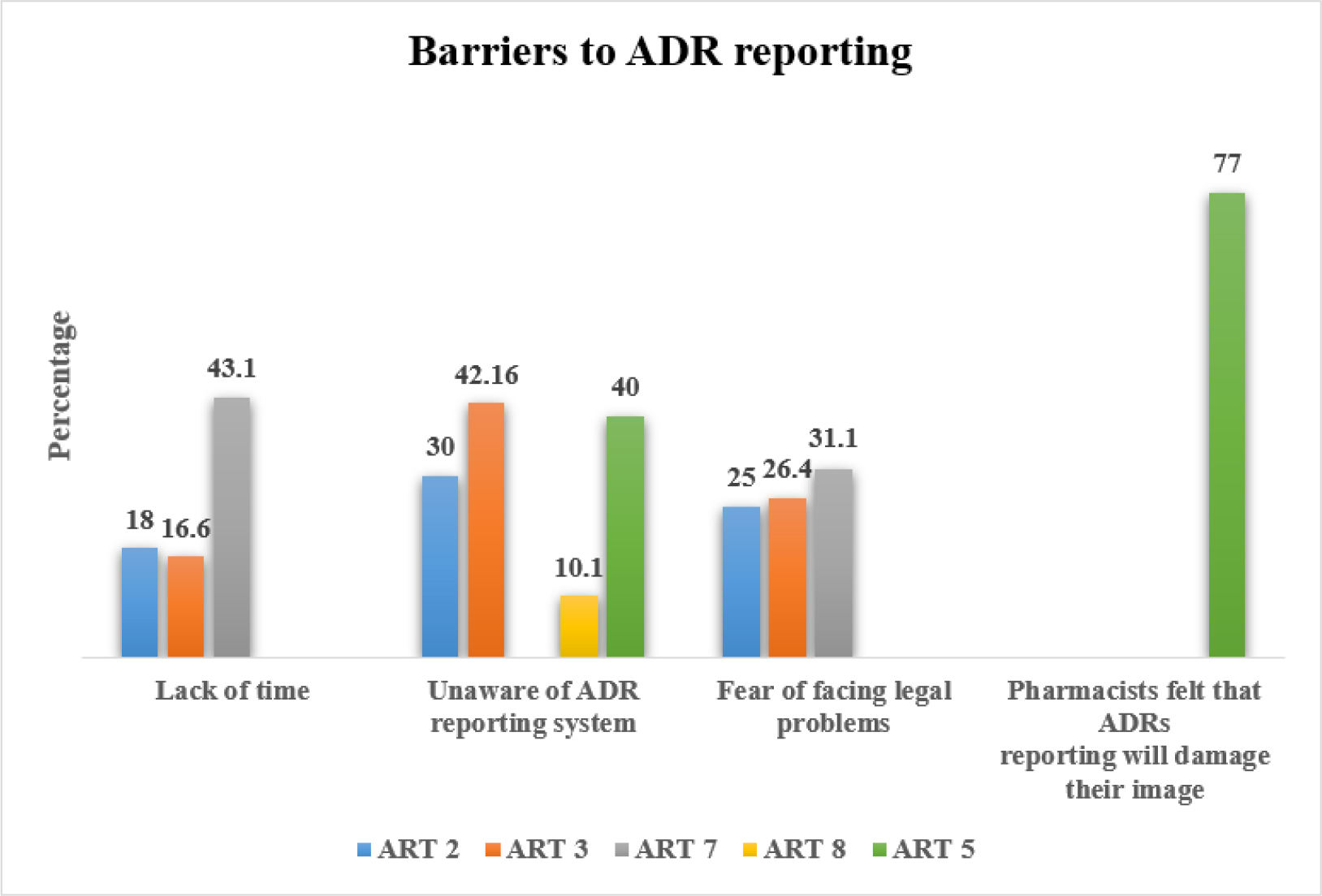
Figure 4:
Major barriers faced by pharmacists in reporting Adverse Drug Reactions (ADRs).
CONCLUSION
Community pharmacists in India exhibit a positive attitude toward ADR reporting, overwhelmingly recognizing it as an essential professional duty that contributes to patient safety. However, this positive attitude is undermined by significant knowledge gaps, particularly a lack of awareness of the national PvPI system and inadequate training leading to suboptimal reporting practices. The primary barriers are a lack of awareness of the reporting system, a lack of time, and concerns about legal issues or professional image.
The evidence strongly suggests that regular and ongoing educational intervention programs are the crucial strategy for strengthening pharmacovigilance by improving pharmacists' knowledge, confidence, and adherence to reporting procedures.
Acknowledgments
None.
Conflict of Interest
The authors declare that there is no conflict of interest.
References
Ahmad, A., Patel, I., Balkrishnan, R., Mohanta, G. P., Manna, P. K.. (2013). An evaluation of knowledge, attitude and practice of Indian pharmacists towards adverse drug reaction reporting: A pilot study. Perspectives in Clinical Research, 4(4), 204-210. https://doi.org/10.4103/2229-3485.120168
M S, S., R, A.. (2018). Assessment of Educational Intervention on knowledge, attitude and practice of Rural Community Pharmacists of Mysuru District Towards Adverse Drug Reaction Reporting. Asian Journal of Pharmaceutical and Clinical Research, 11(10), 242-246. https://doi.org/10.22159/ajpcr.2018.v11i10.23156
.
Prakasam, A., Nidamanuri, A., Kumar, S.. (2012 October–December). Knowledge, perception and practice of pharmacovigilance among community pharmacists in South India. Pharmacy Practice, 10(4), 222-226. https://doi.org/10.4321/S1886-36552012000400006
Ravinandan, A. P., Achutha, V., Ramani, V. K., Uttangi, S., Kumar, S. L.. (2015). Study of knowledge, attitude and practice of pharmacists towards adverse drug reaction reporting in Davangere city. Asian Journal of Pharmaceutical and Clinical Research, 8(3), 262-265.
Sah, R. K., Chandane, R. D., Krishna, M. S., Manocha, S., Kapur, A.. (2017). Knowledge, attitude and practice of pharmacovigilance among community pharmacists in Delhi, India. International Journal of Basic and Clinical Pharmacology, 6(3), 618-623. https://doi.org/10.18203/2319-2003.ijbcp20170824
Selvam, S., Karthik, S., Sankaravadivel, A. R., Durai, K. S., Rajarathinam, N., Raja, S., Jothibabu, I.. (2024). Knowledge, attitude and practice of pharmacovigilance among community pharmacy in India: A questionnaire study. International Journal of Basic and Clinical Pharmacology, 13(5), 636-641. https://doi.org/10.18203/2319-2003.ijbcp20242421
Srikanth, M. S., Adepu, R., Patel, H., Parthasarathi, G.. (2015). A study of knowledge, attitude and practice of community pharmacists towards adverse drug reaction reporting & monitoring. Value in Health, 18(7), A541-A542. https://doi.org/10.1016/j.jval.2015.09.1713
Vigneshwaran, E., Harichandana, V., Sadiq, M. M. J., Alavudeen, S. S., Khan, N. A., Ahmed, T.. (2020). Knowledge, attitude and practice of community pharmacists towards adverse drug reactions reporting. Journal of Young Pharmacists, 12(1), 75-80. https://doi.org/10.5530/jyp.2020.12.15
.
.