

Cardiovascular Diseases (CVDs) are the leading cause of morbidity and mortality worldwide. Their management requires long-term, multi-drug therapy, which increases the risk of Adverse Drug Reactions (ADRs) in patients. The objective of this systematic review was to summarize the pattern, severity, and drug-class distribution of ADRs associated with cardiovascular drugs, using published studies alongside FAERS and PvPI pharmacovigilance data. The review was conducted following PRISMA guidelines. Studies published between 2009 and 2026 were searched on PubMed and Google Scholar. Following final screening, 15 studies were included, comprising 12 global FAERS-based studies and 3 India-based hospital pharmacovigilance studies. ADRs were reported across all major cardiovascular drug classes. Dry cough with ACE inhibitors, myalgia with statins, and peripheral edema with calcium channel blockers were consistently observed. Global FAERS studies reported more serious ADRs, while Indian studies predominantly reported mild-to-moderate ADRs. Elderly patients and those on polypharmacy were identified as high-risk groups. Overall, the present systematic review demonstrates that ADR underreporting remains a major challenge in India. Structured pharmacovigilance, improved ADR reporting, and active involvement of clinical pharmacists can further enhance cardiovascular drug safety and patient outcomes.
Abstract
Share on Mobile
Scan to access on mobile
Keywords
Adverse Drug Reactions
Cardiovascular Drugs
FAERS
Pharmacovigilance
PvPI
Systematic Review
INTRODUCTION
Cardiovascular Diseases (CVDs) have become the leading cause of death and morbidity worldwide. CVD patients are typically prescribed multiple drugs -statins, beta blockers, antihypertensives, diuretics, antiplatelets, and antiarrhythmics -and because they often manage more than one condition, they take several medications simultaneously, increasing their risk of Adverse Drug Reactions (ADRs). According to WHO, an ADR is any harmful and unintended response to a drug occurring at normal recommended doses used for prophylaxis, therapy, or diagnosis, and has become a major public health problem, particularly among cardiovascular patients on multiple medications over extended periods.
Pharmacovigilance refers to the science of detecting, assessing, and preventing adverse effects of medicines. Clinical trials, conducted before market entry, involve controlled environments with limited populations, so rare side effects often go undetected and vulnerable populations such as pregnant women, children, and the elderly are typically excluded. Once a drug enters the market and reaches a much larger, more diverse population, pharmacovigilance plays a crucial role in detecting rare adverse effects through spontaneous reporting systems, which allow healthcare professionals, patients, or the public to report adverse events worldwide.
In the United States, the FDA Adverse Event Reporting System (FAERS) analyzes millions of adverse event reports to detect and help prevent future harm. FAERS uses disproportionality analysis, in which the Reporting Odds Ratio (ROR) is calculated to assess the strength of a safety signal. One FAERS-based study found that the risk of drug-induced cardiac arrest was significantly elevated, with an ROR of 3.89 (95% CI: 3.78-4.01) (Ren et al., 2025). Another FAERS study covering 2004-2023 analyzed 17.3 million adverse event reports, identifying 240,050 heart failure cases; more than half of these patients were aged above 65 years, indicating a greater risk and need for monitoring of heart failure among elderly patients (Huang et al., 2025). The Pharmacovigilance Programme of India (PvPI), established in 2010 to identify, assess, and prevent ADRs across Indian hospitals and build a national safety database, has enabled several hospital-based studies finding that cardiovascular drugs account for a substantial proportion of reported ADRs.
One tertiary care hospital study found that cardiovascular drug-related ADRs accounted for approximately 18.1% of all reported ADRs, with commonly reported reactions including dry cough (enalapril), gastritis (aspirin), fatigue (beta-blockers), and myalgia or muscle pain (atorvastatin) (Palaniappan et al., 2015).
A separate prospective study conducted in an Intensive Cardiac Care Unit (ICCU) analyzed 389 patients, of whom 282 experienced ADRs. The most common ADRs observed were electrolyte imbalance, headache, and gastritis, with digoxin and furosemide identified as the drugs most frequently associated with ADRs (Shanmugam et al., 2019).
Considerable research has been conducted on ADRs associated with cardiovascular drugs; however, this research remains fragmented, with information scattered across separate studies. At the global level, studies using databases such as FAERS typically focus on a specific drug class (e.g., statins or anticoagulants) or a specific adverse event, rather than providing a broader picture. In India, ADR studies are largely small-scale, single-centre, and hospital-based, relying on data from individual hospitals that have not been compared or combined with one another. As a result, no updated systematic review currently exists that consolidates both global pharmacovigilance database findings and India-specific hospital-based pharmacovigilance data to provide a comprehensive overview of ADRs across multiple cardiovascular drug classes.
This review differs from prior work in three specific ways. First, unlike single-drug-class FAERS analyses, it consolidates disproportionality signals across multiple cardiovascular drug classes (statins, ACE inhibitors, antiplatelets, anticoagulants, and diuretics) within one synthesis. Second, unlike India-only hospital-based studies, it directly compares global FAERS severity patterns against India-specific hospital reporting, characterizing where and why the two diverge. Third, it applies a structured risk-of-bias appraisal (AXIS tool) across all included studies, a step not undertaken in the two related reviews identified during the literature search (Destere et al., 2024; Shan et al., 2023).
Objectives
This systematic review aims to consolidate and analyze available evidence on ADRs associated with commonly used cardiovascular medications, drawing on global pharmacovigilance databases and India-specific hospital studies, to characterize their patterns, severity, and clinical impact.
METHODOLOGY
Study Design
This study is a systematic review conducted following PRISMA (Preferred Reporting Items for Systematic Reviews and Meta-Analyses) guidelines, an internationally recognized standard ensuring transparency and scientific rigor.
Data Sources
For this review, literature was searched across the PubMed/ MEDLINE and Google Scholar databases. In addition to published research, real-world pharmacovigilance data were also included, obtained from the FDA Adverse Event Reporting System (FAERS) and hospital-based ADR reports under the Pharmacovigilance Programme of India (PvPI).
Search Strategy
The following keywords were used for the search: 'cardiovascular drugs', 'Adverse Drug Reaction (ADR)', and 'pharmacovigilance', combined using the search string: ("cardiovascular drugs" OR "cardiovascular agents") AND ("adverse drug reaction" OR "ADR") AND "pharmacovigilance". The search was restricted to English-language publications from January 2009 to July 2026.
Inclusion Criteria
• Studies clearly reporting ADRs associated with cardiovascular medications.
• Human studies, to evaluate patient safety and real clinical outcomes.
• English-language publications from 2009 to 2026, to ensure recent and accessible evidence.
Exclusion Criteria
• Animal/preclinical studies, as results cannot be directly applied to humans.
• Case reports without denominator data (1-2 patients), which do not allow accurate estimation of ADR frequency or risk.
• Studies not reporting ADRs separately for a specific cardiovascular drug.
• Duplicate publications.
Data Extraction
For each selected study, data were collected using a standardized extraction sheet, including study source, drug name/class, ADR type and affected organ system (SOC), severity, patient age/ gender, outcome, number of reported cases, reporting year, and country/region.
PRISMA Study Selection
PRISMA 2020 study selection flow. Searches were conducted on PubMed and Google Scholar (2009-2026), supplemented by targeted searches for FAERS-and PvPI-specific data Table 1, Figure 1.
Quality / Risk of Bias Assessment
The methodological quality of the included studies was appraised using the AXIS tool (Appraisal tool for Cross-Sectional Studies), assessing clarity of objectives, appropriateness of design, adequacy of sample size/data source scale, transparency of reported results, susceptibility to selection/reporting bias, and consistency of conclusions with results.
The FAERS-based studies' principal strength is their very large sample size, which makes them highly effective at detecting rare and serious ADRs; however, they are inherently subject to underreporting, reporting bias, and the absence of a true denominator, meaning ROR/PRR values indicate statistical association rather than confirmed causation. The India-based hospital studies used active data collection, which reduced reporting bias relative to FAERS, but their single-centre design and modest sample sizes limit generalizability.
For these reasons, both study types were rated Moderate or Low-to-Moderate risk of bias (Table 2). The Hussain et al. (2009) study, being a smaller single-centre hospital study, was rated Moderate; the Hagiwara et al. (2020) study, which statistically adjusted for known confounders, was rated Low-to-Moderate, reflecting this additional methodological strength.
No studies were excluded on the basis of quality assessment. This is because, in pharmacovigilance research, studies based on spontaneous reporting systems such as FAERS are naturally expected to carry a Moderate risk of bias -this is an inherent limitation of their design, not a reason for rejection. All studies were therefore retained in this review, and their respective limitations are discussed transparently in the Discussion section (Section 4.7) to allow findings to be interpreted in appropriate context.
Data Synthesis
Extracted data were tabulated and summarized by drug class to identify the most frequently reported ADRs, severity distribution, and demographic patterns. Given the heterogeneity of reporting formats across databases (FAERS, PvPI) and clinical studies, a narrative/qualitative synthesis was used rather than meta-analysis, consistent with standard practice for pharmacovigilance-based systematic reviews where denominator data are frequently unavailable.
RESULTS
Study Selection
Following final screening, 15 studies were included: three India-based hospital pharmacovigilance studies (PvPI) and twelve global FAERS-based pharmacovigilance studies. The FAERS-based studies covered muscle toxicity and rhabdomyolysis (Zhang et al., 2026), statin-daptomycin myopathy (Wei et al., 2023), statin hepatotoxicity (Zhou et al., 2025), ACE inhibitor angioedema and cough (Ahmed, 2026), anticoagulant bleeding (Logvinsky et al., 2025; Feng et al., 2026), antiplatelet bleeding risk (Hagiwara et al., 2020), diuretic safety signals for spironolactone (Lin et al., 2025), and broader cardiovascular drug safety surveillance (Patel et al., 2022; Park and Hwang, 2024).
Drug-Class Wise Distribution of ADRs
Table 3 summarizes the drug-class wise ADR findings across the included studies, with exact case counts or disproportionality statistics (ROR/PRR) reported where available in the source studies (Figure 2).
Severity Pattern
The included studies reported ADRs ranging in severity from mild to life-threatening. Mild ADRs (dry cough, gastritis, myalgia, fatigue, peripheral edema) were usually temporary and resolved with treatment, while serious ADRs (anemia, renal failure, cardiac arrest, heart failure) could be life-threatening. Serious ADRs were more frequently reported in global FAERS studies, largely due to their very large-scale reporting, whereas India-based hospital studies predominantly reported mild-tomoderate ADRs -one South Delhi hospital study found 52.9% Table 1: After de-duplication and title/abstract screening, 15 full-text articles were assessed for eligibility and all 15 were included in the final qualitative synthesis.
mild, 41.2% moderate, and only 5.8% severe (Hussain et al., 2009) (Figure 3).
Demographic Patterns
The included studies identified several patient subgroups at disproportionately elevated risk of ADRs.
Older patients
ADRs were more frequently observed in patients above 65 years; approximately 52.37% of heart failure-related ADR cases in one FAERS study occurred in elderly patients, possibly reflecting declining kidney/liver function and increased polypharmacy with age (Huang et al., 2025).
Female patients
Two India-based studies reported a higher proportion of ADRs in female patients, suggesting women may be relatively more susceptible to certain cardiovascular drug ADRs (Shanmugam et al., 2019; Hussain et al., 2009).
Combination therapy
Patients on combination cardiovascular therapy had a higher ADR risk than those on monotherapy -the South Delhi hospital study found 61.8% of ADRs in combination-therapy patients versus 38.2% in monotherapy patients, a statistically significant difference (Hussain et al., 2009).
Drug Class Most Frequently Implicated
In the India-based ICCU prospective study, digoxin and furosemide were identified as the drugs most frequently associated with ADRs. Electrolyte imbalance, headache, and gastritis were the most commonly observed adverse reactions with these drugs (Shanmugam et al., 2019).
Table 1 PRISMA 2020 study selection flow. Searches were conducted on PubMed and Google Scholar (2009-2026), supplemented by targeted searches for FAERS- and PvPI-specific data. After de-duplication and title/abstract screening, 15 full-text articles were assessed for eligibility and all 15 were included in the final qualitative synthesis.
| Stage | Count |
|---|---|
| Records identified through PubMed database searching | 39 |
| Records identified through Google Scholar searching (2009-2026) | 1,140 |
| Additional records from targeted FAERS/ PvPI/journal searches | 12 |
| Total records identified | 1,191 |
| Records after removing duplicates | 57 |
| Records excluded after title/abstract screening | 42 |
| Full-text articles assessed for eligibility | 15 |
| Full-text articles excluded (with reasons) | 0 |
| Studies included in qualitative synthesis | 15 |
Table 2 Summary of risk of bias ratings for included studies, based on study design and data source characteristics.
| Study | Design / Data Source | Overall Risk of Bias |
|---|---|---|
| Palaniappan et al. | Hospital-based observational (India) | Low-Moderate |
| Ren et al. | FAERS disproportionality analysis | Moderate |
| Huang et al. | FAERS disproportionality analysis | Moderate |
| Shanmugam et al. | Prospective cohort, ICCU (India) | Low-Moderate |
| Hussain et al. | Hospital-based observational (India) | Moderate |
| Patel et al. | FAERS disproportionality analysis | Moderate |
| Park and Hwang | FAERS disproportionality analysis | Moderate |
| Zhang et al. | FAERS disproportionality analysis | Moderate |
| Wei et al. | FAERS disproportionality analysis | Moderate |
| Zhou et al. | FAERS retrospective pharmacovigilance | Moderate |
| Ahmed | FAERS descriptive analysis | Moderate |
| Logvinsky et al. | FAERS retrospective analysis | Moderate |
| Feng et al. | FAERS real-world pharmacovigilance | Moderate |
| Hagiwara et al. | FAERS + JADER, confounder-adjusted | Low-Moderate |
| Lin et al. | FAERS disproportionality analysis | Moderate |
DISCUSSION
This systematic review consolidated findings from global pharmacovigilance databases and India-based hospital pharmacovigilance studies to characterize the pattern of Adverse Drug Reactions (ADRs) associated with Cardiovascular (CVS) medications. The findings highlight both consistencies and important differences between global spontaneous-reporting data and India-specific hospital-based observations.
Consistency Across Drug Classes
A key finding of this review was the consistency of certain ADR patterns across both Indian and global data sources: dry cough was consistently observed with ACE inhibitors, myalgia with statins, and peripheral edema with Calcium Channel Blockers (CCBs). This consistency across different countries and healthcare systems demonstrates that these ADRs are genuinely related to the respective drugs and indicates that spontaneous reporting systems such as FAERS and PvPI are reliable, effective tools for detecting drug safety signals.
Comparison with Existing Reviews
The findings of this review align with those of Destere et al. (2024), who similarly identified statins, ACE inhibitors, and anticoagulants as major contributors to cardiovascular ADRs and emphasized FAERS as an essential post-marketing surveillance tool. The present review extends this by quantifying signal strength (e.g., 124,638 ACE inhibitor angioedema reports; ROR 96.22) and by directly comparing global FAERS data against India-based hospital reporting -a comparison Destere et al. did not undertake. Shan et al. (2023) reported that ADRs are consistently more frequent in female patients across psychotropic, cardiovascular, and analgesic drug classes, attributing this to pharmacokinetic and pharmacodynamic differences between men and women.
The present review's finding of higher female ADR reporting in the India-based hospital studies aligns with this pattern, though this review was not designed to isolate the underlying mechanism and can only report the observed association.
The distinguishing feature of this review is its integration of global FAERS data with India-based hospital reporting into a single comparative synthesis, which neither Destere et al. nor Shan et al. undertook. This approach also means the synthesis inherits the combined limitations of both data types - FAERS underreporting/reporting bias and the modest, single-centre design of the India-based studies (see Section 4.7) - but offers a more comprehensive, India-relevant picture of cardiovascular drug safety than either prior review alone.
Studies
A notable difference observed in this review was that global FAERS studies reported more serious ADRs, such as cardiac arrest and heart failure, whereas India-based hospital studies predominantly reported mild-to-moderate ADRs. This discrepancy does not necessarily indicate that serious ADRs are less common in India; rather, it likely reflects the reporting systems themselves. FAERS aggregates millions of reports, allowing even rare and severe ADRs to be detected, whereas India-based hospital studies are typically smaller, single-centre, and conducted over a limited duration, reducing the likelihood of capturing rare or highly serious ADRs.
Vulnerable Populations
The present review identified several patient subgroups at elevated risk of ADRs: elderly patients (65 and above), patients on combination therapy/polypharmacy (due to increased drug interaction risk), and, in some studies, female patients -possibly reflecting pharmacokinetic and pharmacodynamic differences between men and women, though this warrants further investigation (Shan et al., 2023). Clinically, this underscores the need for regular medication review and closer monitoring among elderly and polypharmacy patients to enable early identification and management of ADRs.
Underreporting and Data Gaps
An important limitation of this review was the likely underreporting of ADRs in India, meaning many ADR cases that actually occur are never reported, due to inconsistent reporting practices and variable awareness across hospitals and clinicians. As a result, the true burden of cardiovascular drug-related ADRs in India is likely considerably higher than reported figures suggest, underscoring the need to strengthen ADR reporting systems and encourage healthcare professionals to actively report ADRs.
Role of Clinical Pharmacists
The findings of this review underscore the vital role of the clinical pharmacist in preventing and managing ADRs associated with cardiovascular drugs -counseling patients on expected ADRs (e.g., dry cough with ACE inhibitors), monitoring high-risk patients such as the elderly and those on polypharmacy, and performing medication reconciliation to identify unnecessary duplication and drug interactions. Clinical pharmacists also play a key role in identifying, documenting, and reporting ADRs to pharmacovigilance systems such as PvPI, thereby helping to reduce underreporting, and collaborate closely with physicians and nurses to ensure safe medication use.
Strengthening pharmacist-led ADR monitoring and reporting could reduce underreporting in India and enable earlier detection of serious ADRs, extending the clinical pharmacist's role well beyond dispensing to a critical function in ADR prevention and patient safety.
Limitations
Like any systematic review, this study has certain limitations. Only 15 studies were included, and the search was limited to PubMed and Google Scholar (supplemented by targeted searches); databases such as Embase, Scopus, and Web of Science were not accessible, so relevant studies may have been missed. The included studies varied in design, population, and outcomes, precluding meta-analysis, and spontaneous reporting data (FAERS, PvPI) may be subject to underreporting and reporting bias and cannot establish causality. The risk of bias assessment used a simplified AXIS-adapted checklist rather than a full tool with independent dual-reviewer scoring. The 17-year search window (2009) (2010) (2011) (2012) (2013) (2014) (2015) (2016) (2017) (2018) (2019) (2020) (2021) (2022) (2023) (2024) (2025) (2026) also spans a period of considerable change in pharmacovigilance practices, which should be considered when interpreting temporal trends.
Future Directions
Future research should focus on large, multi-centre pharmacovigilance studies in India to accurately determine the burden of ADRs, strengthened long-term safety surveillance of newer cardiovascular drugs, and greater participation of clinical pharmacists and healthcare professionals in ADR reporting to improve both drug safety data and patient safety.
Table 3 Drug-class wise ADR findings from included studies, with case counts/disproportionality statistics where reported.
| Drug Class | Representative Drug(s) | Most Common ADR(s) -with figures | Source |
|---|---|---|---|
| Statins | Atorvastatin, Rosuvastatin, Simvastatin | Myalgia (hospital data); DILI -7,779 FAERS cases, 53.48% atorvastatin | Tertiary care hospital study; FAERS DILI study |
| Statins | Rosuvastatin + Daptomycin combo | Myopathy -ROR 124.39 (95% CI 87.35-178.47) | FAERS Statin-Daptomycin study |
| Antihypertensives (ACEI) | Captopril | Cough -6.88% of captopril reports | FAERS ACEI descriptive study |
| Antihypertensives (ACEI) | Benazepril | Angioedema -11.97% of benazepril reports | FAERS ACEI descriptive study |
| Antihypertensives (ACEI, class-wide) | All ACE inhibitors | Angioedema signal -124,638 total reports; ROR 96.22 | FAERS ACEI descriptive study |
| Antiplatelets | Aspirin | Gastritis | Tertiary care hospital study, India |
| Antiplatelets | Prasugrel vs Clopidogrel | Hemorrhagic events (intracranial, GI) -adjusted ROR 2.21-2.45 (prasugrel higher risk) in JADER and FAERS | FAERS/JADER prasugrel-clopidogrel bleeding study |
| Beta Blockers | Unspecified | Fatigue; CV ADRs (mild-moderate, 52.9% mild) | Tertiary care hospital / South Delhi study |
| Calcium Channel Blockers | Amlodipine | Peripheral edema; CNS effects (reported) | ICCU prospective study |
| Diuretics/Cardiac glycosides | Digoxin, Furosemide (most implicated drugs) | Electrolyte imbalance (14.89%), headache (13.12%), gastritis (12.41%) - top 3 ADRs overall; 282 ADRs in 389 patients | ICCU prospective study |
| Diuretics | Spironolactone | Real-world FAERS adverse events (electrolyte and renal-related signals) | FAERS spironolactone study |
| Anticoagulants | Apixaban vs Rivaroxaban | GI/cerebral/renal hemorrhage, epistaxis, hemoptysis (2012-2024) | FAERS Apixaban-Rivaroxaban bleeding study |
| Anticoagulants | Rivaroxaban vs Warfarin | Bleeding hospitalization -51.4% (rivaroxaban) vs 33.7% (warfarin) | FAERS agent-specific bleeding study |
| Anticoagulants | Apixaban vs Dabigatran/ Rivaroxaban | Anemia; renal failure (comparative) | FAERS disproportionality study |
| Mixed classes | 17 newly approved CVD drugs (2014-21) | 97,702 AE reports (0.22% of FAERS) | FAERS safety analysis |
| Mixed classes | Class-wide CVS drugs | Cardiac arrest -ROR 3.89 (95% CI 3.78-4.01) | FAERS cardiac arrest study |
| Mixed classes | Multiple CVS/non-CVS drugs | Heart failure -240,050 cases of 17.3 million reports | FAERS heart failure study |
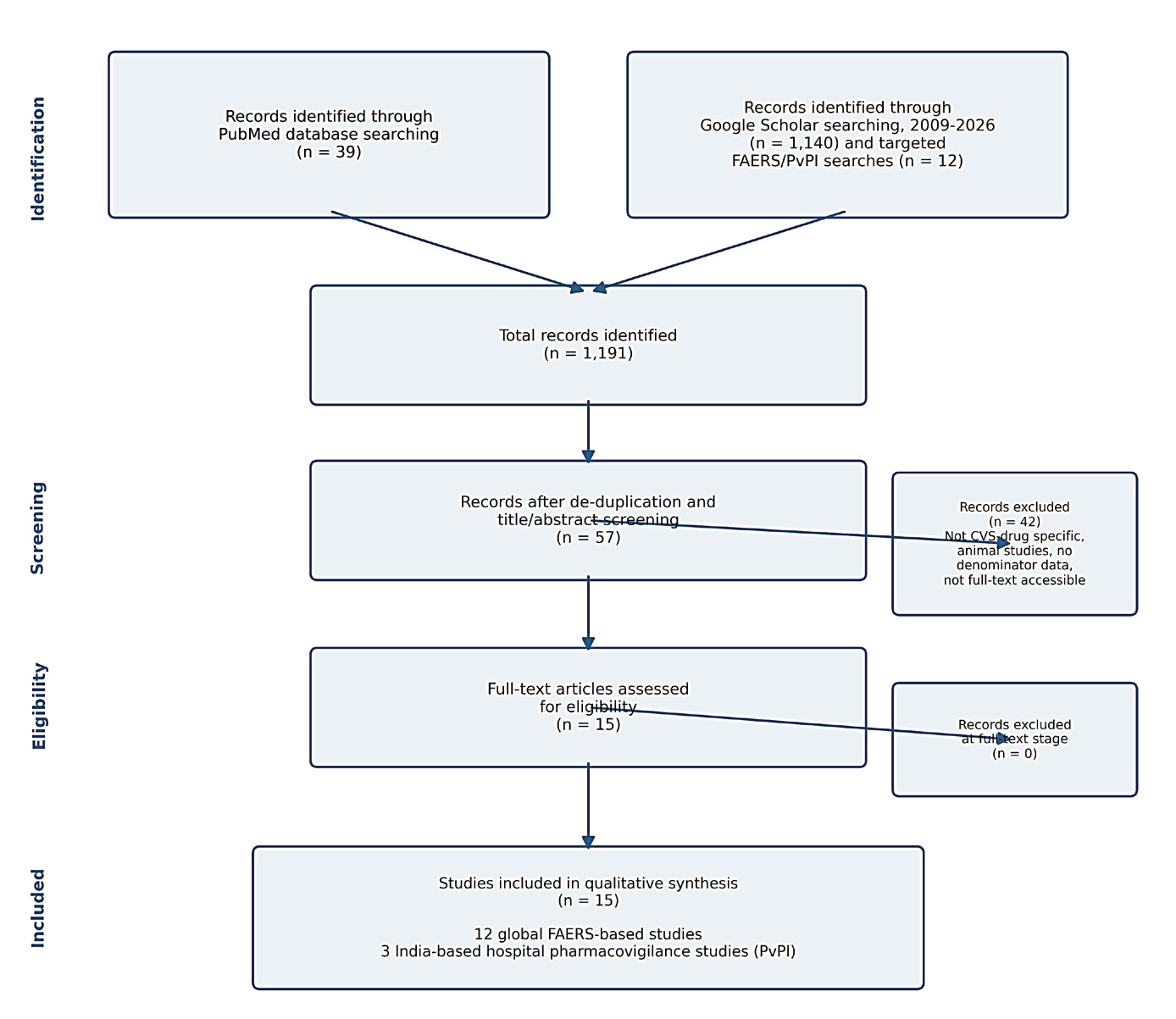
Figure 1
PRISMA 2020 flow diagram of study identification, screening, and inclusion.
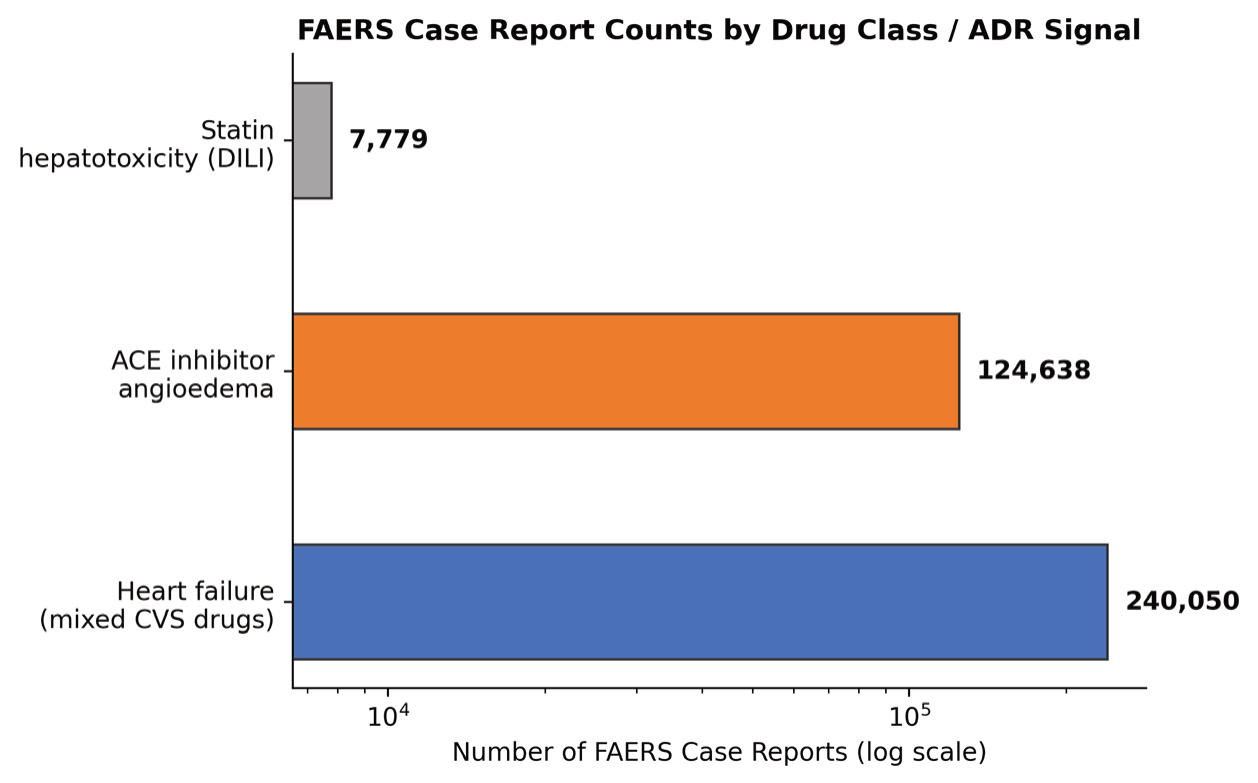
Figure 2
FAERS case report counts by drug class / ADR signal, shown on a logarithmic scale given the wide variation in reporting volume across signals.
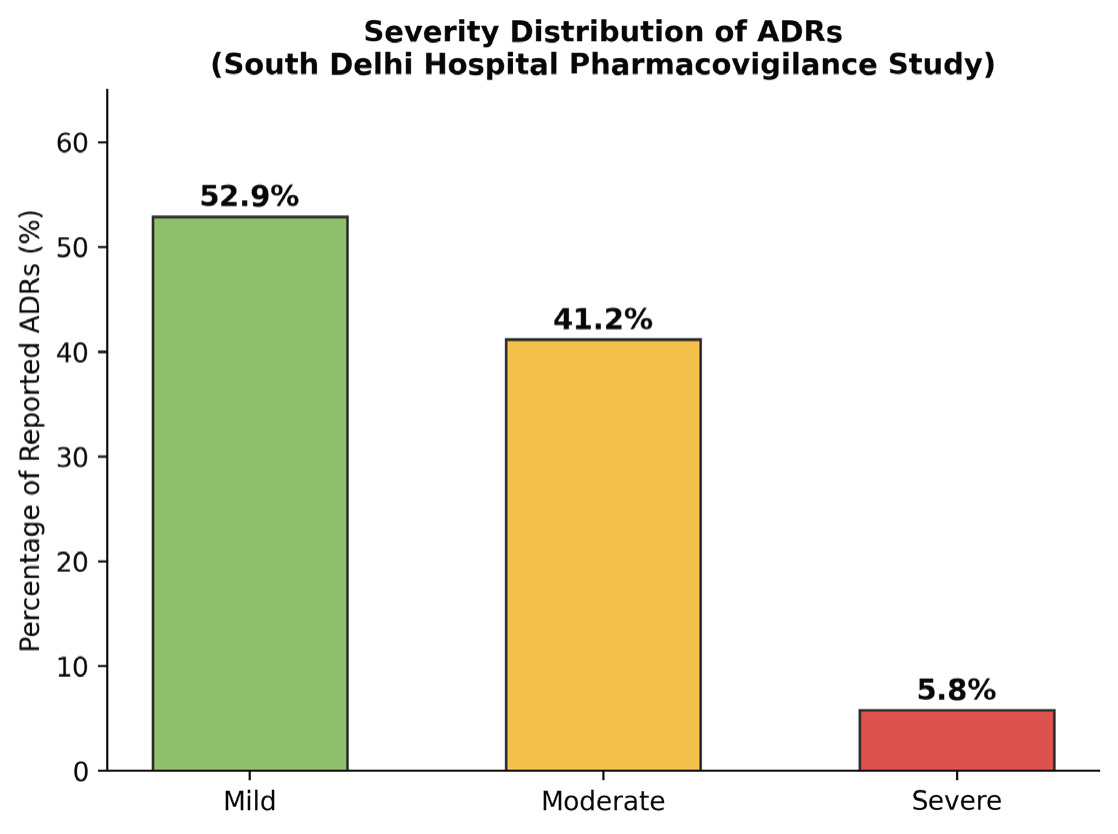
Figure 3
Severity distribution of ADRs reported in the South Delhi hospital pharmacovigilance study (Hussain et al., 2009).
CONCLUSION
This systematic review concludes that certain ADR patterns associated with cardiovascular drugs were consistent across Indian and global data sources -dry cough with ACE inhibitors, myalgia with statins, and peripheral edema with calcium channel blockers -supporting the known pharmacology of these drugs.
A difference in severity was also observed between India-based and FAERS studies, largely attributable to differences in reporting systems and study design rather than true differences in underlying drug risk. ADR underreporting remains a significant challenge in India, meaning reported data may underestimate the actual burden of ADRs, and elderly and polypharmacy patients emerged as high-risk groups requiring closer medication monitoring.
Clinical pharmacists and pharmacovigilance programmes occupy a central role in improving cardiovascular drug safety through patient counseling, ADR detection, reporting, and medication review. Structured ADR reporting, expanded multi-centre prospective studies, and pharmacist-led medication review integrated into routine cardiovascular care are recommended to improve patient safety and treatment outcomes.
Abbreviations
ADR: Adverse Drug Reaction
CVD: Cardiovascular Disease
FAERS: FDA Adverse Event Reporting System
PvPI: Pharmacovigilance Programme of India
PRISMA: Preferred Reporting Items for Systematic Reviews and Meta-Analyses
ROR: Reporting Odds Ratio
PRR: Proportional Reporting Ratio
ICCU: Intensive Cardiac Care Unit
ACE: Angiotensin-Converting Enzyme
CCB: Calcium Channel Blocker
JADER: Japanese Adverse Drug Event Report database
AXIS: Appraisal Tool for Cross-Sectional Studies
DILI: Drug-Induced Liver Injury
SOC: System Organ Class
WHO: World Health Organization
FDA: Food and Drug Administration.
Acknowledgments
The author sincerely thanks Imran Ali, senior, for his valuable guidance and support during the preparation and writing of this manuscript.
Author Contributions
Concept and Design: Aftab Hussain; Definition of Intellectual Content: Aftab Hussain; Literature Search: Aftab Hussain; Data Acquisition and Data Analysis: Aftab Hussain; Manuscript Preparation: Aftab Hussain; Manuscript Editing and Manuscript Review: Aftab Hussain; Aftab Hussain takes responsibility for the integrity of the work as a whole, from inception to the published article, and is designated as guarantor.
Conflict of Interest
The author declares that there is no conflict of interest.
References
Ahmed, N. J.. (2026). Adverse event of ACE inhibitors: A descriptive analysis of FAERS data. Journal of Public Health Research, 15(2), 22799036261444101. https://doi.org/10.1177/22799036261444101
Destere, A., Merino, D., Lavrut, T., Rocher, F., Viard, D., et al.. (2024). Drug-induced cardiac toxicity and adverse drug reactions, a narrative review. Therapie, 79(2), 161-172. https://doi.org/10.1016/j.therap.2023.10.008
Feng, Y., Liu, H. H., Li, L. C., Mao, K. L., Niu, X. F., et al.. (2026). Agent-specific bleeding signatures in non-hypertensive versus hypertensive patients exposed to oral anticoagulants: A real-world pharmacovigilance study. Naunyn-Schmiedeberg's Archives of Pharmacology. https://doi.org/10.1007/s00210-026-05453-z
Hagiwara, H., Fukuta, H., Niimura, T., Zamami, Y., Ishizawa, K., et al.. (2020). Comparison of hemorrhagic risk between prasugrel and clopidogrel: A retrospective study using adverse drug event reporting databases. International Journal of Medical Sciences, 17(6), 728-733. https://doi.org/10.7150/ijms.43168
Huang, Y., Chen, X., Chen, M., Lin, Y., Chen, B., et al.. (2025). Drug-induced heart failure: A real-world pharmacovigilance study using the FDA Adverse Event Reporting System database. Frontiers in Pharmacology, 15, 1523136. https://doi.org/10.3389/fphar.2024.1523136
Hussain, A., Aqil, M., Alam, M. S., Khan, M. R., Kapur, P., et al.. (2009). A pharmacovigilance study of antihypertensive medicines at a South Delhi hospital. Indian Journal of Pharmaceutical Sciences, 71(3), 338-341. https://doi.org/10.4103/0250-474X.56018
Lin, G., Chen, R., Wen, C., Li, Z., Yan, X., Li, L.. (2025). Analyzing real-world adverse events of spironolactone with the FAERS database. PLoS ONE, 20(9), e0330659. https://doi.org/10.1371/journal.pone.0330659
Logvinsky, I. K., Sanchez, C., Ciuciureanu, C., Wu, E., El Aryan, O., Delibasic, M.. (2025). Apixaban- and rivaroxaban-associated bleeding: A retrospective analysis using the FDA Adverse Event Reporting System. Cureus, 17(6), e85509. https://doi.org/10.7759/cureus.85509
Palaniappan, M., Selvarajan, S., George, M., Subramaniyan, G., Dkhar, S. A., et al.. (2015). Pattern of adverse drug reactions reported with cardiovascular drugs in a tertiary care teaching hospital. Journal of Clinical and Diagnostic Research, 9(11), FC01-FC04. https://doi.org/10.7860/JCDR/2015/13810.6704
Park, T., Hwang, M.. (2024). Safety of cardiovascular disease drugs approved between 2014 and 2021 in the US: A pharmacovigilance analysis. Expert Review of Cardiovascular Therapy, 22(6), 273-283. https://doi.org/10.1080/14779072.2024.2354255
Patel, N. M., Stottlemyer, B. A., Gray, M. P., Boyce, R. D., Kane-Gill, S. L.. (2022). A pharmacovigilance study of adverse drug reactions reported for cardiovascular disease medications approved between 2012 and 2017 in the United States Food and Drug Administration Adverse Event Reporting System (FAERS) database. Cardiovascular Drugs and Therapy, 36(2), 309-322. https://doi.org/10.1007/s10557-021-07157-3
Ren, G., Huang, P., Zhang, J., Liu, J., Yan, Z., Ma, X.. (2025). Drug-induced cardiac arrest: A pharmacovigilance study from 2004-2024 based on FAERS database. Frontiers in Cardiovascular Medicine, 12, 1498700. https://doi.org/10.3389/fcvm.2025.1498700
Shan, Y., Cheung, L., Zhou, Y., Huang, Y., Huang, R. S.. (2023). A systematic review on sex differences in adverse drug reactions related to psychotropic, cardiovascular, and analgesic medications. Frontiers in Pharmacology, 14, 1096366. https://doi.org/10.3389/fphar.2023.1096366
Shanmugam, H., Panneerselvam, N., Lawrence, A. A.. (2019). Adverse drug reactions of cardiovascular drugs in intensive cardiac care unit in a tertiary care hospital: A prospective study. Biomedical & Pharmacology Journal, 12(3), 1079-1083. https://doi.org/10.13005/bpj/1737
Wei, C., Yin, W., He, Z., Wu, B.. (2023). Reporting of drug-induced myopathies associated with the combination of statins and daptomycin: A disproportionality analysis using the US Food and Drug Administration Adverse Event Reporting System. Journal of Clinical Medicine, 12(10), 3548. https://doi.org/10.3390/jcm12103548
Zhang, L., Wang, Y., Wang, F., Ji, K., Yang, L., Li, J.. (2026). Muscle toxicity reports in FAERS: A disproportionality analysis with focus on rhabdomyolysis and cross-database assessment. Frontiers in Pharmacology, 17, 1852621. https://doi.org/10.3389/fphar.2026.1852621
Zhou, L., Wu, B., Bian, Y., Lu, Y., Zou, Y., et al.. (2025). Hepatotoxicity associated with statins: A retrospective pharmacovigilance study based on the FAERS database. PLoS ONE, 20(7), e0327500. https://doi.org/10.1371/journal.pone.0327500