

Surgery is increasingly recognized as a complex, longitudinal therapeutic process spanning preoperative preparation, anesthesia, intraoperative care, and postoperative recovery rather than an isolated operating room event. Because this continuum is highly medication-intensive and subject to challenges like polypharmacy, rapid drug administration, physiological instability, multiple transitions of care, and communication failures, the perioperative environment carries a high risk for preventable medication errors. This review explores the evolving role of the clinical pharmacist, transitioning from a passive dispenser to an active, multidisciplinary collaborator throughout the surgical pathway. In the preoperative phase, clinical pharmacists improve patient safety by constructing a best possible medication history, clarifying continuation or cessation plans for high-risk home therapies (such as anticoagulants and antidiabetics), and delivering patient education to reduce morning-of-surgery non-adherence. In the intraoperative phase, they support anesthesia providers through system-level and case-level interventions, including the standardization of medication trays and labeling, antimicrobial prophylaxis stewardship, and multimodal analgesic design. Postoperatively, pharmacists collaborate with anesthesiologists to optimize acute pain management, support opioid stewardship, manage thromboembolism prophylaxis, and coordinate comprehensive discharge reconciliation to prevent drug duplication or omission. Collaborative models-such as joint acute pain services and pre-anesthesia consultations-render medication reviews clinically actionable and significantly enhance therapy optimization. Although challenges like staffing constraints, training gaps, and inconsistent clinical integration persist, the future of perioperative pharmacy lies in proactive, technology-enabled care incorporating clinical decision support, barcode administration, and artificial intelligence to solidify clinical pharmacists as core contributors to surgical patient safety.
Abstract
Share on Mobile
Scan to access on mobile
Keywords
Clinical Pharmacist
Medication Safety
Multidisciplinary Collaboration
Perioperative Care
Postoperative Pain Management
INTRODUCTION
Surgery is no longer a purely technical event confined to the operating room; it is a longitudinal therapeutic process that begins before admission, continues through anesthesia and the operation itself, and extends into recovery, rehabilitation, discharge, and follow-up. In modern practice, the success of surgery depends not only on operative skill but also on how well the patient's physiology, chronic diseases, drug therapy, pain, infection risk, thrombosis risk, nutrition, glycemic control, and psychological preparedness are managed across the perioperative continuum. This broader model of care is reflected in contemporary perioperative, anesthesia, and multidisciplinary safety frameworks, which view perioperative care as a coordinated, patient-centered pathway rather than a sequence of isolated encounters (Naseralallah et al., 2025). The perioperative period is generally divided into the preoperative, intraoperative, and postoperative phases. Although these divisions are convenient for teaching and workflow, in practice they are tightly linked. A medication decision made in the preoperative clinic can influence induction hemodynamics, postoperative pain, bleeding, delirium, nausea and vomiting, antimicrobial exposure, or time to discharge. For example, failure to identify an anticoagulant before surgery can increase bleeding risk; poor adjustment of antihypertensive therapy can contribute to peri-induction hypotension; inadequate planning of multimodal analgesia can lead to excessive opioid exposure and delayed mobilization; and errors in antibiotic prophylaxis can raise the risk of surgical site infection. Because drug-related decisions cross all three phases, perioperative care is fundamentally a medication-intensive specialty (Hillier et al., 2020).
This complexity is magnified by the fact that a large proportion of surgical patients present with polypharmacy, chronic comorbidity, and multiple transitions of care. Reviews of perioperative pharmacy practice consistently emphasize that medication therapy management must address pain, nausea and vomiting, anticoagulation, infection prophylaxis, chronic disease therapy, blood pressure, blood glucose, and discharge continuity. In parallel, preoperative clinic and guideline-based reports show that incomplete or inaccurate medication histories are a major source of medication error during admission and early postoperative prescribing (Eid et al., 2020).
These realities explain why the perioperative arena is widely recognized as a high-risk setting for medication harm. Published work on perioperative medication error detection, anesthesia drug administration safety, and operating room error mechanisms shows that medication-related incidents are often under-recognized and that preventable errors continue to occur across anesthesia practice (Table 1) (Nanji et al., 2016).
The persistence of these errors is not surprising. Unlike many hospital settings, anesthesia professionals often prescribe, prepare, label, administer, and document medications themselves in real time, usually under severe time pressure and in a distracting environment. For that reason, perioperative medication safety is not only a question of individual vigilance but also of system design, standardization, communication, technology, protocol development, and support from medication experts (Merry et al., 2011).
Against this background, the role of the clinical pharmacist has become increasingly important. Contemporary perioperative pharmacy literature no longer presents the pharmacist as a passive dispenser of medicines, but as an active participant in medication reconciliation, therapeutic optimization, antimicrobial stewardship, analgesic planning, discharge counseling, safety surveillance, and systems redesign. The key argument is simple: because the perioperative pathway is heavily dependent on safe and rational medication use, the professional most specifically trained in pharmacotherapy should be embedded within that pathway (Chapuis et al., 2019).
This framing is consistent with systematic reviews, perioperative pharmacy guidance, anesthesia safety literature, and multidisciplinary safety programs (American Society of Health-System Pharmacists (ASHP), 2019).
Perioperative medication management as a continuum of care
Perioperative medication management can be defined as the planned assessment, continuation, modification, temporary cessation, substitution, re-initiation, monitoring, and education surrounding all medicines used by or prescribed for the surgical patient across the entire surgical timeline. This includes not only anesthetic drugs, analgesics, antibiotics, anticoagulants, antiemetics, and vasoactive agents, but also the patient's chronic therapy: antihypertensives, antidiabetics, thyroid drugs, antiepileptics, antidepressants, steroids, immunosuppressants, inhalers, herbal supplements, and self-medicated OTC products (American Society of Health-System Pharmacists [ASHP], 2013).
The core challenge is that surgery creates a temporary physiological state in which the usual rules of outpatient pharmacotherapy do not fully apply. Fasting alters oral drug absorption; anesthesia and blood loss affect circulation and tissue perfusion; inflammatory stress changes insulin sensitivity and catabolism; renal or hepatic perfusion may fluctuate; nausea and ileus interfere with oral intake; and postoperative immobility increases thrombotic risk. Therefore, the clinician must repeatedly ask several questions: Which medicines should be continued? Which should be withheld, and when? Which require bridging? Which need dose reduction? Which should be converted from oral to parenteral form? What monitoring is required before re-starting them? And how will the patient understand the revised plan at discharge? (American Society of Health-System Pharmacists [ASHP], 2013).
From a practical standpoint, perioperative medication management has five recurring goals. First, it aims to preserve control of chronic disease without exposing the patient to unnecessary procedural risk. Second, it attempts to reduce predictable complications such as bleeding, infection, thromboembolism, postoperative nausea and vomiting, severe pain, stress hyperglycemia, delirium, and medication-related adverse effects. Third, it seeks to avoid medication discrepancies at handover points. Fourth, it tries to standardize time-sensitive practices such as prophylactic antibiotic administration or postoperative analgesia. Fifth, it ensures continuity after discharge so that the patient does not leave hospital with an unsafe or confusing medication plan (American Society of Health-System Pharmacists [ASHP], 2013).
A useful way to understand this is to view perioperative medication management as a drug-use pathway rather than a set of isolated prescribing moments. The available literature shows that safer perioperative pharmacotherapy depends on the design of the whole system: accurate medication histories, standardized preparation and labeling, protocol-driven prophylaxis, better communication across transitions, and deliberate medication review from preadmission to discharge (Eid et al., 2020).
The Preoperative phase
is the foundation on which the rest of perioperative medication management is built. It begins when surgery is planned and includes preadmission review, medication history-taking, anesthesia assessment, optimization of chronic disease, risk stratification, patient education, and preparation for day-of-surgery care. If this phase is weak, downstream problems multiply. Many intraoperative and postoperative medication issues are not truly "new" errors; they are consequences of a poorly captured drug history, a missed interaction, an unclear continuation/withholding plan, or inadequate communication between the preoperative clinic and the surgical team (Smith et al., 2010).
The first major task in the preoperative phase is the creation of an accurate best possible medication history. This goes beyond asking the patient to name their prescriptions. It requires active verification of generic and brand names, dose, frequency, indication, adherence pattern, recent changes, allergy history, previous adverse drug reactions, herbal products, supplements, alcohol and smoking exposure, and use of high-risk agents such as anticoagulants, insulin, corticosteroids, opioids, benzodiazepines, or immunosuppressants. Preoperative pharmacy and anesthesia guidance specifically recommend that pharmacists obtain a complete medication history and identify potential drug-treatment problems, especially in patients with chronic disease and polypharmacy (Apfelbaum et al., 2021).
Why is this so important? Because surgical admission is a classic setting for unintended medication discrepancies. Reports from preoperative clinics, perioperative pharmacy guidance, and systematic reviews consistently show that structured pharmacist review improves the identification of medication-related risks, clarifies continuation and withholding plans, and strengthens postoperative prescribing accuracy (Smith et al., 2010).
Prospective and department-level reports also suggest that pharmacist involvement before anesthesia review can improve the quality of medication histories available to anesthesiologists and support safer perioperative prescribing. When medication information is verified before admission orders are written, discrepancies involving omissions, wrong drugs, and wrong doses are less likely to reach the perioperative period (Apfelbaum et al., 2021).
The broader perioperative pharmacy literature strengthens this argument by showing that medication reconciliation before admission improves patient safety, supports continuation planning for chronic therapy, and reduces avoidable medication problems during hospitalization. These findings are highly relevant to anesthesiology because anesthesiologists routinely depend on the accuracy of home-medication information when planning perioperative continuation, withholding, or bridging strategies (Cullen et al., 2021).
The drug-specific decisions of the preoperative phase are equally important. Anticoagulants and antiplatelet agents must be evaluated in terms of procedural bleeding risk, thromboembolic risk, renal function, and timing of interruption or bridging. Antihypertensive agents require nuanced handling; antidiabetic drugs need adjustment based on fasting status and expected postoperative intake; chronic opioids require tolerance-aware pain planning; and herbal products or OTC supplements may affect bleeding, sedation, or hepatic metabolism. Interaction review is also important, including consideration of serotonergic combinations and other medicines that may complicate anesthetic care (De Caterina et al., 2015).
At this stage, the pharmacist benefits anesthesiology in several ways. First, the pharmacist can identify the exact medicines that matter for anesthesia planning and distinguish active from inactive or obsolete therapy. Second, the pharmacist can anticipate interactions and monitoring needs, such as QT-prolonging combinations, serotonin-related interactions, anticoagulant timing, or renal dose issues. Third, the pharmacist can save anesthesiologist time by preparing a verified medication record rather than leaving medication reconstruction to a brief clinic encounter (Gillman, 2005).
The preoperative phase also includes patient education, which is often underestimated. Patients frequently misunderstand which chronic medicines to stop, when to fast, whether to bring medicines to hospital, or how to restart drugs after surgery. This confusion is a major cause of omitted or duplicated therapy. Pharmacists are particularly well placed to translate complex medication instructions into patient-friendly language and to tailor counseling to literacy level, age, and drug burden (Smith et al., 2010). A patient who clearly understands the preoperative drug plan is less likely to arrive with unexpected anticoagulant exposure, omitted inhalers, duplicated insulin use, or inappropriate self-medication on the morning of surgery Table 2 and Figure 1.
The evidence for pharmacist benefit in this phase is strongest for medication review, discrepancy detection, counseling, and risk clarification before surgery (Smith et al., 2010).
The Intraoperative phase
is often viewed as the domain of the anesthesiologist alone, but from a medication-safety perspective it is the point at which all prior planning is tested under maximal pressure. The operating room is a distinctive medication environment because it combines urgent decision-making, multiple high-alert medicines, rapid sequence preparation, frequent syringe handling, and immediate physiologic consequences when things go wrong. Unlike most inpatient settings, the anesthesia provider often controls the entire chain of medication selection, preparation, labeling, administration, and documentation in real time (Mertes et al., 2011).
The drug classes used in the intraoperative phase are broad and pharmacologically potent: induction agents such as propofol or etomidate; volatile anesthetics; opioids such as fentanyl or morphine; benzodiazepines; neuromuscular blockers and reversal agents; vasopressors and inotropes; local anesthetics; antiemetics; antibiotics; tranexamic acid; IV fluids; insulin; and emergency drugs. Each has the potential for dosing error, wrong route, duplicate administration, or hazardous interaction. In addition, the operating room often contains multiple look-alike vials and syringes, and many medicines are used in small volumes or titrated rapidly, increasing cognitive load (Tariq et al., 2024).
This environment helps explain the persistently high rates of observed perioperative medication incidents. Evidence from perioperative error studies and anesthesia safety literature emphasizes that routine reporting systems can underestimate the problem, and that a large proportion of intraoperative medication errors are preventable when standardization and monitoring systems are strengthened (Mertes et al., 2011).
From the anesthesiologist's perspective, intraoperative medication management is not just about giving the right anesthetic drugs. It also includes time-sensitive prophylaxis and physiological support. For example, surgical antibiotic prophylaxis should be selected appropriately and administered at the correct interval before incision; antiemetic strategies should be risk-based; analgesic plans should support multimodal recovery; neuromuscular blockade should be monitored and reversed safely; and vasoactive therapy should reflect the patient's baseline pharmacology and comorbidity profile. Mistakes at this stage can affect not only immediate intraoperative stability but also postoperative infection, pain, nausea, mobilization, and length of stay (Gan et al., 2014).
The pharmacist's role in the intraoperative phase can therefore be understood at two levels: case-level and system-level. At the case level, the pharmacist supports anesthesiology through protocol design, formulary optimization, antimicrobial stewardship, medication preparation pathways, and review of high-risk medication plans. At the system level, the pharmacist contributes to standardization of trays, labeling, storage, barcode systems, prefilled products, and decision support (American Society of Health-System Pharmacists [ASHP], 2019).
The intraoperative phase is also where collaboration affects analgesic architecture. A strong anesthetic plan today is rarely opioid-only; it is multimodal and considers regional techniques, acetaminophen, NSAIDs where appropriate, ketamine or lidocaine infusions in selected settings, and antiemetic pairing. Pharmacists can support anesthesiologists by aligning perioperative analgesia protocols with patient-specific factors such as opioid tolerance, renal function, age, bleeding risk, sleep apnea, and interacting CNS depressants (Apfel et al., 2004) (Table 3).
prefilled products, and decision support (American Society of Health-System Pharmacists [ASHP], 2019). One major intraoperative application is antimicrobial prophylaxis. Incorrect agent choice, poor timing, unnecessary redosing, and excessive postoperative continuation remain common. Perioperative pharmacy guidance and operating room safety literature support pharmacist involvement in antimicrobial stewardship, formulary management, standardization, and time-critical perioperative medication processes (American Society of Health-System Pharmacists [ASHP], 2013).
The Postoperative phase
is sometimes described as recovery from anesthesia, but clinically it is much more than emergence and transfer to PACU. It is the period in which the patient's physiologic stress response, wound healing, mobilization, resumption of oral intake, management of drains and lines, and control of pain and complications all converge. From a medication perspective, this phase is defined by transition: IV to oral switching, re-starting chronic medicines, preventing avoidable complications, rationalizing antibiotics, adjusting anticoagulation, and preparing the patient for discharge (American Society of Health-System Pharmacists [ASHP], 2013).
Pain management is central to postoperative medication therapy. Poor pain control is not a minor comfort issue; it is linked to delayed mobilization, impaired respiratory effort, sleep disturbance, prolonged opioid use, higher readmission risk, and in some patient's progression to persistent postsurgical pain. Anesthesiologists design much of the perioperative pain strategy, but pharmacists can strengthen this by reviewing analgesic regimens for completeness, duplication, renal safety, sedation burden, constipation prophylaxis, patient counseling, and adherence after discharge (Dean, 2004).
Evidence for pharmacist impact on postoperative pain is growing. Systematic review evidence and collaborative practice reports suggest that pharmacist participation can improve pain-control processes, strengthen opioid stewardship, and support safer use of adjunct analgesics and bowel regimens after surgery (Naseralallah et al., 2025).
The collaborative study by Chen and colleagues offers another useful postoperative perspective. In hospitalized patients with poor pain control, collaboration between pharmacists and anesthesiologists improved pain-management processes and strengthened opioid-use quality indicators. This supports the view that pharmacist-anesthesiologist collaboration can improve pain-related outcomes when medication review is linked to specialist analgesic decision-making (Chen et al., 2021).
Beyond pain, postoperative medicine includes antiemetic therapy, venous thromboembolism prophylaxis, stress-ulcer or gastrointestinal complication prevention in selected populations, glycemic management, fluid and electrolyte correction, and the safe reintroduction of chronic medications. The available perioperative literature suggests that pharmacists may contribute most where postoperative therapy is protocol-based yet still requires individualization (Rengel and Pandharipande, 2021).
Discharge is another major vulnerability. A patient may leave with new anticoagulation, short-term opioid therapy, bowel regimen, antiemetics, antibiotic changes, held chronic medications, altered insulin schedules, and instructions to restart selected medicines only after a certain date. Without good medication reconciliation and counseling, the patient can easily duplicate therapy, omit essential chronic drugs, or continue medicines that were intended to stop. Perioperative pharmacy guidance explicitly includes medication education, individualized follow-up, and adverse-effect monitoring after discharge as pharmacist responsibilities (American Society of Health-System Pharmacists Table 4 and Figure 2 (ASHP, 2019).
Pharmacist-Anesthesiologist collaboration
The phrase "pharmacist-anesthesiologist collaboration" should not be understood narrowly as the pharmacist advising on anesthetic drugs. In a robust perioperative model, it means that both professionals jointly shape the medication plan that surrounds anesthesia and surgery: what the patient comes in on, what is withheld, what is given in the operating room, what is used for prophylaxis, how pain is managed, and what the patient goes home with. The collaboration is strongest when it is structured, recurrent, and pathway-based, rather than occasional consultation after a problem has already occurred (Chapuis et al., 2019).
Several models of collaboration are described in the literature. One model is pre-anesthesia medication consultation, where the pharmacist helps prepare a verified home-medication history and flags high-risk drugs for anesthesiology review. A second model is the shared pain-management service, where pharmacists and anesthesiologists round together and intervene on opioid selection, dosing, bowel regimens, and adjunct therapy. Legend: PONV, postoperative A third is the protocol and systems model, in which pharmacists and anesthesiologists jointly redesign workflows around operating-room medication preparation, prophylaxis, analgesia, and reconciliation (Chapuis et al., 2019).
Why is this collaboration particularly valuable in anesthesiology? First, anesthesiologists must make rapid medication decisions that are highly dependent on an accurate medication background. Second, anesthesiology increasingly extends beyond the OR into preoperative assessment, acute pain services, and perioperative pathway design. Third, many anesthetic outcomes are medication-mediated rather than purely procedural: hypotension, delayed emergence, PONV, breakthrough pain, respiratory depression, and interactions with chronic drugs. Fourth, anesthesiology is already a discipline deeply engaged with patient safety science, making it especially receptive to pharmacist-led standardization and systems redesign (Evered et al., 2018).
The best collaborations create benefits in both directions. Pharmacists help anesthesiologists by clarifying medication histories, optimizing prophylaxis, improving discharge planning, and identifying preventable discrepancies. Anesthesiologists help pharmacists by contextualizing surgical stress, timing, procedural bleeding risk, anesthesia implications, and the practical constraints of the OR and PACU. When the two work together, medication review becomes clinically actionable rather than purely administrative. (Naseralallah et al., 2025).
The best collaborations create benefits in both directions. Pharmacists help anesthesiologists by clarifying medication histories, optimizing prophylaxis, improving discharge planning, and identifying preventable discrepancies. Anesthesiologists help pharmacists by contextualizing surgical stress, timing, procedural bleeding risk, anesthesia implications, and the practical constraints of the OR and PACU. When the two work together, medication review becomes clinically actionable rather than purely administrative (Naseralallah et al., 2025).
Record; Nonsteroidal Anti-Inflammatory Drugs; PONV: Postoperative nausea and vomiting; VTE, venous thromboembolism; LMWH, low-molecular-weight heparin; DOAC, direct oral anticoagulant.
Evidence for Pharmacist involvement in Perioperative care
The strongest overall evidence comes from contemporary reviews and departmental experience reports evaluating pharmacist participation in perioperative settings. These publications suggest that pharmacist-led interventions can improve medication review, discharge processes, pain-management quality, and broader perioperative medication optimization, although study quality is variable across the literature (Naseralallah et al., 2025).
However, the evidence is not uniform across all domains. Pharmacist effects appear strongest in areas where medication use is protocolized but error-prone: reconciliation, prophylactic medication use, postoperative pain management, discharge counseling, and therapy optimization around transitions. Evidence is less consistent in areas where many perioperative confounders influence outcome. This nuance is important for thesis discussion: pharmacist impact is real, but it is most visible where the intervention directly addresses a known medication-system vulnerability (Table 5) (American Society of Health-System Pharmacists [ASHP], 2019).
Medication safety and Medication-error prevention
Medication safety is one of the most compelling reasons to embed pharmacists in perioperative care. The operating room and surrounding perioperative environment concentrate several known error-producing conditions: look-alike ampoules, unlabeled syringes, interruptions, time pressure, incomplete records, high-alert medicines, and frequent handovers. Anesthesia safety literature emphasizes that operating-room medication safety requires a combination of systems thinking, training, standardization, and process redesign rather than reliance on vigilance alone (Glavin, 2010).
A useful way to discuss pharmacist contributions is through the familiar safety domains of standardization, technology, pharmacy support, and culture. Standardization includes consistent concentrations, labels, tray layouts, and protocols. Technology includes barcode systems, computerized order entry, and safer documentation practices. Pharmacy support emphasizes shifting medication preparation away from ad hoc OR compounding toward standardized products and pharmacy-supported supply. Culture includes teamwork, speaking up, checklist use, and non-punitive reporting. Pharmacists contribute to all of these domains (Cohen, 2007).
The WHO Surgical Safety Checklist also intersects with medication safety because it formalizes communication at three key moments: before induction, before incision, and before the patient leaves the OR. Although the checklist is not a pharmacy tool, pharmacists reinforce its goals by helping ensure that medication-related parts of the pathway are reliable: accurate medication histories, appropriate prophylaxis, clear recovery plans, and consistent handover communication (World Health Organization [WHO], 2009).
In practical terms, pharmacist-supported medication safety in anesthesiology includes standardized anesthesia trays, ready-toadminister syringes where feasible, segregation of look-alike products, barcoded dispensing and administration, clearly written continuation or stop plans, post-op analgesia algorithms, audit of antibiotic timing, and medication reconciliation at admission and discharge (Institute for Safe Medication Practices [ISMP], 2021).
Importance of Multidisciplinary collaboration
No single professional can safely manage the contemporary perioperative pathway alone. Surgical safety and perioperative medication management depend on structured cooperation among surgeons, anesthesiologists, pharmacists, nurses, and other clinicians. Deliberate communication, role clarity, and shared responsibility across the whole pathway are central to safe care (Naseralallah et al., 2025). Within this multidisciplinary model, the pharmacist occupies a unique niche. Surgeons focus primarily on the operation and its surgical consequences. Anesthesiologists focus on perioperative physiology, anesthesia, analgesia, and recovery. Nurses monitor implementation and continuity at the bedside. Pharmacists, by contrast, focus on the medication logic that connects all these domains. They are therefore well placed to bridge transitions, detect discrepancies, rationalize regimens, educate patients, and support pathway standardization (Naseralallah et al., 2025).
A multidisciplinary team matters not simply because it pools expertise, but because it reduces blind spots. The anesthesiologist may know the hemodynamic consequences of a drug, while the pharmacist knows its interaction profile and safer formulation strategy; the surgeon may define bleeding risk, while the pharmacist helps translate that into antithrombotic management; the nurse may identify adherence barriers or side effects first, prompting refinement of the medication plan. In this sense, pharmacist-anesthesiologist collaboration is best seen not as a stand-alone partnership but as a core link inside a wider multidisciplinary network that improves continuity from scheduling to discharge (Figure 3) (Naseralallah et al., 2025).
Table 1 Why Perioperative Medication Management Is High-Risk.
| Risk domain | Why it occurs in surgery | Typical consequences |
|---|---|---|
| Polypharmacy | Patients arrive on chronic cardiovascular, endocrine, antithrombotic, psychiatric, and OTC/herbal medicines | Omitted drugs, interactions, rebound effects |
| Rapid drug administration | Induction and intraoperative care require immediate preparation and administration | Wrong drug, wrong dose, wrong route |
| Multiple transitions | Home -> preadmission -> ward -> OR -> PACU -> ward -> discharge | Reconciliation errors, duplication, omissions |
| Physiological instability | Surgery and anesthesia alter hemodynamics, renal function, hepatic blood flow, and stress hormones | Altered pharmacokinetics and pharmacodynamics |
| Communication failures | Teams change across phases and handovers are frequent | Delayed prophylaxis, conflicting orders, poor continuity |
| Incomplete protocols | Variation in local practice and specialty-specific pathways | Non-standardized care and preventable variability |
| Legend: OR, operating room; PACU, post-anesthesia care unit; OTC, over-the-counter. | ||
Table 2 Major Preoperative Medication Issues and Pharmacist Contributions.
| Preoperative issue | Why it matters to anesthesiology | Pharmacist contribution |
|---|---|---|
| Inaccurate home-medication history | Wrong continuation/withholding decisions | Best possible medication history, source verification |
| Anticoagulant/antiplatelet use | Bleeding or thrombosis risk | Timing plans, bridging advice, discrepancy detection |
| Antihypertensives | Risk of peri-induction hypotension or rebound hypertension | Continuation review and individualized recommendations |
| Diabetes medicines | Fasting-related hypoglycemia/hyperglycemia | Dose adjustments and monitoring plans |
| Chronic opioid or benzodiazepine use | Tolerance, withdrawal, respiratory depression | Analgesia planning and high-risk medication review |
| Supplements/herbals/OTC use | Hidden bleeding, sedation, or interaction risk | Explicit questioning and documentation |
| Poor patient understanding | Non-adherence to pre-op instructions | Counseling and written medication instructions |
| Legend: OTC, over-the-counter. | ||
Table 3 Intraoperative Medication Domains Relevant to Pharmacist-Anesthesiologist Collaboration.
| Domain | Typical medications | Why collaboration helps |
|---|---|---|
| Antibiotic prophylaxis | Cefazolin, clindamycin, vancomycin, metronidazole | Correct selection, timing, redosing, allergy review |
| Hemodynamic support | Phenylephrine, ephedrine, norepinephrine, vasopressin | Standard concentrations, labeling, storage, preparation |
| Induction/maintenance | Propofol, volatile agents, adjunct sedatives | Protocol standardization and interaction awareness |
| Analgesia | Fentanyl, morphine, ketamine, acetaminophen, NSAIDs | Multimodal design and patient-specific risk balancing |
| Antiemesis | Ondansetron, dexamethasone, droperidol | Risk-based prophylaxis and interaction review |
| Reversal/rescue | Sugammadex, neostigmine, naloxone, flumazenil | Availability, protocols, dosing safeguards |
| Legend: NSAIDs, non-steroidal anti-inflammatory drugs. | ||
Table 4 Key Postoperative Medication Domains.
| Postoperative domain | Typical treatment focus | Pharmacist contribution |
|---|---|---|
| Pain | Multimodal analgesia, opioid minimization, bowel regimen | Regimen review, safety monitoring, counseling |
| PONV | Risk-based antiemetic combinations | Prophylaxis optimization and interaction checking |
| VTE prevention | LMWH, DOAC plans, mechanical + pharmacologic strategy | Dosing, timing, contraindication review |
| Re-start of chronic therapy | Antihypertensives, antidiabetics, anticoagulants, psychotropics | Re-initiation plan and reconciliation |
| Antimicrobial stewardship | Stop unnecessary continuation after prophylaxis | Duration review and protocol adherence |
| Discharge safety | Simplified medication list and patient understanding | Reconciliation, education, handover to primary care |
| Legend: PONV, postoperative nausea and vomiting; VTE, venous thromboembolism; LMWH, low-molecular-weight heparin; DOAC, direct oral anticoagulant. | ||
Table 5 Comparative Evidence Supporting Pharmacist Participation.
| Study | Setting | Intervention | Main finding |
|---|---|---|---|
| Naseralallah et al., 2025 | Systematic review | Perioperative pharmacist-care interventions | Improved therapy optimization and clinically relevant perioperative outcomes |
| Chen et al., 2021 | Inpatient pain service | Pharmacist-anesthesiologist collaboration | Improved pain-management processes and opioid-related care quality |
| Hillier et al., 2020 | Systematic review | Review of clinical pharmacists in perioperative care | Supported improved medication management and risk detection in surgical patients |
| Chapuis et al., 2019 | Anaesthesiology and critical care department | Integration of a pharmacist into the department | Improved medication-management processes and supported safer practice |
| ASHP, 2019 | Perioperative pharmacy services guidance | Guideline-based pharmacy role definition | Defined pharmacist responsibilities across the perioperative continuum |
| Nanji et al., 2016[4] | Perioperative medication-safety study | Analysis of medication errors in the EHR era | Highlighted persistent error risks and need for systems-based prevention |
| Merry et al., 2011 | Anaesthesia medication-administration system | Multimodal safety intervention | Demonstrated that structured systems can reduce medication-administration errors |
| Smith et al., 2010 | Preoperative clinic | Pharmacist medication review and counselling | Improved identification of medication-related risks before surgery |
| Legend: ASHP, American Society of Health-System Pharmacists; EHR, electronic health record. | |||
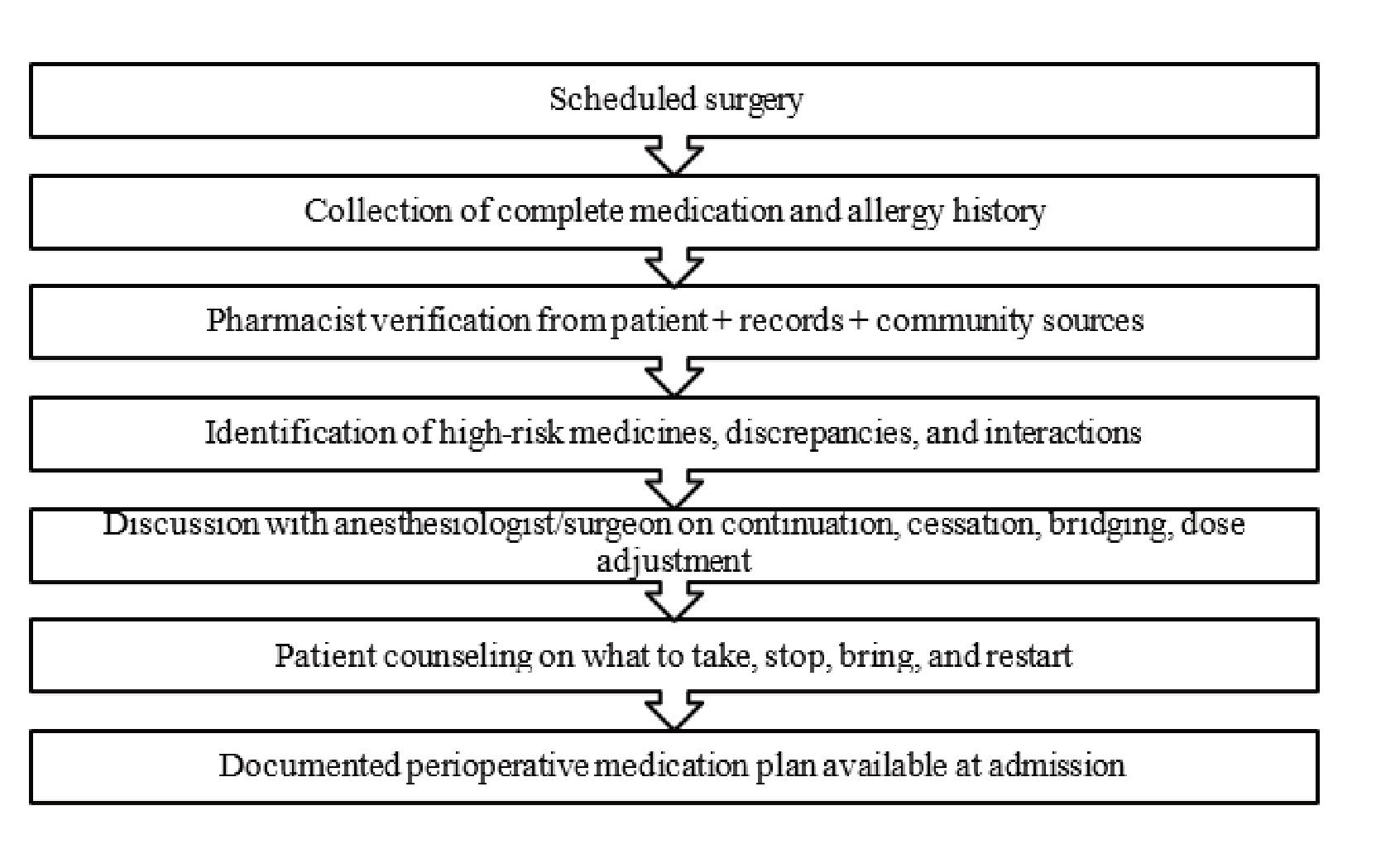
Figure 1
Preoperative medication management pathway.
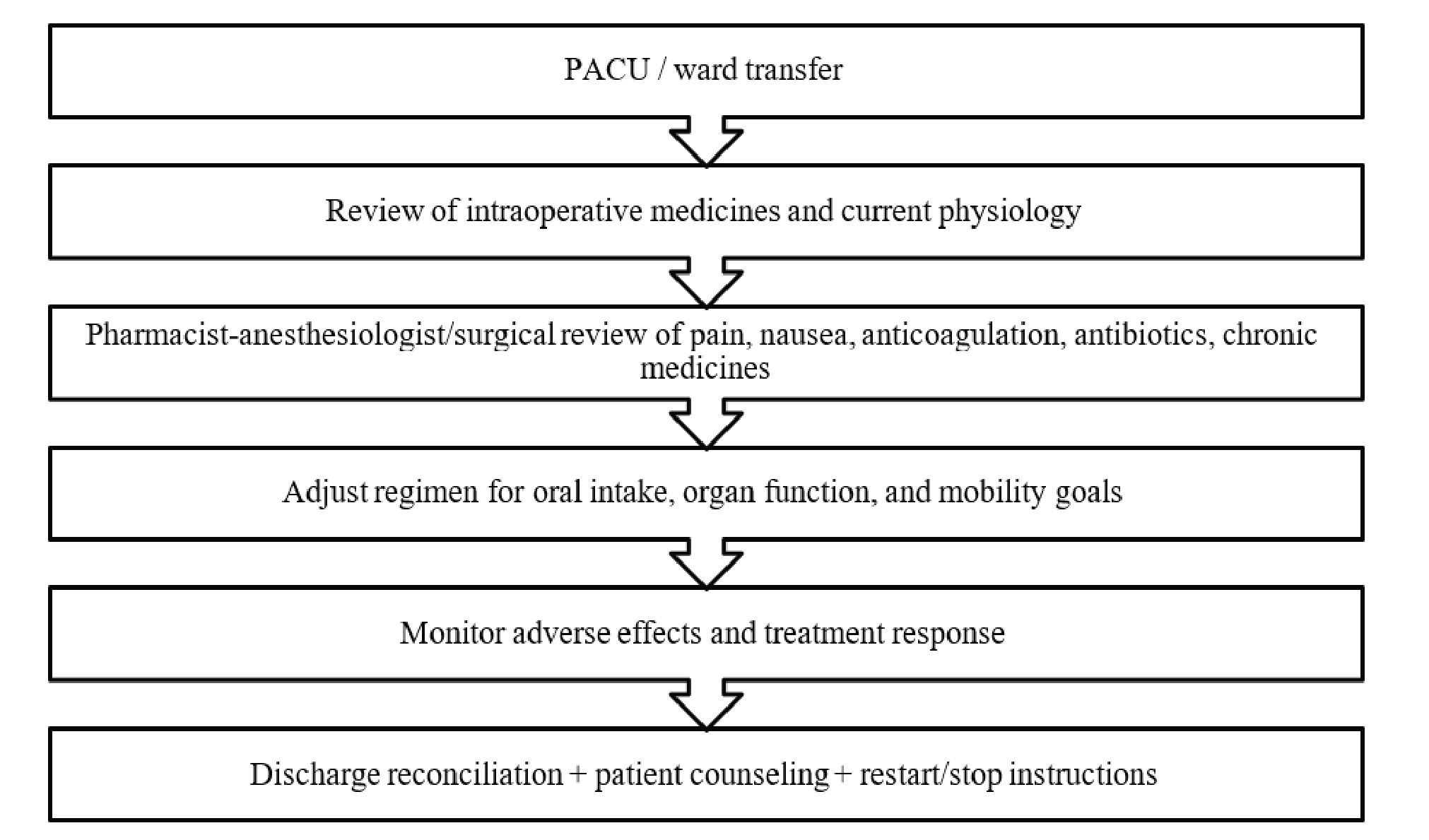
Figure 2
Postoperative medication optimization.
GAP AND CHALLENGES
Despite the potential of clinical pharmacists in perioperative care, their integration into anesthesiology and surgical teams remains inconsistent. Current practice often focuses on selected activities such as medication reconciliation and discharge review rather than continuous involvement throughout the perioperative pathway. Evidence is also limited by variation in study designs, settings and outcome measures, making it difficult to establish standardized models of practice. The gap between potential and current practice highlights the need for formal collaborative protocols, defined clinical roles, adequate staffing, pharmacist training in perioperative and critical care pharmacotherapy, and high-quality multicentre studies. Bridging this gap could transform pharmacists from supportive medication reviewers into integral contributors to perioperative safety and patient outcomes.
FUTURE OUTLOOK
The future of clinical pharmacist in perioperative setup is likely to move toward proactive, integrated and technology-enabled medication management. Clinical pharmacists may increasingly become permanent members of perioperative and anesthesiology teams, contributing to medication reconciliation, individualized pharmacotherapy, antimicrobial stewardship, acute pain management and discharge optimization. Integration of electronic medication reconciliation, clinical decision-support systems, barcode technology and potentially artificial intelligence could further improve medication safety and enable earlier identification of high-risk patients. Future research should focus on standardized pharmacist-anesthesiologist collaboration models and clinically meaningful outcomes, including medication-related harm, complications, readmissions, length of stay and cost-effectiveness.
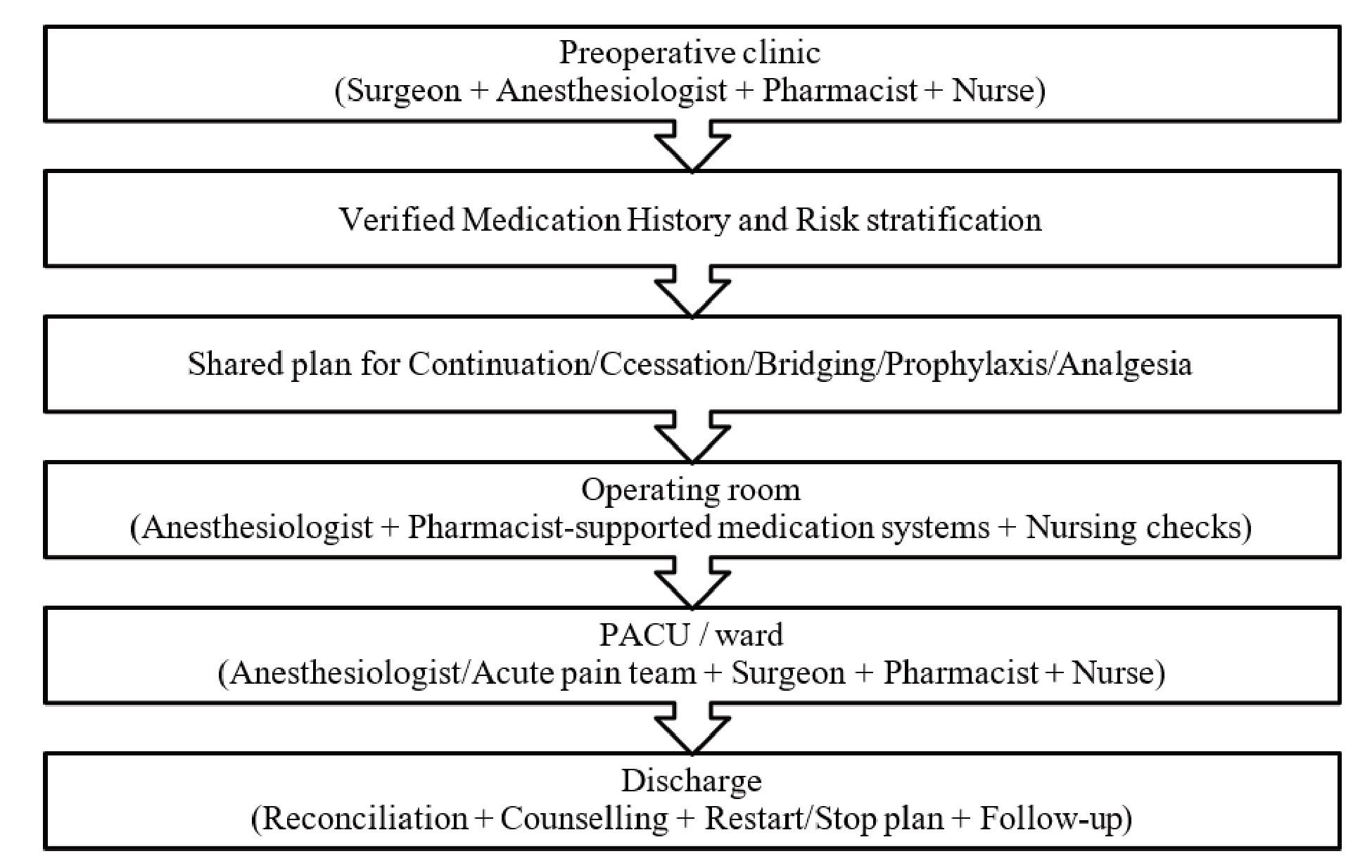
Figure 3
Multidisciplinary perioperative medication collaboration.
CONCLUSION
The evolution of surgical care into a longitudinal, medication-intensive therapeutic continuum has highlighted the critical need for systems-based safety strategies to mitigate preventable medication-related harm. This review demonstrates that clinical pharmacists have transitioned from traditional passive dispensing roles to active, indispensable collaborators across the entire perioperative pathway. By constructing accurate preoperative medication histories, supporting intraoperative standardization and antimicrobial stewardship, optimizing postoperative multimodal analgesia, and coordinating high-risk transitions of care, clinical pharmacists significantly enhance patient safety and therapy optimization.
The collaborative partnership between clinical pharmacists and anesthesiologists is particularly valuable, converting routine medication reviews into actionable clinical interventions that directly address medication-mediated anesthetic outcomes. However, widespread and consistent integration remains hindered by organizational variations, staffing constraints, and specialized training gaps. To fully realize the potential of this multidisciplinary model, future practice must focus on establishing formal collaborative protocols, expanding perioperative-focused pharmacy training, and leveraging integrated, technology-enabled systems such as clinical decision support and barcode administration. Ultimately, permanently embedding clinical pharmacists as core members of the surgical team represents a vital step toward safeguarding patients and achieving optimal outcomes across the perioperative journey.
Abbreviations
OR: Operating Room
PACU: Post-Anesthesia Care Unit
OTC: Over-the-Counter
ASHP: American Society of Health-System Pharmacists
EHR: Electronic Health Record
NSAIDs: Nonsteroidal Anti-Inflammatory Drugs
PONV: Postoperative Nausea and Vomiting
VTE: Venous Thromboembolism
LMWH: Low-Molecular-Weight Heparin
DOAC: Direct Oral Anticoagulant.
Conflict of Interest
The authors declare that there is no conflict of interest.
References
American Society of Health-System Pharmacists. (2013). ASHP guidelines on perioperative pharmacy services.American Journal of Health-System Pharmacy,70(14), e88-e97. https://doi.org/10.2146/sp130001
American Society of Health-System Pharmacists. (2019). ASHP guidelines on the perioperative role of the pharmacist.American Journal of Health-System Pharmacy,76(7), e81-e93.https://. https://doi.org/10.1093/ajhp/zxy005
Apfel, C. C., Korttila, K., Abdalla, M., Kerger, H., Turan, A., et al.. (2004). A factorial trial of six interventions for the prevention of postoperative nausea and vomiting.New England Journal of Medicine,350(24), 2441-2451.https://. New England Journal of Medicine. https://doi.org/10.1056/NEJMoa032196
Apfelbaum, J. L., Connis, R. T., Nickinovich, D. G., Pasternak, L. R., Arens, J. F., et al.. (2021). Practice advisory for preanesthesia evaluation: An updated report by the American Society of Anesthesiologists Task Force on Preanesthesia Evaluation.Anesthesiol ogy,134(3), 495-520.https://. Anesthesiol ogy. https://doi.org/10.1097/ALN.0000000000003682
Chapuis, C., Albaladejo, P., Billon, L., Catoire, C., Chanoine, S., Allenet, B., Bosson, J., Bedouch, P.. (2019). Integrating a pharmacist into an anaesthesiology and critical care department: Is this worthwhile?International Journal of Clinical Pharmacy,41(6), 1491-1498.https://. International Journal of Clinical Pharmacy(6). https://doi.org/10.1007/s11096-019-00913-6
Chen, K., Tai, Y., Chang, E., Kuo, L., Kuo, C.. (2021). Effectiveness of collaboration between oncology pharmacists and anaesthesiologists for inpatient cancer pain management: A pilot study in Taiwan.Journal of International Medical Research,49(11), 3000605211055415.https://. Journal of International Medical Research. https://doi.org/10.1177/03000605211055415
Medication errors (2nd ed.) American Pharmacists Association Cohen M R 2007.
Cullen B F Stock M Barash, Cullen, and Stoelting's clinical anesthesia (9th ed.) Wolters Kluwer Cullen B F Stock M C Ortega R Sharar S R Holt N F 2021 (Eds.
De Caterina, R., Ammentorp, B., Darius, H., Husted, S., Lip, G. Y. H., et al.. (2015). Management of bleeding complications in patients on oral anticoagulants.Thrombosis and Haemostasis,114(6), 1113-1126. Thrombosis and Haemostasis. https://doi.org/10.1160/TH15-05-0402
Dean, M.. (2004). Opioids in renal failure and dialysis patients.Journal of Pain and Symptom Management,28(5), 497-504.https://. Journal of Pain and Symptom Management. https://doi.org/10.1016/j.jpainsymman.2004.02.021
Eid, D., Long, A., Baxley, T.. (2020). The role of pharmacists in the perioperative setting: A review.Hospital Pharmacy,55(2), 87-94.https://. Hospital Pharmacy. https://doi.org/10.1177/0018578718824141
Evered, L., Silbert, B., Knopman, D. S., Scott, D. A., DeKosky, S. T., et al.. (2018). Recommendations for the nomenclature of cognitive change associated with anaesthesia and surgery-2018.British Journal of Anaesthesia,121(5), 1005-1012.https://. British Journal of Anaesthesia, 121(5), 1005-1012. https://doi.org/10.1016/j.bja.2018.07.003
Gan, T. J., Diemunsch, P., Habib, A. S., Kovac, A., Kranke, P., et al.. (2014). Consensus guidelines for the management of postoperative nausea and vomiting.Anesthesia & Analgesia,118(1), 85-113.https://. Anesthesia & Analgesia. https://doi.org/10.1213/ANE.0000000000000002
Gillman, P. K.. (2005). Monoamine oxidase inhibitors, opioid analgesics and serotonin toxicity.British Journal of Anaesthesia,95(4), 434-441.https://. British Journal of Anaesthesia. https://doi.org/10.1093/bja/aei210
Glavin, R. J.. (2010). Drug errors: Consequences, mechanisms, and avoidance.British Journal of Anaesthesia,105(1), 76-82.https://. British Journal of Anaesthesia. https://doi.org/10.1093/bja/aeq131
Hillier, K., Shrestha, S., Singh, M., Kosari, S.. (2020). The role of clinical pharmacists in the perioperative setting: A systematic review.Pharmacy,8(2), 62.https://. https://doi.org/10.3390/pharmacy8020062
Institute for Safe Medication Practices. (2021). ISMP Medication Safety Alert!. Acute Care, 26(4).
Merry, A. F., Webster, C. S., Hannam, J., Mitchell, S. J., Henderson, R., et al.. (2011). Multimodal system designed to reduce errors in recording and administration of drugs in anaesthesia: Prospective randomised clinical evaluation.BMJ,343, d5543.htt ps. BMJ. https://doi.org/10.1136/bmj.d5543https://doi.org/10.1136/bmj.d5543
Mertes, P. M., Malinovsky, J. M., Jouffroy, L., Aberer, W., Terreehorst, I., et al.. (2011). Reducing the risk of anaphylaxis during anesthesia: Guidelines for clinical practice.Journal of Investigational Allergology and Clinical Immunology,21(6), 442-453. Journal of Investigational Allergology and Clinical Immunology.
Nanji, K. C., Patel, A., Shaikh, S., Seger, D. L., Bates, D. W.. (2016). Perioperative medication errors in the era of electronic health records.Anesthesiology,124(1), 25-34.https://. Anesthesiology, 124(1), 25-34. https://doi.org/10.1097/ALN.0000000000000904
Naseralallah, L., Koraysh, S., Alasmar, M., Aboujabal, B.. (2025). Effect of pharmacist care on clinical outcomes and therapy optimization in perioperative settings: A systematic review.American Journal of Health-System Pharmacy,82(1), e44-e73.https://. American Journal of Health-System Pharmacy, 82(1). https://doi.org/10.1093/ajhp/zxae282
Rengel, K. F., Pandharipande, P. P.. (2021). Postoperative delirium and cognitive dysfunction.Current Opinion in Critical Care,27(6), 657-664.https://. Current Opinion in Critical Care. https://doi.org/10.1097/MCC.0000000000000889
Smith, M. Y., Olin, J. L., McElvain, M. A.. (2010). The pharmacist's role in the preoperative clinic.American Journal of Health-System Pharmacy,67(9), 733-738.http s. American Journal of Health-System Pharmacy. https://doi.org/10.2146/ajhp090159
Tariq, R. A., Vashisht, R., Scherbak, Y.. (2024). Medication dispensing errors and prevention. InStatPearls.
World Health Organization. (2009). WHO surgical safety checklist 2009: Safe surgery saves lives.