

Amoxicillin-clavulanic acid is a commonly prescribed β-lactam antibiotic combination known for its broad-spectrum antibacterial activity, but it can occasionally cause hypersensitivity reactions such as skin rashes. This case describes a 40-year-old female diagnosed with Abnormal Uterine Bleeding-Adenomyosis who developed erythematous skin rashes 2 days after starting amoxicillin-clavulanic acid as part of her postoperative treatment following a total abdominal hysterectomy. The antibiotic was immediately discontinued, and the patient was treated with Inj. Chlorpheniramine maleate, 4 mg stat, leading to complete resolution of symptoms. The adverse event was assessed using the Naranjo Adverse Drug Reaction Probability Scale, yielding a score of 7, indicating a probable reaction. This case highlights the need for close monitoring of antibiotic therapy, early identification of adverse reactions, and prompt discontinuation of the causative drug to ensure patient safety and prevent recurrence.
Abstract
Share on Mobile
Scan to access on mobile
Keywords
Abnormal Uterine Bleeding
Adenomyosis
Adverse Drug Reaction
Amoxicillin-clavulanic acid
Antibiotic Allergy
β-lactam antibiotics
Drug-Induced Hypersensitivity
Naranjo scale
Pharmacovigilance
Skin Rashes
INTRODUCTION
Amoxicillin-clavulanic acid is a widely used β-lactam antibiotic combination that exerts broad-spectrum antibacterial activity by combining the bactericidal effects of amoxicillin with the β-lactamase-inhibiting properties of clavulanic acid. Despite its efficacy, it is frequently associated with Adverse Drug Reactions (ADRs), with cutaneous manifestations being among the most common (Salas et al., 2017). These skin reactions can range from mild maculopapular rashes to severe hypersensitivity syndromes such as urticaria, angioedema, or, rarely, Stevens-Johnson syndrome and toxic epidermal necrolysis (Torres et al., 2010). The underlying pathophysiology is primarily immune-mediated, involving either IgE-dependent immediate hypersensitivity (Type I) or T-cell-mediated delayed hypersensitivity (Type IV) mechanisms (Romano et al., 2016). In these reactions, amoxicillin acts as a hapten, binding covalently to host proteins to form antigenic complexes that trigger immune responses, including mast cell activation, histamine release, and cytokine-mediated inflammation, leading to erythema, pruritus, and skin eruptions. Clavulanic acid may also contribute independently by modifying immune recognition of β-lactam structures (Demoly et al., 2014). Certain factors such as prior sensitization, viral infections, or genetic predisposition may increase susceptibility. Dechallenge refers to the observation of a reduction or complete disappearance of an ADR after discontinuing the medication. There are two types of dechallenge: positive dechallenge, where symptoms resolve upon stopping the drug, and negative dechallenge, where the symptoms continue independently of the drug withdrawal. The decision to withdraw the medication is made based on the ADR and its relationship to the underlying condition being treated (Banu et al., 2014).
CASE DESCRIPTION
A 40-year-old female presented to the Obstetrics and Gynecology Department on November 26, 2024, with complaints of heavy menstrual bleeding for the past 4 months, accompanied by passage of clots and pain. She reported changing 6-7 pads per day. The patient had no significant past medical or medication history. On examination, she was conscious, orientated, and febrile, with stable vital signs. Hematological investigations revealed decreased levels of RBC, Hb, PCV, MCV, MCH, and MCHC (Table 1). Based on clinical and diagnostic findings, she was diagnosed with Abnormal Uterine Bleeding-Adenomyosis.
Initially, she was treated with Inj. Tranexamic acid, 1 g stat and Tab. Tranexamic acid, 500 mg BD for 2 days. On the third day, she was prescribed preoperative medications, including Inj. Cefotaxime, 0.1 mL (test dose) followed by 1 g (full dose), Inj. Lidocaine, 0.1 ml, Inj. TT 0.5 ml, Inj. Pantoprazole, 40 mg, Inj. Ondansetron, 4 mg, and Dulcoflex suppository in preparation for a total abdominal hysterectomy.
On the fourth day, she underwent the surgical procedure successfully. Postoperatively, she received Inj. Cefotaxime, 1 g BD, Inj. Metronidazole, 500 mg (3 doses), Inj. Pantoprazole, 40 mg BD, and Inj. Acetaminophen, 1 g TDS. After 3 days, her intravenous medications were switched to oral forms-Tab. Amoxicillin + clavulanic acid, 625 mg BD, Tab. Pantoprazole, 40 mg OD, Tab. Acetaminophen, 650 mg BD, Tab. Calcium + vitamin D3 (0-1-0), and Tab. Folic acid + ferrous fumarate (1-0-0).
Following administration of the amoxicillin + clavulanic acid combination, the patient developed skin rashes, indicating a possible allergic reaction to the antibiotic (Figure 1).
Dechallenge
The patient was on Tab. Amoxicillin + clavulanic acid, 500/125 mg BD, which was identified as the cause of skin rashes. To address this, the medication was discontinued.
Table 1: Hematological data.
| CBC parameters | Patient value | Normal range |
|---|---|---|
| RBC | 3.9 | 4.5-5.5 million cells/μL |
| Hb | 10.9 | 13-17 g/dL |
| PCV | 37 | 40-50 % |
| MCV | 68 | 83-101 cu/microns |
| MCH | 24 | 27-32 pg |
| MCHC | 29 | 31-35 g/dL |
| WBC | 8,600 | 4,000-11,000 cells/cu mm |
| PLATELET | 2.6 | 1.45-4.5 lakhs |
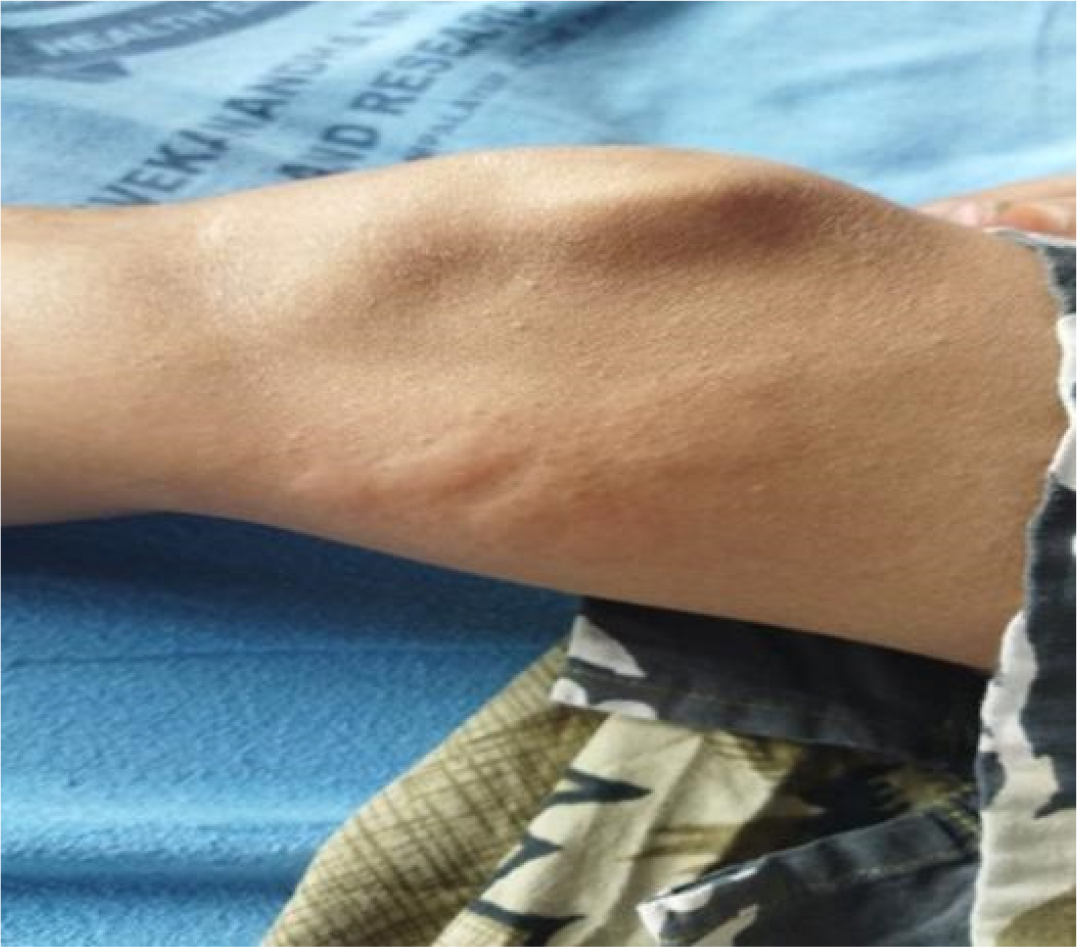
Figure 1:
Skin rashes.
DISCUSSION
Abnormal Uterine Bleeding (AUB) is one of the most common gynecologic complaints among women of reproductive and perimenopausal age, often significantly affecting quality of life and leading to complications such as anemia. According to the FIGO classification system, adenomyosis is categorized under the structural causes of AUB (AUB-A) and is characterized by the presence of endometrial tissue within the myometrium, resulting in an enlarged uterus and dysregulated uterine contractility. The patient in this case presented with chronic heavy menstrual bleeding for 4 months, accompanied by passage of clots and pain-symptoms highly suggestive of adenomyosis. The hematological findings of decreased RBC count, hemoglobin, and red cell indexes (MCV, MCH, MCHC) indicated iron deficiency anemia secondary to chronic blood loss, a common sequela of AUB. The initial management with tranexamic acid, an antifibrinolytic agent, aimed to reduce menstrual blood loss by stabilizing clot formation and preventing excessive fibrinolysis. Despite temporary medical management, the persistence of symptoms and the chronicity of the condition warranted a definitive surgical intervention, leading to the decision for total abdominal hysterectomy, which remains the standard curative procedure for adenomyosis in women who have completed their family. Preoperative prophylaxis with cefotaxime and TT injection was given to prevent postoperative infections, while lidocaine served as a local anesthetic, and pantoprazole and ondansetron were administered for gastric and antiemetic protection, respectively. Post-surgery, broad-spectrum antibiotics such as cefotaxime and metronidazole were used to minimize the risk of postoperative wound infection and anerobic bacterial growth. Analgesics like acetaminophen ensured adequate pain control, and after stabilization, the IV medications were appropriately transitioned to oral formulations. The inclusion of calcium with vitamin D3 and iron with folic acid supported recovery and correction of postoperative anemia. However, the development of skin rashes following administration of amoxicillin-clavulanic acid suggests a probable drug-induced hypersensitivity reaction, a known adverse effect of β-lactam antibiotics.
Diagnosis and Pathophysiological Consideration
The patient was clinically diagnosed with a drug-induced hypersensitivity reaction presenting as skin rashes following administration of amoxicillin-clavulanic acid (Figure 2). This reaction likely resulted from immune-mediated mechanisms, where the drug acts as a hapten, triggering either IgE-mediated immediate or T-cell-mediated delayed hypersensitivity. These immune responses lead to the release of inflammatory mediators such as histamine and cytokines, causing erythematous and pruritic skin eruptions. Amoxicillin-clavulanic acid-induced skin rashes occur due to immune-mediated hypersensitivity reactions. Amoxicillin acts as a hapten, binding to body proteins and forming antigenic complexes that trigger either IgE-mediated immediate reactions or T-cell-mediated delayed reactions. In immediate reactions, mast cell activation and histamine release cause urticaria and itching, while delayed responses involve cytokine release from activated T-lymphocytes, leading to maculopapular or morbilliform rashes. Clavulanic acid may also enhance immune recognition, contributing to the hypersensitivity response (Wang et al., 2022).
Management and Outcome
The patient was a 40-year-old female who developed skin rashes 2 days after initiating amoxicillin-clavulanic acid therapy. Upon diagnosis of drug-induced hypersensitivity reaction, the offending antibiotic was immediately discontinued. She was administered Inj. Chlorpheniramine maleate, 4 mg stat to relieve allergic symptoms (Table 2). Following treatment, the patient showed significant improvement, and the skin rashes resolved completely, indicating full recovery.
The causality assessment using the WHO-Naranjo adverse reaction probability scale yielded a score of 7 (Table 3), suggesting a probable adverse reaction in terms of severity.
Table 2: Treatment.
| Patient Age and Gender | Antibiotic | Period before onset of skin rashes | Diagnosis | Treatment | Outcome |
|---|---|---|---|---|---|
| F/40 | Tab. amoxicillin + clavulanic acid | 2 days | skin rashes | Stopped antibiotic, then Inj. Chlorphenamine malate 4 mg was given as stat | recovered |
Table 3: Naranjo scale (The adverse drug reaction probability scale) (National Institutes of Health, 2019).
| Naranjo Adverse Drug Reaction Probability Scale | ||||
|---|---|---|---|---|
| Question | Yes | No | Do not Know | Score in Our Case |
| 1. Are there previous conclusive reports on this reaction? | +1 | 0 | 0 | +1 |
| 2. Did the adverse event appear after the suspected drug was administered? | +2 | −1 | 0 | +2 |
| 3. Did the adverse reaction improve when the drug was discontinued or a specific antagonist was administered? | +1 | 0 | 0 | +1 |
| 4. Did the adverse event reappear when the drug was readministered? | +2 | −1 | 0 | 0 |
| 5. Are there alternative causes (other than the drug) that could on their own have caused the reaction? | −1 | +2 | 0 | +2 |
| 6. Did the reaction reappear when a placebo was given? | −1 | +1 | 0 | 0 |
| 7. Was the drug detected in blood (or other fluids) in concentrations known to be toxic? | +1 | 0 | 0 | 0 |
| 8. Was the reaction more severe when the dose was increased or less severe when the dose was decreased? | +1 | 0 | 0 | 0 |
| 9. Did the patient have a similar reaction to the same or similar drugs in any previous exposure? | +1 | 0 | 0 | 0 |
| 10. Was the adverse event confirmed by any objective evidence? | +1 | 0 | 0 | +1 |
| Total score: | 7 | |||
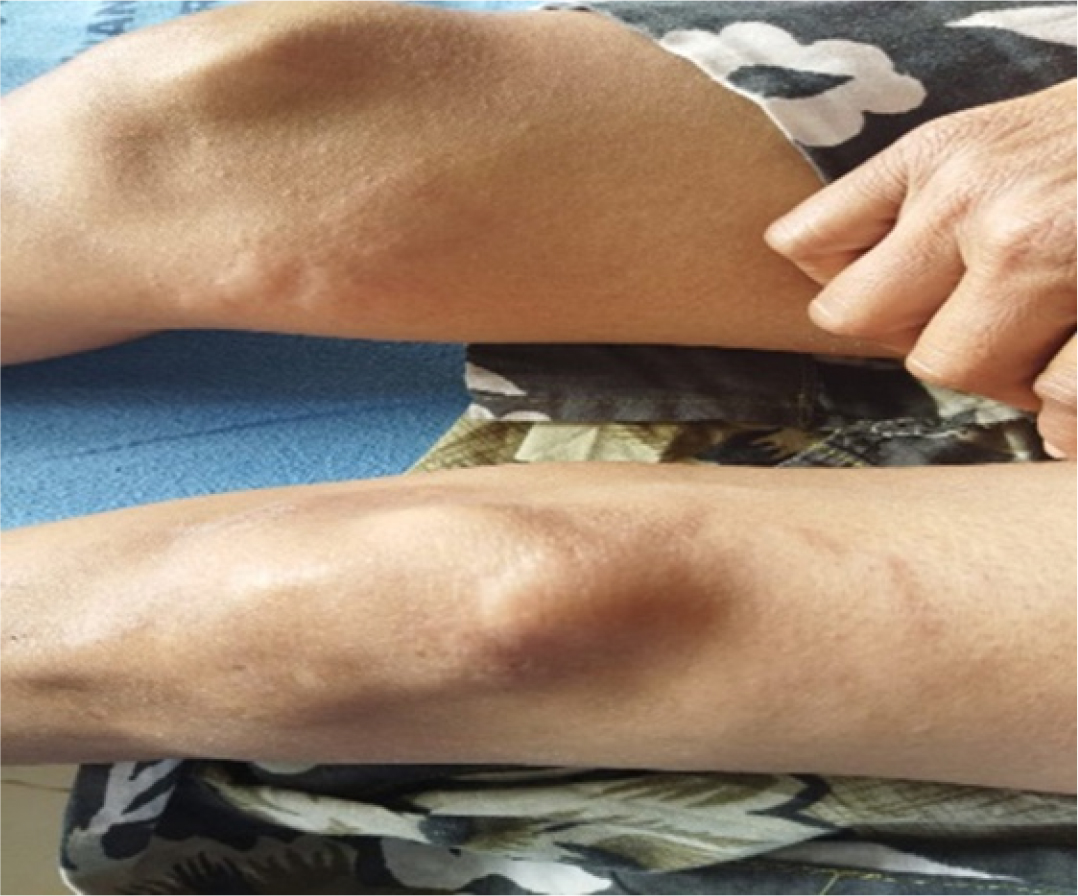
Figure 2:
Skin rashes.
CONCLUSION
This case highlights the importance of vigilant monitoring for antibiotic-induced adverse reactions, particularly with β-lactam antibiotics such as amoxicillin-clavulanic acid, which are widely used but can trigger immune-mediated hypersensitivity in susceptible individuals. Early identification and prompt management, including immediate drug withdrawal and symptomatic treatment, are crucial for favorable patient outcomes. Furthermore, careful documentation and avoidance of re-exposure to the offending agent are essential to prevent recurrence of such reactions in the future.
PATIENT CONSENT AND ETHICAL COMMITTEE APPROVAL
This study was conducted in accordance with the Declaration of Helsinki. Written informed consent was obtained from the participant involved in the study. The case report was reviewed and approved by the Institutional Review Board of the Institutional Ethics Committee of Vivekananda Medical Care Hospital, under approval no. EC/NEW/INST/2024/TN/0529.
Acknowledgments
We would like to thank our management for providing all the necessary facilities for the conduct of this study, Dr Redlin Jani RR, for her valuable support.
Author Contributions
Subhalakshmi M, Sabithra P, Sreelakshmi S, Sreeja DS identified adverse drug reactions and dechallenged the drug. Redlin Jani RR conceived the idea, while Subhalakshmi M, Sabithra P, Sreelakshmi S, Sreeja DS collected the data, participated in patient treatment and follow-up, and edited the manuscript. All authors have read and approved the final manuscript.
Conflict of Interest
The authors declare that there is no conflict of interest.
References
Banu, A. B., Alias Balamurugan, S. A., Thirumalaikolundusubramanian, P.. (2014). Detection of dechallenge in spontaneous reporting systems: A comparison of Bayes methods. Indian Journal of Pharmacology, 46(3), 277-280. https://doi.org/10.4103/0253-7613.132157
Demoly, P., Adkinson, N. F., Brockow, K., Castells, M., Chiriac, A. M., Greenberger, P. A., Thong, B. Y.. (2014). International consensus on drug allergy. Allergy, 69(4), 420-437. https://doi.org/10.1111/all.12350
(2019). LiverTox: Clinical and research information on drug-induced liver injury.
Romano, A., Atanaskovic-Markovic, M., Barbaud, A., Bircher, A. J., Bonadonna, P., Brockow, K.. (2016). Skin testing in delayed hypersensitivity reactions to beta-lactam antibiotics. Allergy, 71(10), 1433-1444.
Salas, M., Audicana, M. T., Berroa, F., Alonso-Díaz de Durana, M., Laguna, J. J., Mayorga, C.. (2017). Patients taking amoxicillin-clavulanic acid can become sensitized to either component. Journal of Allergy and Clinical Immunology: In Practice, 5(3), 694-702.
Torres, M. J., Ariza, A., Mayorga, C., Doña, I., Blanca-Lopez, N., Rondon, C., Blanca, M.. (2010). Clavulanic acid can be the component in amoxicillin-clavulanic acid responsible for immediate hypersensitivity reactions. Journal of Allergy and Clinical Immunology, 125(2), 502-505.e2. https://doi.org/10.1016/j.jaci.2009.11.032
Wang, X. M., Zhao, Y., Wang, F., Liu, S., Zhang, H.. (2022). Amoxicillin hypersensitivity: Patient outcomes in a seven-year follow-up. Annals of Allergy, Asthma and Immunology, 129(5), 568-575.