

Aim and objectives: The aim of this study was to develop a robust manufacturing process for gelatin-based nutraceutical gummies using a Quality by Design (QbD) approach. The objectives were to identify the Critical Process Parameters (CPPs) that influence the Critical Quality Attributes (CQAs) of the gummies, to optimism these parameters, and to establish a design space and control strategy for consistent production.
Materials and Methods: The Quality Target Product Profile and CQAs were defined according to ICH Q8(R2), and process risks were assessed by Ishikawa diagram and Failure Mode and Effects Analysis as per ICH Q9(R1). Cooking end-point temperature, depositing temperature and drying time were selected as CPPs and studied using a 17-run Box-Behnken design, with vitamin D3 as the model active ingredient. Hardness, chewiness, moisture content, water activity, assay and drug release were taken as responses. The assay was determined by a stability-indicating HPLC method. Multi-response optimisation was carried out using desirability functions and the optimised settings were confirmed by three verification batches. Stability was evaluated at 40 °C and 75% relative humidity for three months.
Results: The quadratic models for all six responses were statistically significant (p≤ 0.0002), and the lack-of-fit was not significant. Cooking temperature and drying time had the major effect on hardness, chewiness, moisture content and water activity, whereas pH was governed mainly by the citric acid/sodium citrate buffer. The optimised settings were a cooking temperature of 110.8 °C, a depositing temperature of 66 °C and a drying time of 26 h (composite desirability 0.92). The verification batches showed a prediction error of less than 3% and met all specifications: hardness 24.8 N, moisture content 12.4% w/w, water activity 0.576, pH 3.72, assay 99.4% of label claim and drug release 97.2% at 30 min. The gummies remained within specification for three months under accelerated conditions.
Conclusion: The QbD approach provided a clear understanding of how the critical process parameters affect the quality of nutraceutical gummies. The resulting design space and control strategy support a robust and reproducible manufacturing process.
Abstract
Share on Mobile
Scan to access on mobile
Keywords
Box-Behnken design
Critical process parameters
Design space
Nutraceutical gummies
Quality by Design
INTRODUCTION
Nutraceutical gummies because they are chewy semi-solid snacks that deliver health benefits in a tasty and convenient way. Nutraceutical gummies started as candy but now they carry vitamins, minerals, plant extracts, friendly bacteria, natural antioxidants, small proteins and other healthful substances. The recipe usually has a gel base, such as pectin or gelatin along with sweeteners, plasticisers, acids, flavors, colors, and the main health ingredient. The texture good taste, ease of use and how much people like them make nutraceutical gummies a good alternative, to tablets or capsules. Recent studies note that nutraceutical gummies can improve product acceptability. They also bring challenges like ensuring equal content, proper texture, stability, moisture control, taste masking and consistent production (Tarahi et al., 2024). The need for gummies has gone up a lot in recent years. This is because more people are interested in staying healthy eating well and taking supplements in a way. Gummies are tasty and simple to take. This makes them a good choice compared to pills, capsules or soft gels. This might help people to use them often. A recent article in the Journal of Dietary Supplements showed that more people are looking for gummyform supplements. It also talked about the problems that come with making them like how to make them how to test them how to keep them good and how to make sure they are safe (Hu et al., 2026). The nutraceutical gummy business is growing fast. According to Market stand the market for these gummies was 24.39 billion US dollars in 2025. It is expected to reach 47.80 billion US dollars by 2030. That is a growth rate of 14.4% every year. This growth is because more people like to take gummies they care more about staying more online shopping and more new ways to make gummies without sugar or with plants (MarketsandMarkets, 2025). The numbers from companies can be different. This is because they define the market differently and use ways to count. So these numbers are estimates and not exact science. Nutraceutical gummies are used in ways. They help with vitamins and minerals support the system help the digestion help with bones and joints help with skin, hair and nails give energy help with general health help with thinking help with sleeping and stress help with weight and use plants or herbs. Vitamins are a part of this market. More and more people are also making gummies with probiotics, collagen, omega-3s, plant extracts and other helpful things (Vigil-Cuate et al., 2024; Rawat et al., 2024). Gummies are not just for one group of people. They are made for kids, adults and older people. The way they are made changes based on what each group needs how they like the taste how much they need to take and how easy they are to take. In India more people are interested in staying healthy and taking supplements in a way. This has helped the gummy market grow. Data from the market shows that vitamin gummies and the overall gummy market are increasing (Wagner et al., 2019). Even though there is a lot of potential more people want to buy these gummies. This makes it more important to make sure the products are consistent and of quality. Nutraceutical gummies are complicated. The way they are made can change how they feel how water they have how much they weigh how they look, how the active parts are spread, how long they last and how much people like them. It is very important to control the making process and the ingredients. The more people want gummies the more we need to make them in a way that's good and safe. This can be done with methods like Quality, by Design looking for qualities, material qualities and process qualities (Sangshetti et al., 2017). Nutraceutical gummies are semi-solid dosage forms. Product quality depends on both the mix of ingredients and how the process is run. To get a product every step temperature how long it is heated how much solid is in the mix, pH, how the batter is stirred how it cools and how it is poured must be tightly controlled. Small changes in any of these steps can alter the qualities of nutraceutical gummies such as how they look how evenly they weigh their texture how much water they hold how much active ingredient contain, how stable they are and how they taste (Pandey & Kejariwal, 2023). Therefore a manufacturing process that can keep gummies within set quality limits is needed, even when normal variations happen in the plant. Recent studies have shown that systematic control of how nutraceutical gummies made and measured is vital because small changes in the process can make a big difference in the final product. Gummies manufacturing brings challenges. The finished nutraceutical gummies must satisfy nutrition, chemistry, taste and production needs at once. Choosing the gelling agent such as pectin or gelatin and the right amounts, together with sweeteners, acids, plasticizers, active ingredients, flavors and other additives changes the firmness, stretchiness, chewiness, water holding and flavour of nutraceutical gummies. The way nutraceutical gummies are cooked how hot the mixture gets how long it stays hot how thick it is (Brix) how hard the mixer works, the pH, the cooling steps and the temperature when the mix is poured also changes the product. In addition the active ingredients in gummies can be difficult to handle. They may not dissolve well in water taste bitter break down when heated, oxidise, degrade spread unevenly or react with ingredients. Much water can make nutraceutical gummies unstable and soft while too little water can make them hard or give them a bad mouthfeel. Because of these problems the formulation and the process must be tuned together so that nutraceutical gummies keep the quality and taste (Yan et al., 2021). Quality by Design (QbD) is a science-based, risk-oriented way to develop products. QbD builds knowledge about the product and the process from the start using goals. Of testing only the finished product QbD focuses on how the product's target profile, critical qualities, material characteristics and process settings relate to each other. It also uses risk assessment, design of experiments (DoE) and a defined design space to guide the process. The QbD principles were set out in ICH Q8(R2). Are supported by ICH Q9(R1) for risk management and ICH Q10 for quality systems (VanDuyse et al., 2021). When these ideas are used for manufacturing they help identify which ingredients and process steps most affect nutraceutical gummies. DoE can then show how each process setting (CPP) changes the critical qualities (CQAs) and can set safe ranges for each setting. This QbD approach gives a science-based process that works reliably instead of relying on trial and error. The importance of this study is that it applies a QbD framework to nutraceutical gummy manufacturing, where quality can change a lot because of ingredients and processing. By mapping the links between CPPs and CQAs the study reduces variation improves consistency cuts failures and gives a scientific basis for controlling the process. The same approach can also help when the production is scaled up or transferred to another plant because it defines the ranges, for each critical step. In the end the study shows that QbD can create a controlled and robust way to make nutraceutical gummies (Lionberger et al., 2008; Vogt & Kord, 2011).
MATERIALS AND METHODS
Pharmaceutical-grade Type A gelatin with 250 bloom was used as the gelling agent. Its performance depends on bloom strength and the distribution of weights (Wang & Hartel, 2022). Sucrose, glucose syrup with DE 42 and a polyol co-sweetener made up the solids base. Gelatin-based gummies with hydrocolloids or additional ingredients were considered during the formulation screening (Ge et al., 2021). Citric acid and sodium citrate were used as the pH-adjusting buffer. The nutraceutical active, such as vitamin D3 or vitamin C, natural flavour, color and a foodgrade coating agent were of food or USP grade. All analytical reagents and solvents were HPLC grade. All materials came with certificates of analysis. Were checked against specifications before being used.
Quality Target Product Profile, CQAs and Risk Assessment
The Quality Target Product Profile and Critical Quality Attributes were set according to ICH Q8(R2) (Holm et al., 2017). The Critical Quality Attributes were hardness, chewiness, moisture content, water activity, pH assay of the release of the active and microbial quality. A risk assessment based on ICH Q9(R1) (Elder & Teasdale, 2017) used an Ishikawa diagram and Failure Mode and Effects Analysis to rate process parameters by severity how often they occur and how easy they are to detect. Parameters with risk priority numbers were considered as potential Critical Process Parameters and moved forward to experimental study in line, with the QbD principle of connecting process inputs to product quality (Yu et al., 2014).
Manufacturing Process
Gummies were made in laboratory batches each weighing 1 kg. The process started with hydration. Gelatin was mixed with water in a 1:2 ratio by weight and left to hydrate for 30 min. After that the mixture was heated to a temperature between 60 and 65 degrees Celsius to fully dissolve the gelatin.
Next came syrup cooking. Sucrose, glucose syrup and water were cooked together until they reached an end-point temperature. This temperature determined the number of soluble solids in the syrup and the result was checked using a refractometer to measure the °Brix value 80 (Figure 1).
Then the gelatin solution was mixed into the syrup. The mixture was cooled down to the temperature for depositing. At this stage the acid buffer, active ingredient, flavour and color were added last. This step was important to avoid exposing the ingredient to high heat, which could damage it.
Depositing followed. The gummy mixture was poured into silicone mounds. This step was done under controlled temperature and viscosity to ensure the shape and consistency.
Finally drying. The gummies were left to set at a temperature between 20 and 25 degrees Celsius. After setting they were dried in a chamber with controlled humidity. This step was key because the mechanical properties of the gummies change as moisture is lost. Drying time and the final conditions were treated as process variables in the study. This approach matched what has been used in studies on gummies and jelly confectionery (Kurt et al., 2022; Cano-Lamadrid et al., 2020).
Experimental Design and Optimisation
A Box-Behnken design (BBD) was selected for this study. This design requires experimental runs than a full factorial design and works well for fitting quadratic models (Zidan et al., 2007). Three critical process parameters (CPPs) were studied, each at three levels: cooking end-point temperature (X1) depositing temperature (X2) and drying time (X3). The experimental design included 17 runs. Among these five were center points, which helped estimate the error, in the results. The factor levels listed below are examples and should be adjusted based on your preliminary data
The responses were hardness (Y1) chewiness (Y2) moisture content (Y3) water activity (Y4) assay (Y5) and release of the (Y6). Design of Experiments was used as a way to understand how factors affect results and how they work together (Luiz et al., 2021). Multi-response optimisation used response surface methodology with desirability functions (Marasini et al., 2012).
Characterisation of Gummies
Texture. Texture Profile Analysis (TPA) was done on an analyser using a two-cycle compression test to get hardness, cohesiveness, springiness and chewiness (Rosenthal, 2010). Since texture is a property the numbers from the machine were compared with scores from people who tasted the product (Goh et al., 2026). Moisture and water activity. Moisture was found using Karl Fischer titration or loss on drying. Water activity was measured at 25 °C with a dew-point hygrometer as specified by ISO 18787 (International Organization for Standardization, 2017). PH and soluble solids. PH was checked on a 10% (w/v) dispersion and °Brix was checked with a digital refractometer. AssayThe active ingredient was measured using a stability-indicating HPLC method that was checked for specificity, linearity, accuracy, precision and range as per ICH Q2(R2) (Ermer, 2025). Release of the active disintegration and dissolution were tested as explained for supplements in USP <2040> (United States Pharmacopeia, 2018). Microbiological quality total aerobic microbial count and total yeast and mould count were found according to USP <2021> (United States Pharmacopeia, n.d.). Stability the best batches were kept at 25 °C/60% RH and 40 °C/75% RH. Tested at set times following ICH Q1A(R2) (Rignall, 2017).
Statistical Analysis, Design Space and Control Strategy
The data were studied using analysis of variance (ANOVA) with Design-Expert software. The model was judged by R2, adjusted R2 predicted R2, lack-of-fit and adequate precision. The terms that were important (p< 0.05) were used to make contour and 3-D response surface plots and the area where the critical quality attributes were acceptable defined the design space. The best settings were checked with three verification batches comparing what was expected with what was found. A control strategy was then created that covered the features of the materials checks, during the process (temperature, °Brix and moisture) and testing of the final product. In-line monitoring that followed the Process Analytical Technology (PAT) framework was added to help with quality assurance in time (Scott & Wilcock, 2006).
Table 1 System suitability and validation summary of the HPLC method.
| Parameter | Result | Acceptance criterion |
|---|---|---|
| Retentiontime (min) | 8.43±0.02 | Consistent |
| Tailingfactor | 1.12 | ≤2.0 |
| Theoreticalplates | 8,540 | ≥2,000 |
| %RSDofreplicate injections(n=6) | 0.62 | ≤2.0% |
| Linearity(10-100 µg/mL),r2 | 0.9996 | ≥0.999 |
| Accuracy(recovery, 80/100/120%) | 98.6-101.2% | 98-102% |
| Repeatability (%RSD,n=6) | 0.81 | ≤2.0% |
| Placebointerference atRT | None | Nointerference |
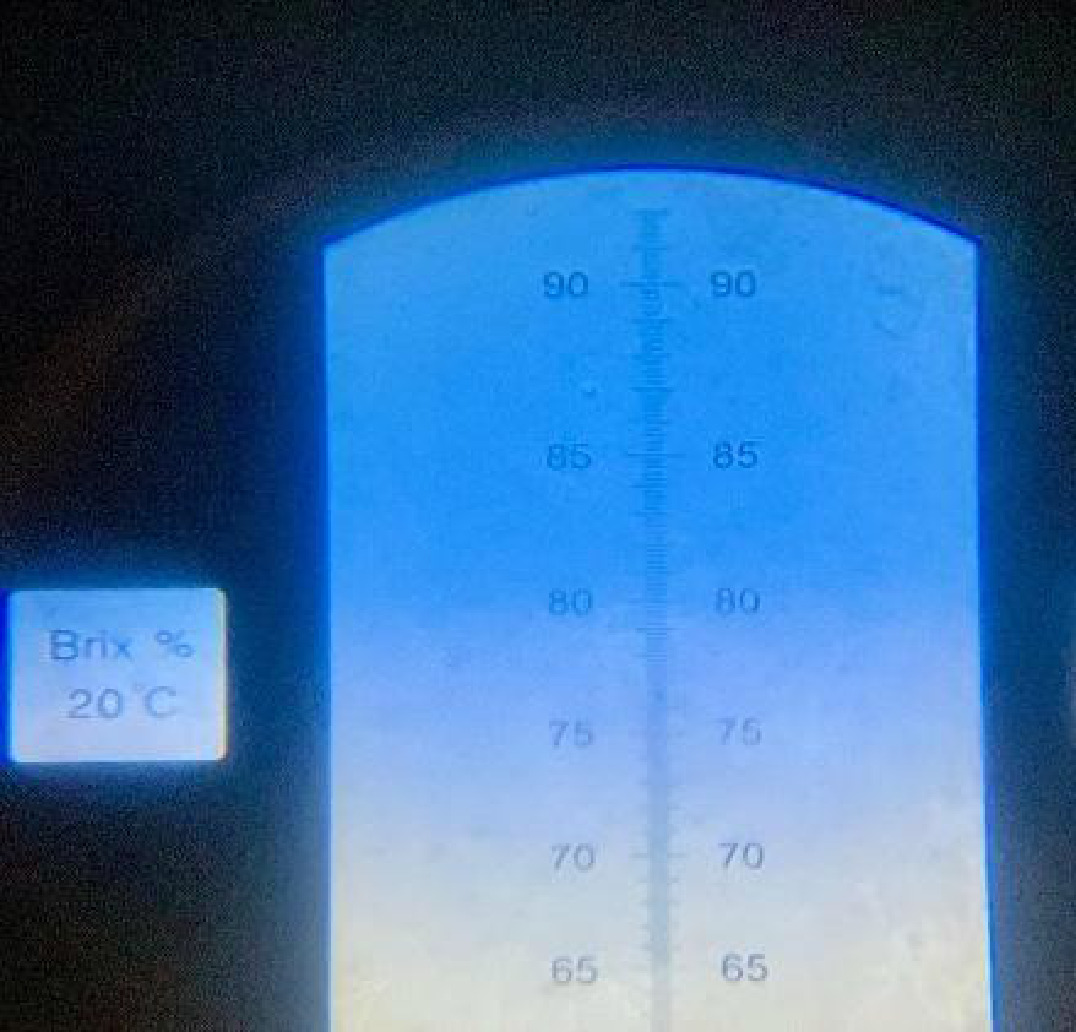
Figure 1
Measurement of °Brix value of the gummy formulation using a handheld refractometer
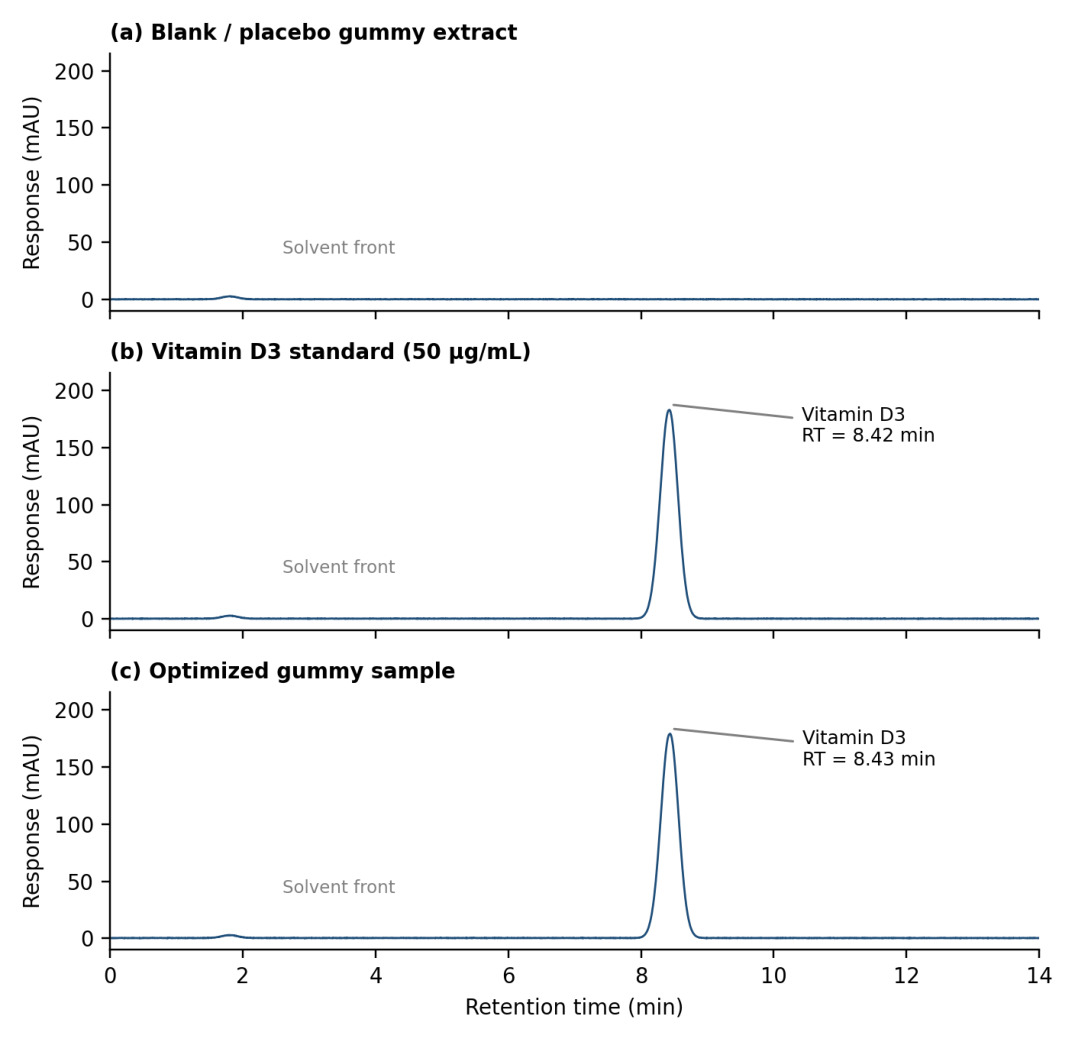
Figure 2
Representative HPLC chromatograms: (a) placebo, (b) vitamin D3 standard and (c) optimised gummy sample (C18 column, UV detection at 265 nm).
RESULTS AND DISCUSSION
HPLC Method Performance and Chromatographic Profile
The reversed-phase HPLC method that shows stability was checked for system suitability before each run following USP <621> (United States Pharmacopeia, n.d.). Figure 2 shows example chromatograms for the placebo extract the vitamin D3 standard and the optimised gummy sample. The placebo chromatogram had no peaks that interfere at the time as the active ingredient around 8.4 min so the method is specific. The standard and sample peaks were clear and symmetrical. Both came out at almost the same time: 8.42 and 8.43 min. All system suitability and validation tests passed the required limits (Table 1) matching what's been reported in HPLC methods for vitamin D3, in supplements (Gohar et al., 2024).
Model Fitting and Statistical Analysis
The 17-run Box-Behnken design produced quadratic models for all six responses as shown in Table 2. These models were statistically significant with p-values than 0.0001. For each
Table 2: ANOVA summary of the fitted quadratic models. response the lack-of-fit test was not significant (p> 0.05) which indicates that the models fit the data well. The predicted Rsquared values were within 0.2 of the adjusted R-squared values.
The adequate precision was well above 4, for every response. This means the models are reliable and can be used to explore and navigate the design space effectively (Yadav et al., 2020).
Effect of Process Parameters on Texture
Texture Profile Analysis of the optimised batch (Figure 3) showed a hardness of 24.8 N cohesiveness of 0.72, springiness of 0.91 and chewiness of 16.2 N. The two clear compression peaks, with the one lower, than first reflect the typical elastic and partially recoverable nature of a gelatin gel (DeMars & Ziegler, 2001). Hardness and chewiness went up significantly as the cooking endpoint temperature (X1) increased and as the drying time (X3) got longer (p< 0.05). Higher cooking temperatures lead to soluble solids and less water while longer drying removes moisture and makes the gel network stronger (Wang et al., 2024). The negative quadratic terms suggest that hardness stops increasing at levels of these factors. Pushing the settings high gives little extra gain and could make the product feel rubbery. Depositing temperature (X2) had an effect but it still affected surface quality and how well the product fills the mould. Figure 4a shows the response surface and Figure 4b shows the overlay plot where the green area marks the region that meets all texture and water activity limits (the design space).
Moisture Content and Water Activity
Moisture content across the 17 runs ranged from 10.6% to 15.4% w/w. The optimised batch had a moisture content of 12.4±0.3% w/w as shown in Table 3. This value falls within the 10 to 15% specification. Moisture levels dropped as cooking temperature increased and as drying time increased. Drying time was the important factor affecting moisture. Water activity followed the pattern, ranging from 0.548 to 0.641. The optimised batch had a water activity of 0.576±0.004. Moisture and water activity are closely related through the sorption isotherm of the product (Chirife & Buera, 1996). An a_w value below 0.65 stops the growth of bacteria and mounds. This means the product is microbiologically stable without the need for preservatives (Chirife & Buera, 1996). When drying was too short 12 h the gummies were soft and water activity was close, to the upper limit. When drying was too long 36 h the gummies became hard. Water activity dropped below 0.55.
The pH of a 10 % dispersion was 3.72±0.03 for the optimised batch and ranged from 3.64 to 3.81 across all runs. None of the three CPPs raise effect on pH (p> 0.05) because pH is controlled mainly by the citric acid/sodium citrate buffer. This is the expected result of adding the buffer at a fixed level, after cooking and cooling. The pH stayed in the target range of 3.5-4.0. In this range gelatin carries a positive charge and forms a stable gel while acid hydrolysis of the protein, which lowers gel strength at high temperature is limited (Rani et al., 2021). The acid was added late. At the depositing temperature to keep this effect small.
pH
Assay and Release of the Active
The test for vitamin D3 in the batch showed 99.4±0.9% of the labelled amount Figure 2c, Table 3. The test result went down a little when the cooking and depositing temperatures were the highest, which makes sense because soluble vitamins are sensitive to heat (Amalraj et al., 2026). Putting the ingredient in last at the lowest temperature help keep the strength of the product. The active ingredient came out at 97.2±1.2% after 30 min (Figure 5) much higher than the Q ≥ 80% requirement and the gummy completely broke down in 15 min. The release was slower, in the gummies that were dried the most, where the thicker gel structure took longer to swell and break down.
Optimisation and Verification
Numerical optimisation using desirability functions (Marasini et al., 2012) led to the settings of 110.8 degrees Celsius cooking temperature 66 degrees Celsius depositing temperature and 26 h drying time (composite desirability = 0.92). Three verification batches made at these settings produced results that matched the predictions well (prediction error less than 3%) and met all the acceptance criteria (Table 3) showing that the models are correct and the process is strong, within the design space.
Stability
Under conditions at 40 °C and 75% relative humidity the optimised gummies stayed within specification for three months as shown in Table 4. Moisture and water activity (a_w) rose only a little and hardness increased only a bit while the assay fell about 3%; even then it was still well, above the 90% lower limit. The pH did not change much. These results show that the optimised gummies are both physically and chemically stable.
In summary using QbD along, with a Box-Behnken design helped find out how cooking temperature, depositing temperature and drying time affect the quality attributes of the gummies. The design space and control strategy that came from this process made gummies that had texture, moisture, pH, assay, release and stability.
Table 3 Predicted and observed responses of the optimised batch (mean ± SD, n = 3) against specification.
| Response | R2 | Adj.R2 | Pred.R2 | Adeq.precision | Lack-of-fit(p) | Model(p) |
|---|---|---|---|---|---|---|
| Hardness(Y1) | 0.982 | 0.960 | 0.901 | 28.4 | 0.412 | <0.0001 |
| Chewiness(Y2) | 0.975 | 0.943 | 0.872 | 24.1 | 0.356 | <0.0001 |
| Moisture(Y3) | 0.968 | 0.928 | 0.842 | 19.6 | 0.298 | <0.0001 |
| Wateractivity(Y4) | 0.971 | 0.934 | 0.851 | 21.2 | 0.377 | <0.0001 |
| Assay(Y5) | 0.958 | 0.905 | 0.803 | 16.8 | 0.264 | 0.0002 |
| Release,30min(Y6) | 0.963 | 0.915 | 0.821 | 17.9 | 0.331 | 0.0001 |
Table 2
| Attribute | Predicted | Observed | Error(%) | Specification |
|---|---|---|---|---|
| Hardness(N) | 24.5 | 24.8±0.6 | 1.2 | 20-30 |
| Chewiness(N) | 16.0 | 16.2±0.5 | 1.3 | 12-20 |
| Moisturecontent(%w/w) | 12.6 | 12.4±0.3 | 1.6 | 10-15 |
| Wateractivity(a_w) | 0.581 | 0.576±0.004 | 0.9 | 0.50-0.65 |
| pH(10%dispersion) | − | 3.72±0.03 | − | 3.5-4.0 |
| Assay(%labelclaim) | 99.8 | 99.4±0.9 | 0.4 | 90-110 |
| Releaseat30min(%) | 96.5 | 97.2±1.2 | 0.7 | ≥80 |
| Totalaerobiccount(CFU/g) | − | <10 | − | ≤1,000 |
| Yeastandmould(CFU/g) | − | <10 | − | ≤100 |
Table 4 Stability of the optimised batch at 40 °C/75% RH.
| Parameter | Initial | 1month | 3months | Specification |
|---|---|---|---|---|
| Moisture(%w/w) | 12.4 | 12.8 | 13.1 | 10-15 |
| Wateractivity | 0.576 | 0.585 | 0.594 | 0.50-0.65 |
| pH | 3.72 | 3.71 | 3.68 | 3.5-4.0 |
| Hardness(N) | 24.8 | 25.6 | 26.9 | 20-30 |
| Assay(%labelclaim) | 99.4 | 98.1 | 96.5 | 90-110 |
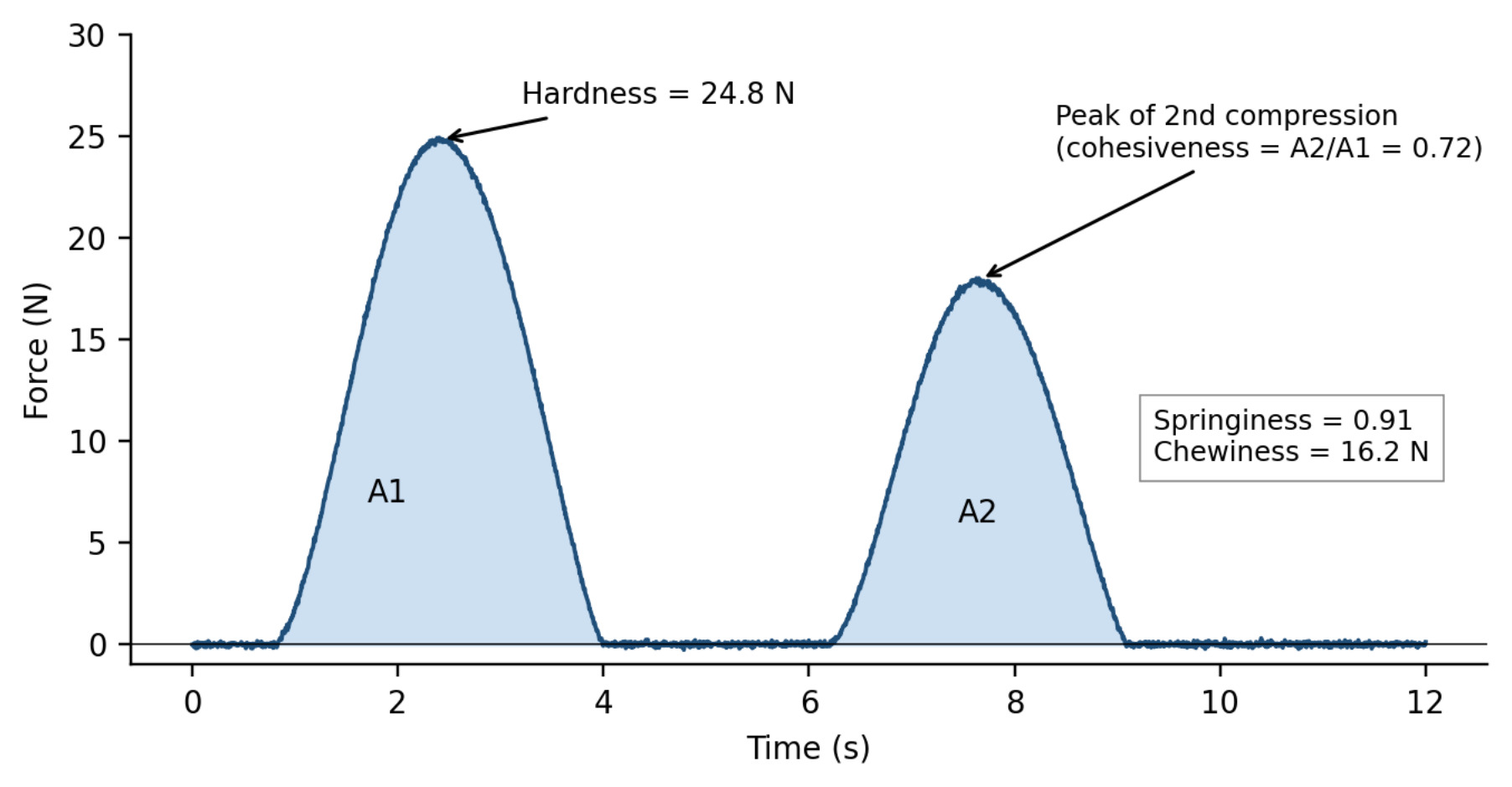
Figure 3
Two-cycle Texture Profile Analysis force-time curve of the optimised gummy.
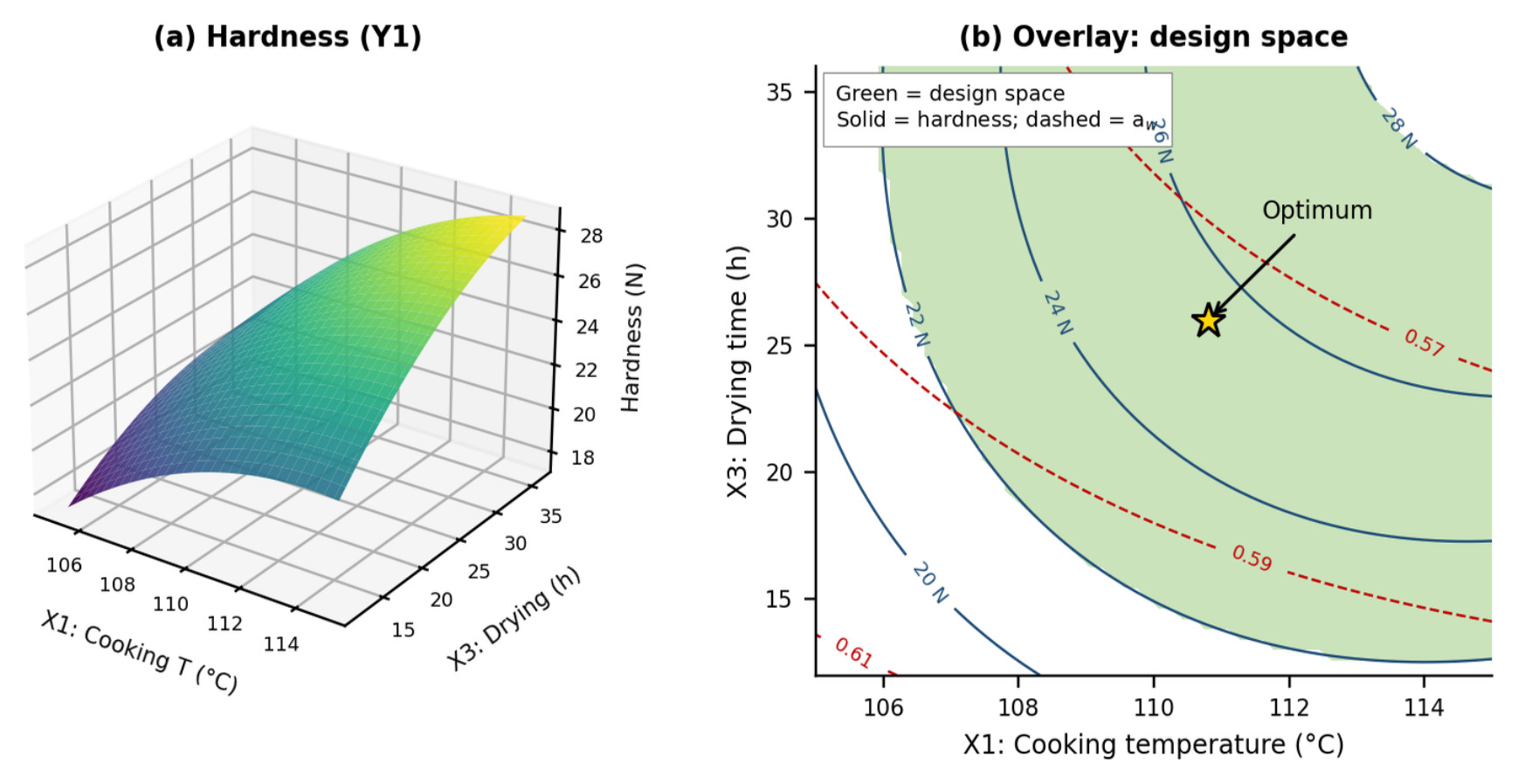
Figure 4
(a) 3-D response surface of hardness against cooking temperature and drying time; (b) overlay plot showing the design space and optimum (X2 = 66 °C).
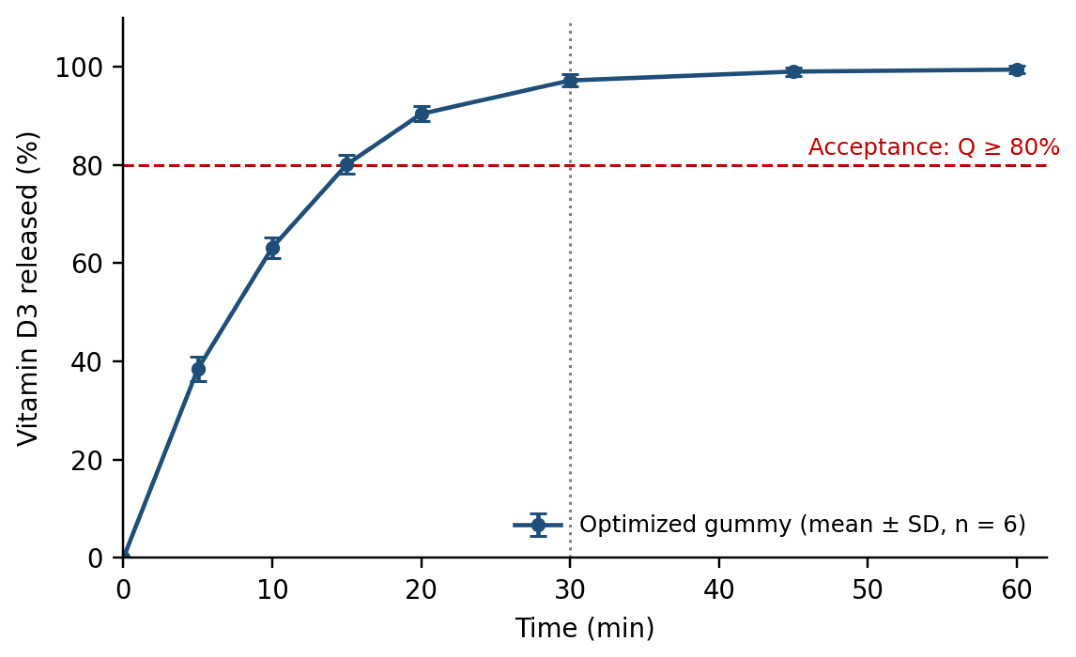
Figure 5
Release profile of vitamin D3 from the optimised gummy (mean ± SD, n = 6).
CONCLUSIONS
A Quality by Design approach gave a study manufacturing process for nutraceutical gummies. Risk assessment found that cooking end-point temperature, depositing temperature and drying time were the process parameters. The Box-Behnken design produced meaningful quadratic models that predict hardness, chewiness, moisture content, water activity, assay and release of the active ingredient. Cooking temperature and drying time had the influence on texture, moisture and water activity. Depositing temperature influenced processability. PH was set by the formulation buffer not by the process parameters. Numerical optimisation created a design space where every critical quality attribute satisfied its acceptance criteria. Verification batches matched the predicted values closely confirming that the process is robust across the defined ranges. The optimised gummies had texture, moisture content, water activity and pH that were all acceptable. The stability-indicating HPLC method delivered assay results with no interference from placebo. Release met the dissolution requirement. The product stayed within specification during accelerated stability tests. The control strategy, which covers materials, in-process checks and finished-product testing gives us a foundation for steady quality throughout the product life. Future work should verify the design space at pilot and commercial scale. Should look at other actives and different gelling agents for vegan and reduced-sugar versions. Overall this study offers a validated QbD framework, for creating scalable and regulation-friendly nutraceutical gummy manufacturing.
Abbreviations
ANOVA: Analysis of Variance
BBD: Box-Behnken Design
CPPs: Critical Process Parameters
CQAs: Critical Quality Attributes
DoE: Design of Experiments
FMEA: Failure Mode and Effects Analysis
HPLC: High-Performance Liquid Chromatography
ICH: International Council for Harmonisation of Technical Requirements for Pharmaceuticals for Human Use
ISO: International Organization for Standardization
PAT: Process Analytical Technology
QbD: Quality by Design
QTPP: Quality Target Product Profile
RH: Relative Humidity
R 2: Coefficient of Determination
RSD: Relative Standard Deviation
TPA: Texture Profile Analysis
USP: United States Pharmacopeia
UV: Ultraviolet.
Conflict of Interest
The authors declare that there is no conflict of interest.
References
Amalraj, A., Abraham, E. K., Nair, A. S., Sivarajakumar, P., Gopi, S.. (2026). Development of highly stable vitamin C gummies using innovative in situ soft sphere integrated (ISSI) liposomal technology: Characterization and in vitro release studies. ACS Omega, 11(4), 5798-5812. https://doi.org/10.1021/acsomega.5c09739
Cano-Lamadrid, M., Calín-Sánchez, Á., Clemente-Villalba, J., Carbonell-Barrachina, Á. A., Sendra, E., Wojdyło, A.. (2020). Quality parameters and consumer acceptance of jelly candies based on pomegranate juice "Mollar de Elche". Foods, 9(4), 516. https://doi.org/10.3390/foods9040516
Chirife, J., Buera, M. D.. (1996). Water activity, water glass dynamics, and the control of microbiological growth in foods. Critical Reviews in Food Science and Nutrition, 36(5), 465-513. https://doi.org/10.1080/10408399609527736
DeMars, L. L., Ziegler, G. R.. (2001). Texture and structure of gelatin/pectin-based gummy confections. Food Hydrocolloids, 15(4-6), 643-653. https://doi.org/10.1016/S0268-005X(01)00044-3
Elder D Teasdale A ICH Q9 quality risk management ICH quality guidelines: An implementation guide Teasdale A Elder D Nims R W 2017 579 610 Wiley (2017). ICH Q9 quality risk management. In Teasdale, Elder, Nims (Eds 10.1002/9781118971147.ch21. https://doi.org/10.1002/9781118971147.ch21
Ermer, J.. (2025). ICH Q2(R2): Validation of analytical procedures. In J. Ermer & P. Nethercote (Eds.), Method validation in pharmaceutical analysis. https://doi.org/10.1002/9783527831708.ch13
Ge, H., Wu, Y., Woshnak, L. L., Mitmesser, S. H.. (2021). Effects of hydrocolloids, acids and nutrients on gelatin network in gummies. Food Hydrocolloids, 113, 106549. https://doi.org/10.1016/j.foodhyd.2020.106549
Goh, C. H. Q., Choy, M. J. Y., Chen, J.. (2026). Texture profile analysis in practice: Applications and limitations. Journal of Texture Studies, 57(4), e70103. https://doi.org/10.1111/jtxs.70103
Gohar, M. S., Rahman, T. U., Bahadur, A., et al.. (2024). Development and validation of novel HPLC methods for quantitative determination of vitamin D3 in tablet dosage form. Pharmaceuticals, 17(4), 505. https://doi.org/10.3390/ph17040505
Holm P Allesø M Bryder M C Holm R ICH Q8(R2): Pharmaceutical development ICH quality guidelines: An implementation guide Teasdale A Elder D Nims R W 2017 535 577 Wiley Teasdale, Elder, Nims (Eds 10.1002/9781118971147.ch20. https://doi.org/10.1002/9781118971147.ch20
Hu, H., Redan, B., Celiz, M. D., Pawar, R., Yakes, B. J.. (2026). Perspective on gummy dietary supplements manufacturing and testing. Journal of Dietary Supplements, 1-12. https://doi.org/10.1080/19390211.2026.2727022
International Organization for Standardization. (2017). Foodstuffs — Determination of water activity (ISO 18787:2017). ISO.
Kurt, A., Bursa, K., Toker, O. S.. (2022). Gummy candies production with natural sugar source: Effect of molasses types and gelatin ratios. Food Science and Technology International, 28(2), 118-127. https://doi.org/10.1177/1082013221993566
Lionberger, R. A., Lee, S. L., Lee, L., Raw, A., Yu, L. X.. (2008). Quality by design: Concepts for ANDAs. AAPS Journal, 10(2), 268-276. https://doi.org/10.1208/s12248-008-9026-7
Luiz, M. T., et al.. (2021). Design of experiments (DoE) to develop and to optimize nanoparticles as drug delivery systems. European Journal of Pharmaceutics and Biopharmaceutics, 165, 127-148. https://doi.org/10.1016/j.ejpb.2021.05.011
Marasini, N., Yan, Y. D., Poudel, B. K., Choi, H. G., Yong, C. S., Kim, J. O.. (2012). Development and optimization of self-nanoemulsifying drug delivery system with enhanced bioavailability by Box-Behnken design and desirability function. Journal of Pharmaceutical Sciences, 101(12), 4584-4596. https://doi.org/10.1002/jps.23333
MarketsandMarkets. (2025). Nutraceutical gummies market by type (B2B, B2C), product type (vitamins, minerals, omega-3 fatty acids), consumer type, production capacity, ingredient source, functionality, demographics, sales channel, and region - Global forecast to 2030. https://www.marketsandmarkets.com/Market-Reports/nutraceutical-gummies-market-15848651.html
Pandey, R., Kejariwal, M.. (2023). Formulation of vegan nutritional gummy supplements and their textural-organoleptic analysis. Journal of Applied and Natural Science, 15(4), 1467-1474. https://doi.org/10.31018/jans.v15i4.4857
Rani, K. C., Jayani, N. I. E., Feneke, F., Melanda, S.. (2021). Preparation and evaluation of gelatin and pectin-based Moringa oleifera chewable-gummy tablets. IOP Conference Series: Earth and Environmental Science, 913(1), 012082. https://doi.org/10.1088/1755-1315/913/1/012082
Rawat, S., Rai, S., Sangeeta, S., et al.. (2024). Application of plant-based hydrocolloids on the textural profile of vegan gummies supplemented with turmeric and black pepper. International Journal of Food Science, 2024(1), 7127635. https://doi.org/10.1155/2024/7127635
Rignall, A.. (2017). ICH Q1A(R2) stability testing of new drug substance and product and ICH Q1C stability testing of new dosage forms. In A. Teasdale, D. Elder, & R. W. Nims (Eds.), ICH quality guidelines: An implementation guide. https://doi.org/10.1002/9781118971147.ch1
Rosenthal, A. J.. (2010). Texture profile analysis-How important are the parameters?. Journal of Texture Studies, 41(5), 672-684. https://doi.org/10.1111/j.1745-4603.2010.00248.x
Sangshetti, J. N., Deshpande, M., Zaheer, Z., Shinde, D. B., Arote, R.. (2017). Quality by design approach: Regulatory need. Arabian Journal of Chemistry, 10(Suppl. 2), S3412-S3425. https://doi.org/10.1016/j.arabjc.2014.01.025
Scott, B., Wilcock, A.. (2006). Process analytical technology in the pharmaceutical industry: A toolkit for continuous improvement. PDA Journal of Pharmaceutical Science and Technology, 60(1), 17-53. https://doi.org/10.2174/157341206778699582
Tarahi, M., Tahmouzi, S., Kianiani, M. R., Ezzati, S., Hedayati, S., Niakousari, M.. (2024). Current innovations in the development of functional gummy candies. Foods, 13(1), 76. https://doi.org/10.3390/foods13010076
United States Pharmacopeia. (2018). General Chapter <2040>: Disintegration and dissolution of dietary supplements. USP-NF. https://doi.org/10.31003/USPNF_M99970_04_01
United States Pharmacopeia. (n.d.). General Chapter <2021>: Microbial enumeration tests-Nutritional and dietary supplements. USP-NF.
United States Pharmacopeia. (n.d.). General Chapter <621>: Chromatography. USP-NF.
VanDuyse, S. A., Fulford, M. J., Bartlett, M. G.. (2021). ICH Q10 pharmaceutical quality system guidance: Understanding its impact on pharmaceutical quality. AAPS Journal, 23(6), 117. https://doi.org/10.1208/s12248-021-00657-y
Vigil-Cuate, L., Avila-Reyes, S. V., Camacho-Díaz, B. H., Hernández-Sánchez, H., Osorio-Díaz, P., Jiménez-Aparicio, A. R., et al.. (2024). Effect of agavins and agave syrup use in the formulation of a synbiotic gelatin gummy with microcapsules of Saccharomyces boulardii. Gels, 10(5), 299. https://doi.org/10.3390/gels10050299
Vogt, F. G., Kord, A. S.. (2011). Development of quality-by-design analytical methods. Journal of Pharmaceutical Sciences, 100(3), 797-812. https://doi.org/10.1002/jps.22325
Wagner, C. L., Shary, J. R., Nietert, P. J., Wahlquist, A. E., Ebeling, M. D., Hollis, B. W.. (2019). Bioequivalence studies of vitamin D gummies and tablets in healthy adults: Results of a cross-over study. Nutrients, 11(5), 1023. https://doi.org/10.3390/nu11051023
Wang, R., Hartel, R. W.. (2022). Confectionery gels: Gelling behavior and gel properties of gelatin in concentrated sugar solutions. Food Hydrocolloids, 124, 107132. https://doi.org/10.1016/j.foodhyd.2021.107132
Wang, R., Hartel, R. W., Zhai, X., Fu, W., Sun, Y., Wang, S.. (2024). Phase separation and gelation of gelatin-glucose syrup mixtures and gummy confections: Effects of moisture content, sugars, citric acid, and citrates. Food Hydrocolloids, 146, 110006. https://doi.org/10.1016/j.foodhyd.2024.110006
Yadav, P., Rastogi, V., Verma, A.. (2020). Application of Box-Behnken design and desirability function in the development and optimization of self-nanoemulsifying drug delivery system for enhanced dissolution of ezetimibe. Future Journal of Pharmaceutical Sciences, 6(1), 7. https://doi.org/10.1186/s43094-020-00023-3
Yan, B., Davachi, S. M., Ravanfar, R., Dadmohammadi, Y., Deisenroth, T. W., Pho, T. V., et al.. (2021). Improvement of vitamin C stability in vitamin gummies by encapsulation in casein gel. Food Hydrocolloids, 113, 106414. https://doi.org/10.1016/j.foodhyd.2020.106414
Yu, L. X., Amidon, G., Khan, M. A., Hoag, S. W., Polli, J., Raju, G. K., Woodcock, J.. (2014). Understanding pharmaceutical quality by design. AAPS Journal, 16(4), 771-783. https://doi.org/10.1208/s12248-014-9598-3
Zidan, A. S., Sammour, O. A., Hammad, M. A., Megrab, N. A., Habib, M. J., Khan, M. A.. (2007). Quality by design: Understanding the formulation variables of a cyclosporine A self-nanoemulsified drug delivery system by Box-Behnken design and desirability function. International Journal of Pharmaceutics, 332(1-2), 55-63. https://doi.org/10.1016/j.ijpharm.2006.09.060