

Background: Chronic Kidney Disease (CKD) significantly alters drug pharmacokinetics, increasing the risk of drug accumulation, toxicity, and adverse drug reactions. The coexistence of multiple comorbidities frequently leads to polypharmacy, necessitating careful dose individualization.
Objectives: To evaluate prescribing patterns, drug utilization, and renal dose adjustment practices in patients with CKD in a tertiary care setting.
Materials and Methods: A prospective observational study was conducted among 166 CKD patients over six months in a tertiary care hospital. Prescriptions were analyzed using World Health Organization (WHO) prescribing indicators and Anatomical Therapeutic Chemical (ATC) classification. Renal dose appropriateness was assessed using creatinine clearance-based recommendations from standard clinical references. Statistical analysis was performed using the Chi-square test to evaluate associations between CKD stage and dose adjustment requirements. Cockcroft-Gault creatinine clearance was preferentially used for drug dosing decisions because most renal dosing recommendations in standard drug references are based on this equation.
Results: Of the 166 patients, 65.66% were male, with a mean age of 54.4±16.3 years. The majority were in Stage 5 CKD (75.9%), with hypertension (79.52%) and diabetes mellitus (51.81%) as predominant comorbidities. A total of 1,950 drugs were prescribed, with an average of 12 drugs per prescription, indicating substantial polypharmacy. Generic prescribing accounted for 45.6%, injectable use for 30.8%, and 86.0% of drugs were from the Essential Medicines List. Renal dose adjustment was required in 15.5% of drugs prescribed. No statistically significant association was observed between CKD stage and dose adjustment requirement (p=0.55).
Conclusion: The study demonstrates a high burden of polypharmacy and identifies gaps in optimal prescribing practices, particularly in renal dose individualization. These findings underscore the need for structured prescription audits and proactive clinical pharmacist-led interventions to improve medication safety and therapeutic outcomes in CKD patients. Implementation of renal dosing protocols and clinical decision-support systems may further enhance medication safety and rational prescribing in CKD management.
Abstract
Share on Mobile
Scan to access on mobile
Keywords
Chronic kidney disease
Drug Utilisation
Polypharmacy
Prescribing Pattern
Renal dose adjustment
INTRODUCTION
Chronic Kidney Disease (CKD) is a progressive and irreversible condition characterized by declining renal function, leading to clinically significant alterations in drug pharmacokinetics and pharmacodynamics. As renal clearance is a major pathway for drug elimination, impairment in kidney function increases the risk of drug accumulation, toxicity, and adverse drug reactions. A substantial proportion of adverse drug events have been reported to be directly or indirectly associated with renal dysfunction (Andrews et al., 2022).
CKD is defined by a persistent reduction in glomerular filtration rate below 60 mL/min/1.73 m² for at least three months or the presence of structural or functional kidney abnormalities (KDIGO CKD Work Group, 2013). It is classified into five stages based on estimated glomerular filtration rate, with Stage 5 representing end-stage renal disease requiring renal replacement therapy (Vadakedath and Kandi, 2017). Globally, CKD affects approximately 9.1% of the population and is associated with substantial morbidity, mortality, and healthcare burden (Bikbov et al., 2020). The clinical complexity of CKD is further amplified by the high prevalence of comorbid conditions such as hypertension, diabetes mellitus, cardiovascular disease, anaemia, and infections (Ahlawat and D'Cruz, 2016). Management of these coexisting conditions often necessitates multiple medications, resulting in polypharmacy, which significantly increases the risk of drug-drug interactions, medication errors, and adverse drug reactions.
Pharmacotherapy in CKD is inherently challenging due to altered drug clearance, changes in protein binding, and the impact of dialysis on drug disposition. Drugs with low molecular weight, reduced protein binding, and a small volume of distribution are more likely to be removed during dialysis, potentially resulting in subtherapeutic drug levels or therapeutic failure (Matzke et al., 2011). These pharmacokinetic complexities necessitate individualized therapy and continuous monitoring to ensure safety and efficacy (Schmidt et al., 2019).
Despite the availability of established dosing guidelines, inappropriate drug prescribing and inadequate renal dose adjustment remain prevalent in clinical practice, particularly in resource-constrained settings and among patients undergoing maintenance haemodialysis. Real-world evidence evaluating adherence to renal dosing recommendations in such populations remains limited, especially within the Indian tertiary care context.
Drug utilization studies offer a structured approach to assess prescribing patterns and promote rational drug use (Hassan et al., 2009). However, data focusing specifically on renal dose adjustment practices in CKD patients remain scarce. Therefore, the present study was undertaken to evaluate prescribing patterns, drug utilization, and renal dose adjustment practices in patients with CKD in a tertiary care hospital setting.
Study Design and Setting
A prospective observational study was conducted over a period of six months in a tertiary care teaching hospital. Patients were enrolled consecutively during the study period to minimize selection bias and to obtain a representative sample of patients with Chronic Kidney Disease (CKD).
Study Population
A total of 166 patients diagnosed with CKD were included in the study. Of these, 43% were inpatients and 57% were outpatients. The majority of patients (90%) were receiving maintenance haemodialysis, whereas the remaining patients were managed conservatively.
Inclusion Criteria
The study included:
• Adults aged 18 years and above diagnosed with CKD based on estimated Glomerular Filtration Rate (eGFR) criteria.
• Patients receiving maintenance haemodialysis. • Patients receiving conservative management.
• Both inpatient and outpatient cases.
Exclusion Criteria
The following patients were excluded from the study:
• Acute kidney injury.
• Age below 18 years.
• Pregnant women.
• Drug-induced kidney injury.
• Post-renal transplantation patients.
Data Collection
Data were collected prospectively using a structured data collection form. Information obtained included demographic characteristics such as age, sex, and body weight; clinical variables including CKD stage, comorbidities, and dialysis status; laboratory parameters such as serum creatinine and eGFR; and complete prescription details.
Assessment of Prescribing Patterns
Prescribing patterns were evaluated using the World Health Organization (WHO) core prescribing indicators, which included:
• Average number of drugs prescribed per encounter.
• Percentage of drugs prescribed by generic name.
• Percentage of encounters involving injectable medications.
• Percentage of drugs prescribed from the Essential Medicines List (EML).
• Drug utilization was further categorized according to the Anatomical Therapeutic Chemical (ATC) classification system to identify patterns of medication use among patients with CKD.
Assessment of Renal Dose Adjustment
Renal function was assessed using Creatinine Clearance (CrCl) calculated by the Cockcroft-Gault equation. Estimated glomerular filtration rate was determined using the CKD-EPI equation.
The appropriateness of prescribed drug doses was evaluated by comparing prescribed regimens with standard renal dosing recommendations obtained from established references, including:
• CKD: Chronic Kidney Disease; eGFR: Estimated Glomerular Filtration Rate; CrCl: Creatinine Clearance; WHO: World Health Organization; ATC: Anatomical Therapeutic Chemical; KDIGO: Kidney Disease: Improving Global Outcomes (; CKD-EPI: Chronic Kidney Disease Epidemiology Collaboration; SD: Standard Deviation; UTI: Urinary Tract Infection; CCB: Calcium Channel Blocker; ASA: Acetylsalicylic Acid; OD: Once Daily; BD: Twice Daily; TID: Three Times Daily; IV: Intravenous; HD: Haemodialysis. KDIGO) guidelines.
• Micromedex®.
• Lexicomp®.
Dose adjustment decisions were based primarily on Cockcroft-Gault creatinine clearance values because most renal dosing recommendations in standard clinical references are derived from this equation. A prescription was considered inappropriate when the prescribed dose differed from the recommended dose for the patient's level of renal function (Table 1).
Assessment of Dialyzable Drugs
Drugs prescribed during the study were evaluated for dialyzability based on standard clinical references.
Medications were categorized according to their removal during conventional haemodialysis and peritoneal dialysis. This assessment was performed to identify drugs that may require supplemental dosing or administration timing adjustments in dialysis patients.
Statistical Analysis
Data were analysed using Statistical Package for the Social Sciences (SPSS) version 25.0.
Continuous variables were expressed as Mean±Standard Deviation (SD), whereas categorical variables were summarized using frequencies and percentages (Table 2).
Associations between categorical variables were assessed using the Chi-square test. Statistical significance was established at a p-value of less than 0.05.
Ethical Considerations
The study protocol was reviewed by the Institutional Ethics Committee and conducted in accordance with institutional policies governing observational studies. Patient confidentiality and anonymity were maintained throughout the study. The study adhered to the ethical principles outlined in the Declaration of Helsinki (Table 3). throughout the study. The study
RESULTS
Baseline Characteristics
A total of 166 patients with chronic kidney disease were included in the study. The mean age of the study population was 54.4±16.3 years, and males constituted 65.66% (n=109) of the participants. The mean body weight was 63.7±9.0 kg, while the mean serum creatinine level was 6.57±2.91 mg/dL (Table 4). Most patients presented with advanced disease, with 75.9% (n=126) classified as Stage 5 CKD and 18.7% (n=31) classified as Stage 4 CKD. Only a small proportion of patients belonged to Stage 2 (0.6%) and Stage 3 (4.8%) CKD categories (Figure 1).
Hypertension was the most prevalent comorbidity, affecting 79.52% (n=132) of patients, followed by diabetes mellitus in 51.81% (n=86) and cardiovascular disease in 46.39% (n=77). Other comorbid conditions included anaemia (28.92%), thyroid disorders (24.10%), respiratory disorders (22.89%), and urinary tract infections (18.07%) (Figure 2).
Therapeutic Class Distribution
Therapeutic class-wise analysis revealed that antihypertensive medications were the most frequently prescribed drug category, accounting for 21.6% of all medications. Vitamins represented 18.1% of prescriptions, followed by antimicrobials (13.85%) and mineral supplements (13.03%).
Antidiabetic medications accounted for 7.79% of prescriptions, haemopoietic agents for 7.44%, and hypolipidemic drugs for 5.79%. Miscellaneous medications, including antacids, analgesics, probiotics, and antiepileptic agents, contributed 11.18% of total prescriptions (Supplementary Table 1.
Renal Dose Adjustment
was required in 15.5% of prescribed medications, highlighting the importance of individualized pharmacotherapy in patients with impaired renal function.
Among the medications requiring dose modification, piperacillin-tazobactam required adjustment in 20% of cases, followed by metoclopramide (25%), ranitidine (16%), clonidine (15.3%), and rosuvastatin (8%). Dose modifications were performed according to creatinine clearance-based recommendations from standard clinical references.
Association between CKD Stage and Dose Adjustment Requirements
Evaluation of the relationship between CKD stage and dose adjustment requirements showed that dose adjustment was more frequently observed among patients with advanced CKD. However, the association did not reach statistical significance (χ²=0.35, p=0.55).
Prescribing Pattern and Drug Utilization
A total of 166 prescriptions containing 1,950 medications were analyzed. The average number of drugs prescribed per prescription was 12, indicating a substantial degree of polypharmacy.
Drug utilization analysis based on the Anatomical Therapeutic Chemical classification system demonstrated that medications acting on the alimentary tract and metabolism constituted the largest proportion of prescriptions (42.5%), followed by cardiovascular drugs (23.5%) and blood and blood-forming agents (15.7%). Anti-infective agents represented 12.6% of prescribed medications, whereas drugs acting on the nervous and respiratory systems accounted for 2.8% and 1.3%, respectively (Figure 3).
Among all prescribed medications, 45.6% were prescribed by generic name. Injectable formulations accounted for 30.8% of medications prescribed, while 86.0% of drugs were prescribed from the Essential Medicines List (Figure 4).
Several commonly prescribed medications were identified as dialyzable through conventional haemodialysis, including piperacillin, tazobactam, clavulanic acid, meropenem, amoxicillin, metronidazole, atenolol, metoprolol, fluconazole, aspirin, and sulbactam. Fewer medications demonstrated significant removal during peritoneal dialysis, including aspirin, clavulanic acid, fluconazole, and gentamicin.
Evaluation of the relationship
Table 1 Therapeutic Class Distribution.
| Drug Class | Number | Percentage (%) |
|---|---|---|
| Antihypertensive Agents | 422 | 21.6 |
| Vitamins | 353 | 18.1 |
| Antimicrobials | 270 | 13.85 |
| Mineral Supplements | 254 | 13.03 |
| Antidiabetic Agents | 152 | 7.79 |
| Haemopoietic Agents | 145 | 7.44 |
| Hypolipidemic Agents | 113 | 5.79 |
| Antithyroid Agents | 23 | 1.18 |
| Others | 218 | 11.18 |
Table 2 Renal Dose Adjustment Requirements.
| Drug | Cases Prescribed | Cases Requiring Adjustment | Adjusted Dose |
|---|---|---|---|
| Piperacillin+Tazobactam | 90 | 18 | 2.25 g IV q12h |
| Rosuvastatin | 75 | 6 | 10 mg OD |
| Clonidine | 85 | 13 | 0.1 mg BD |
| Ranitidine | 50 | 8 | 50 mg BD |
| Metoclopramide | 16 | 4 | 5 mg TID |
Table 3 Association Between CKD Stage and Dose Adjustment Requirements.
| CKD Stage | Dose Adjustment Required | Not Required | Total |
|---|---|---|---|
| Stage 2-3 | 3 | 6 | 9 |
| Stage 4-5 | 68 | 89 | 157 |
| Total | 71 | 95 | 166 |
| Chi-square = 0.35; p=0.55. Interpretation: No statistically significant association was observed between CKD stage and dose adjustment requirements (p>0.05). | |||
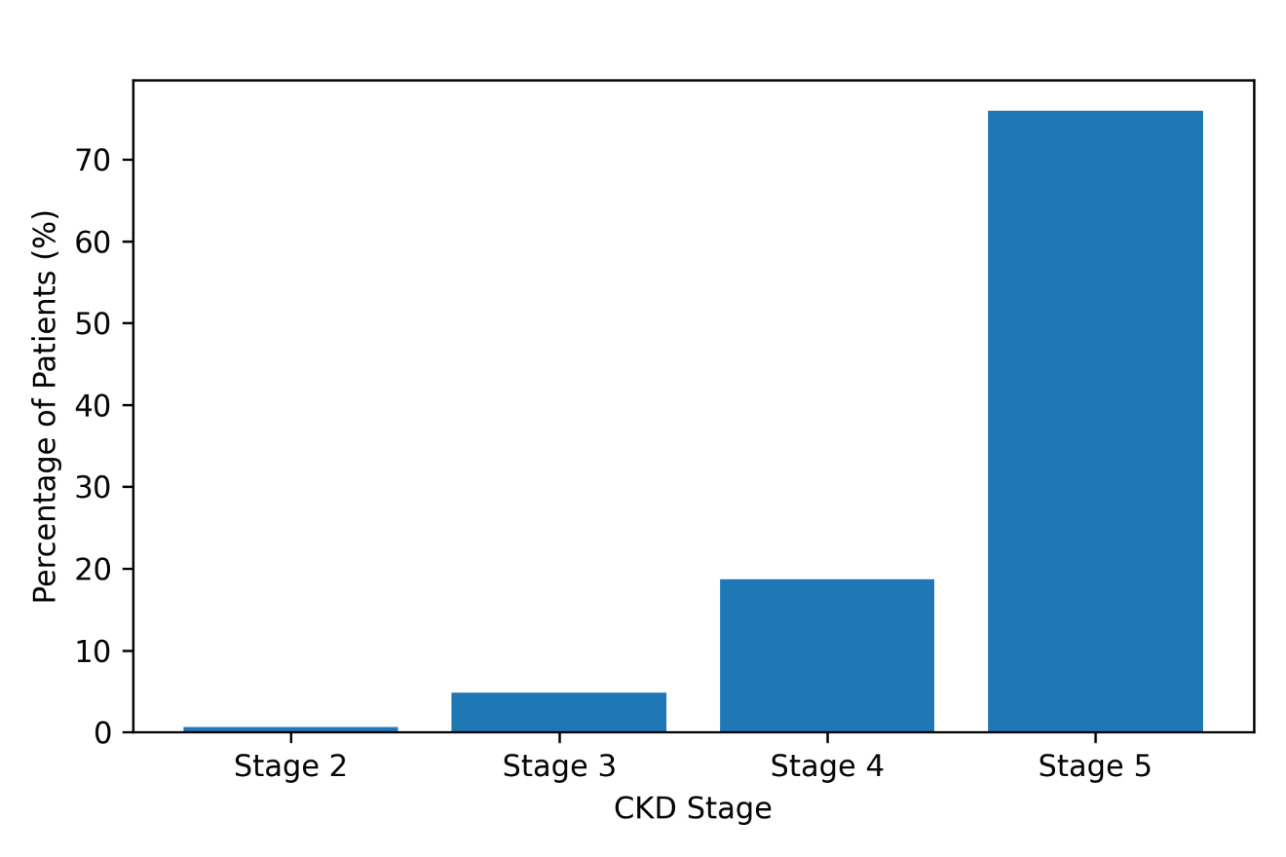
Figure 1
Distribution of Patients Across CKD Stages. Distribution of Patients Across CKD Stages. Most patients belonged to Stage 5 CKD (75.9%), followed by Stage 4 (18.7%), Stage 3 (4.8%), and Stage 2 (0.6%).
DISCUSSION
The present study evaluated prescribing patterns, drug utilization, and renal dose adjustment practices among patients with Chronic Kidney Disease (CKD) in a tertiary care hospital. The findings demonstrate a substantial burden of advanced-stage CKD, multiple comorbidities, and extensive polypharmacy, reflecting the complexity of pharmacotherapeutic management in this patient population.
The mean age of patients in the present study was 54.4±16.3 years, with a predominance of male patients. Similar demographic characteristics have been reported in previous studies evaluating drug utilization patterns among CKD patients (Kamath et al., 2019; Oommen et al., 2019). The predominance of male patients may be attributable to the higher prevalence and progression of CKD among men, as reported in earlier epidemiological investigations (Chang et al., 2016).
Hypertension and diabetes mellitus were identified as the most common comorbidities in the study population. These findings are consistent with global evidence identifying hypertension and diabetes as major contributors to CKD development and progression (Bikbov et al., 2020). The high prevalence of these comorbid conditions emphasizes the need for comprehensive disease management strategies aimed at slowing disease progression and reducing cardiovascular risk.
A notable finding of this study was that the majority of patients were classified as Stage 5 CKD. This observation suggests delayed presentation and referral of patients to specialized nephrology services, a pattern that has been reported in several developing healthcare settings. The predominance of advanced-stage disease may also explain the high burden of pharmacotherapy observed in the present study. recommendations.
The average number of medications prescribed per patient was 12, indicating substantial polypharmacy. This value is higher than those reported by Kamath et al. (2019) and Oommen et al. (2019), who documented lower medication burdens among CKD patients. The increased prevalence of polypharmacy observed in the present study may be explained by the high proportion of Stage 5 CKD patients undergoing maintenance haemodialysis, who typically require multiple medications for the management of renal complications, cardiovascular diseases, anaemia, electrolyte imbalances, and concurrent infections. Polypharmacy, while often unavoidable in advanced CKD, increases the risk of drug-drug interactions, adverse drug reactions, medication errors, and poor adherence.
Drug utilization analysis demonstrated that medications affecting the alimentary tract and metabolism constituted the largest proportion of prescriptions, followed by cardiovascular agents and blood-forming medications. This distribution reflects the multifaceted therapeutic requirements of CKD patients, including management of metabolic disturbances, cardiovascular complications, and anaemia. Similar prescribing trends have been documented in previous studies evaluating pharmacotherapy among CKD populations (Bajait et al., 2014). Renal dose adjustment was required in 15.5% of prescribed medications, highlighting the ongoing challenge of dose individualization in patients with impaired renal function. Appropriate dose adjustment is essential to prevent drug accumulation, toxicity, and adverse clinical outcomes. Several commonly prescribed medications, including piperacillin-tazobactam, rosuvastatin, clonidine, ranitidine, and metoclopramide, required dosage modification based on creatinine clearance. These findings reinforce the importance of routinely assessing renal function before prescribing medications that are substantially eliminated through the kidneys (Matzke et al., 2011).
Although dose adjustment requirements were more frequently observed among patients with advanced CKD, no statistically significant association was identified between CKD stage and dose adjustment requirements (p=0.55). This finding may be attributable to the relatively small number of patients in the earlier stages of CKD, thereby limiting statistical power. Future studies involving larger and more balanced patient populations across all CKD stages may provide additional insights into this relationship.
The identification of dialyzable medications provides clinically relevant information for optimizing pharmacotherapy among patients undergoing haemodialysis. Drugs that are readily removed during dialysis may require supplemental dosing or adjustments in administration timing to maintain therapeutic efficacy. Failure to account for dialysis-related drug removal can result in subtherapeutic drug concentrations and compromised treatment outcomes (Matzke et al., 2011).
Evaluation of WHO prescribing indicators revealed that only 45.6% of medications were prescribed by generic name. Although this finding is comparable to reports from certain tertiary care settings, it remains below the ideal standards recommended for rational prescribing. Increased use of generic prescribing may improve treatment affordability and accessibility, particularly in resource-limited healthcare environments. Conversely, adherence to the Essential Medicines List was relatively high, suggesting that prescribing practices were generally aligned with evidence-based recommendations in such populations
).
The findings of the present study further highlight the valuable role of clinical pharmacists in CKD management. Previous studies have demonstrated that pharmacist-led interventions can significantly improve medication safety, optimize renal dose adjustment, and reduce medication-related errors (Hassan et al., 2009; Salgado et al., 2012). Integration of clinical pharmacists into multidisciplinary nephrology teams may facilitate routine medication review, early identification of prescribing errors, and improved patient outcomes.
The present study has several limitations. It was conducted in a single tertiary care centre with a relatively limited sample size, which may affect the generalizability of the findings. Furthermore, the predominance of Stage 5 CKD patients limits extrapolation of the results to patients with earlier stages of disease. The study evaluated the requirement for renal dose adjustment based on standard recommendations but did not assess prescriber adherence to these recommendations. Additionally, important clinical outcomes such as adverse drug reactions, hospitalization rates, mortality, and medication adherence were not evaluated. Future multicentre studies incorporating larger sample sizes and outcome-based assessments are warranted to validate and extend these findings.
Table 4 WHO Prescribing Indicators and ATC Classification.
| Parameter | Value |
|---|---|
| Total prescriptions | 166 |
| Total drugs prescribed | 1,950 |
| Average drugs per prescription | 12 |
| Generic prescribing | 45.6% |
| Injectable drugs | 30.8% |
| Drugs from Essential Medicines List | 86.0% |
| Alimentary Tract & Metabolism | 42.5% |
| Cardiovascular System | 23.5% |
| Blood & Blood Forming Organs | 15.7% |
| Anti-infectives | 12.6% |
| Nervous System | 2.8% |
| Respiratory System | 1.3% |
| Other Classes | 1.6% |
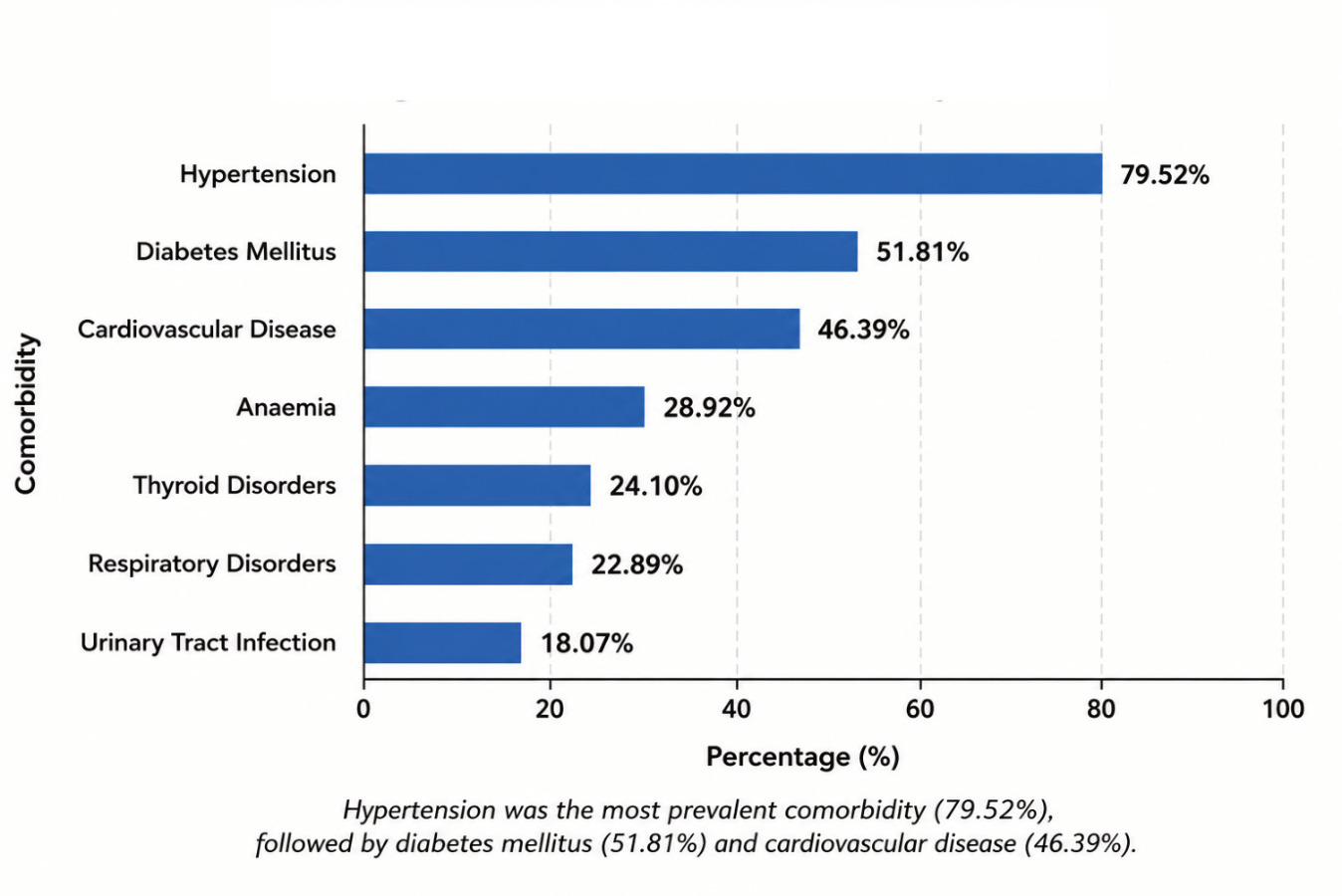
Figure 2
Prevalence of Comorbid Conditions Among Patients with Chronic Kidney Disease.
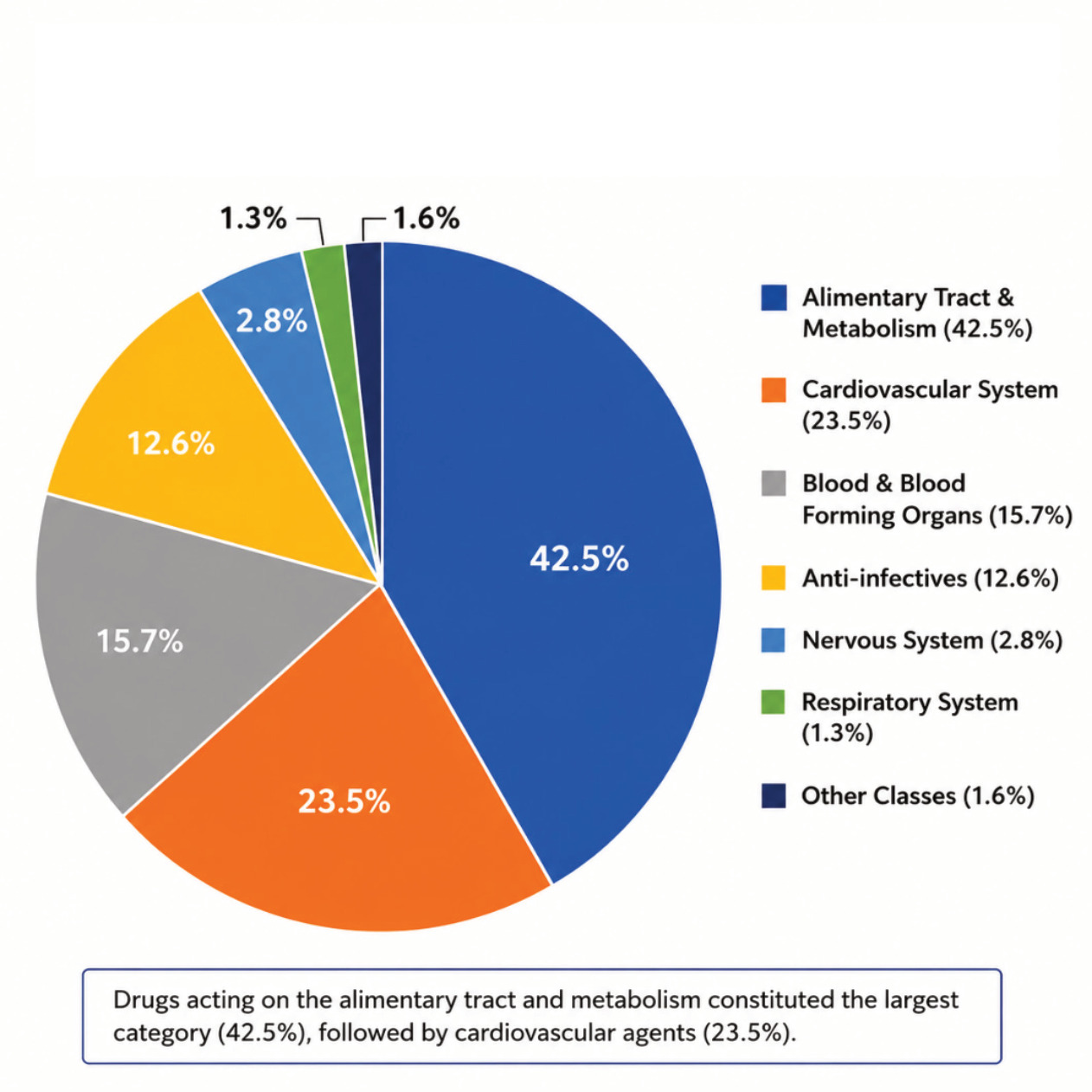
Figure 3
Distribution of Prescribed Drugs According to Anatomical Therapeutic Chemical (ATC) Classification
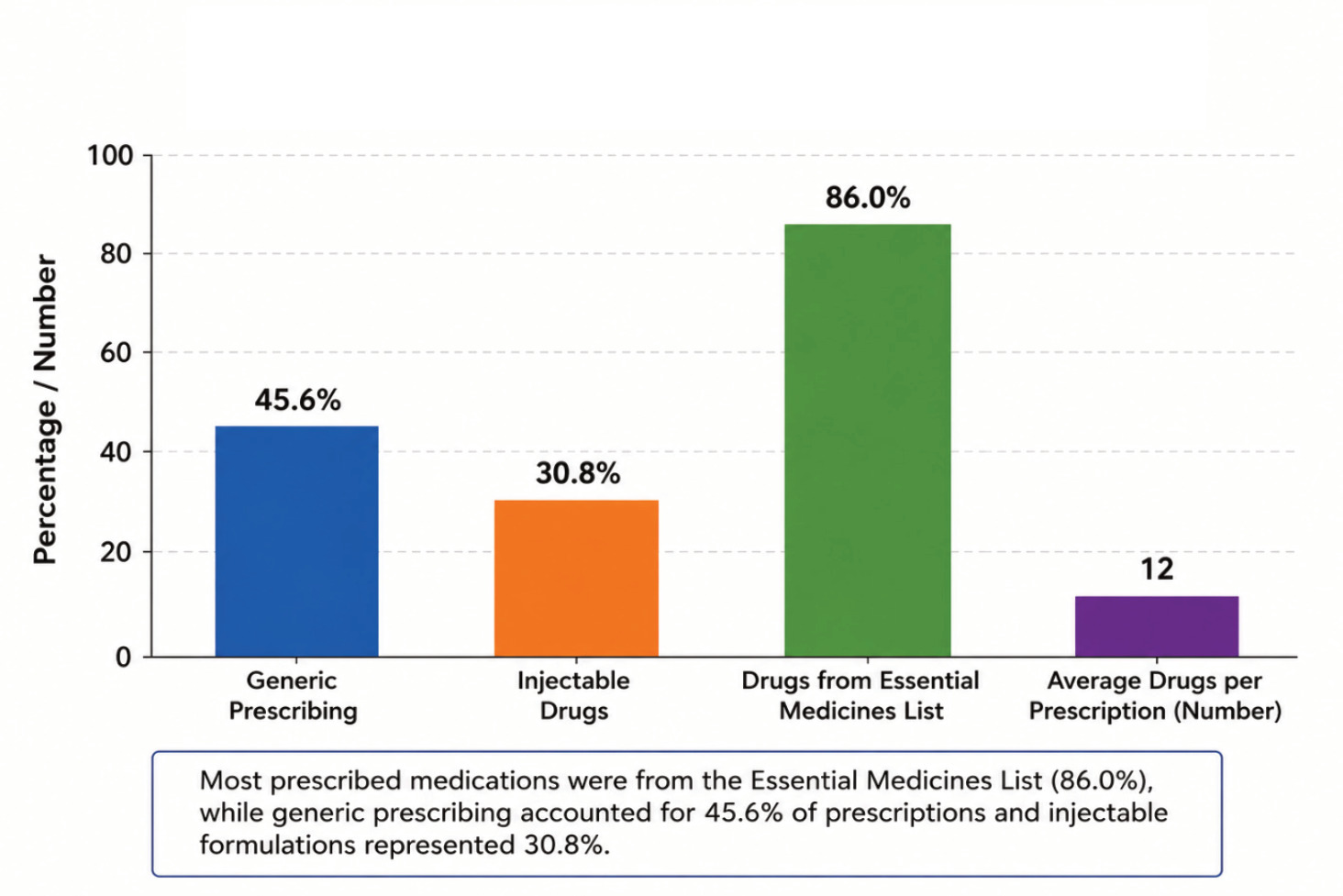
Figure 4
World Health Organization Prescribing Indicators in CKD Patients.
LIMITATIONS
This study has several limitations. It was conducted in a single tertiary care centre with a relatively limited sample size, which may affect the generalizability of the findings. The predominance of Stage 5 CKD patients limits extrapolation of the results to patients with earlier stages of disease. The study assessed the requirement for renal dose adjustment based on standard recommendations but did not evaluate prescriber compliance with these recommendations. Additionally, clinical outcomes such as adverse drug reactions, hospitalization rates, mortality, and medication adherence were not assessed. Future multicentre studies incorporating larger patient populations and outcome-based evaluations are warranted to further validate these findings.
Table S1 Dialyzability of Commonly Prescribed Drugs and Association Between CKD Stage and Dose Adjustment Common Dialyzable Drugs.
| Drug | Conventional HD | Peritoneal Dialysis |
|---|---|---|
| Amoxicillin | Yes | No |
| Aspirin | Yes | Yes |
| Cefuroxime | Yes | No |
| Atenolol | Yes | No |
| Metoprolol | Yes | No |
| Piperacillin | Yes | No |
| Tazobactam | Yes | No |
| Meropenem | Yes | No |
| Fluconazole | Yes | Yes |
| Gentamicin | Yes | Yes |
CONCLUSION
The present study demonstrates a high prevalence of advanced chronic kidney disease, substantial comorbidity burden, and extensive polypharmacy among patients receiving care in a tertiary care setting. Although adherence to the Essential Medicines List was satisfactory, generic prescribing remained below optimal levels. A considerable proportion of medications required renal dose adjustment, highlighting the need for individualized pharmacotherapy in routine clinical practice.
The findings emphasize the importance of systematic prescription review, rational prescribing practices, and integration of clinical pharmacist-led interventions to optimize medication therapy in Supplementary Table 1: Dialyzability of Commonly Prescribed Drugs and Association Between CKD Stage and Dose Adjustment Common Dialyzable Drugs. CKD patients. Strengthening renal dose adjustment practices and implementing evidence-based prescribing strategies may reduce drug-related toxicity and improve therapeutic outcomes. Furthermore, integration of renal dosing protocols and clinical decision-support systems into routine healthcare practice may enhance medication safety and promote rational drug use in this vulnerable population.
Abbreviations
CKD: Chronic Kidney Disease
eGFR: Estimated Glomerular Filtration Rate
CrCl: Creatinine Clearance
WHO: World Health Organization
ATC: Anatomical Therapeutic Chemical
KDIGO: Kidney Disease: Improving Global Outcomes
CKD-EPI: Chronic Kidney Disease Epidemiology Collaboration
SD: Standard Deviation
UTI: Urinary Tract Infection
CCB: Calcium Channel Blocker
ASA: Acetylsalicylic Acid
OD: Once Daily
BD: Twice Daily
TID: Three Times Daily
IV: Intravenous
HD: Haemodialysis.
Acknowledgments
The authors express their sincere gratitude to the Department of Pharmacy Practice, Karnataka College of Pharmacy, Bengaluru, and Bangalore Baptist Hospital for providing the necessary support and facilities to conduct this study. The authors also acknowledge the healthcare professionals who facilitated data collection and contributed to the successful completion of the research.
Author Contributions
Darshan TM: Conceptualization, study design, data collection, data analysis, literature review, manuscript drafting, and manuscript revision. Dr. Banjara Raju Prabhudev: Study supervision, methodology development, clinical guidance, critical review of the manuscript, and final approval of the manuscript. Dr. Balakeshwa Ramaiah: Research supervision, study design, interpretation of findings, manuscript review, and final approval of the manuscript. All authors read and approved the final manuscript.
Conflict of Interest
The authors declare that there is no conflict of interest.
Ethics Statement
The study protocol was reviewed and approved by the Institutional Ethics Committee. The study was conducted in accordance with the ethical principles outlined in the Declaration of Helsinki and institutional guidelines governing observational research. Patient confidentiality and anonymity were strictly maintained throughout the study
References
Ahlawat, R., D'Cruz, S.. (2016). Drug utilization pattern in chronic kidney disease patients at a tertiary care public teaching hospital. Journal of Pharmacy Care & Health Systems, 3(1), 149. https://doi.org/10.4172/2376-0419.1000149
Andrews, M. A., Babu, S., Varghese, E. J., Adnan, M., Yadav, S.. (2022). A study on prescribing pattern of drugs in chronic kidney disease at a tertiary care hospital. International Journal of Pharmacy Research and Applications, 7(5), 278-285. https://doi.org/10.35629/7781-0705278285
Bajait, C. S., Pimpalkhute, S. A., Sontakke, S. D., Jaiswal, K. M., Dawri, A. V.. (2014). Prescribing pattern of medicines in chronic kidney disease with emphasis on phosphate binders. Indian Journal of Pharmacology, 46(1), 35-39. https://doi.org/10.4103/0253-7613.125163
Bikbov, B., Purcell, C. A., Levey, A. S., et al.. (2020). Global, regional, and national burden of chronic kidney disease, 1990-2017: A systematic analysis for the Global Burden of Disease Study 2017. The Lancet, 395(10225), 709-733. https://doi.org/10.1016/S0140-6736(20)30045-3
Chang, P. Y., Chien, L. N., Lin, Y. F., Wu, M. S., Chiu, W. T., Chiou, H. Y.. (2016). Risk factors of gender for renal progression in patients with early chronic kidney disease. Medicine, 95(30), e4203. https://doi.org/10.1097/MD.0000000000004203
Hassan, Y., Al-Ramahi, R. J., Aziz, N. A., Ghazali, R.. (2009). Impact of a clinical pharmacist on drug dosing adjustment in patients with renal impairment in a hospital setting. The Annals of Pharmacotherapy, 43(10), 1591-1598. https://doi.org/10.1345/aph.1M113
Kamath, L., Hegde, G. N., Shastry, A. H.. (2019). A study of drug utilization pattern in patients with chronic kidney disease at a tertiary care hospital. International Journal of Basic & Clinical Pharmacology, 8(2), 170-174. https://doi.org/10.18203/2319-2003.ijbcp20190131
Kidney Disease: Improving Global Outcomes (KDIGO) CKD Work Group. (2013). KDIGO 2012 clinical practice guideline for the evaluation and management of chronic kidney disease. Kidney International Supplements, 3(1), 1-150.
Lunyera, J., Mohottige, D., von Isenburg, M., Jeuland, M., Patel, U. D., Stanifer, J. W.. (2016). CKD of uncertain etiology: A systematic review. Clinical Journal of the American Society of Nephrology, 11(3), 379-385. https://doi.org/10.2215/CJN.07500715
Matzke, G. R., Aronoff, G. R., Atkinson, A. J., Jr, Bennett, W. M., Decker, B. S., Eckardt, K., Golper, T., Grabe, D. W., Kasiske, B., Keller, F., Kielstein, J. T., Mehta, R., Mueller, B. A., Pasko, D. A., Schaefer, F., Sica, D. A., Inker, L. A., Umans, J. G., Murray, P.. (2011). Drug dosing consideration in patients with acute and chronic kidney disease: A clinical update from Kidney Disease: Improving Global Outcomes (KDIGO). Kidney International, 80(11), 1122-1137. https://doi.org/10.1038/ki.2011.322
Oommen, J. M., Nerurkar, P., Sajith, M., Golzy, M., Yohannan, S., Devi, S.. (2019). Prescription pattern of chronic kidney disease patients undergoing haemodialysis in tertiary and private hospitals. Journal of Young Pharmacists, 11(2), 202-206. https://doi.org/10.5530/jyp.2019.11.41
Salgado, T. M., Moles, R., Benrimoj, S. I., Fernandez-Llimos, F.. (2012). Exploring the role of pharmacists in chronic kidney disease: A systematic review. International Journal of Clinical Pharmacy, 34(4), 606-613. https://doi.org/10.1007/s11096-012-9662-7
Schmidt, I. M., Hübner, S., Nadal, J., Titze, S., Schmid, M., Bärthlein, B., et al.. (2019). Patterns of medication use and the burden of polypharmacy in patients with chronic kidney disease: The German Chronic Kidney Disease study. Clinical Kidney Journal, 12(5), 663-672. https://doi.org/10.1093/ckj/sfz046
Tzanakaki, E., Boudouri, V., Stavropoulou, A., Vasilopoulou, C., Kaba, E., Zyga, S.. (2014). Causes and complications of chronic kidney disease in patients on dialysis. Health Science Journal, 8(3), 343-349.
Vadakedath, S., Kandi, V.. (2017). Dialysis: A review of the mechanisms underlying complications in the management of chronic renal failure. Cureus, 9(8), e1603. https://doi.org/10.7759/cureus.1603