

Background: Pharmacovigilance plays a vital role in ensuring medication safety through the detection, assessment, understanding, and prevention of Adverse Drug Reactions (ADRs), with community pharmacists serving as key contributors to ADR reporting.
Objectives: To assess the Knowledge, Attitude, and Practice (KAP) regarding ADR reporting among community pharmacists.
Materials and Methods: A prospective observational study was conducted among 75 community pharmacists over a period of 2 months using a validated KAP questionnaire comprising 15 questions (6 knowledge, 4 attitude, and 5 practice questions).
Results: The study found that 61% of participants had a positive attitude toward ADR reporting, while only 50% had reported at least one ADR. Most pharmacists demonstrated satisfactory knowledge regarding pharmacovigilance and ADR reporting; however, gaps in reporting practices and awareness of the importance of spontaneous reporting were identified.
Conclusion: Although community pharmacists exhibited adequate knowledge and a favorable attitude toward ADR reporting, their reporting practices remained suboptimal, highlighting the need for regular educational interventions and training programs to strengthen pharmacovigilance activities and improve ADR reporting rates.
Abstract
Share on Mobile
Scan to access on mobile
Keywords
Adverse Drug Reaction Reporting
Adverse Drug Reactions
Community Pharmacists
KAP
Pharmacovigilance
INTRODUCTION
Pharmacovigilance in India was found in the late 90's. After which India collaborated with the World Health Organization for ADR monitoring program. The need for pharmacovigilance is to quantify and recognize the risk factor, to find adverse drug reaction, drug-drug interactions, long term efficacy, humanitarian concern (Upadhyaya et al., 2015).
The aim of pharmacovigilance is to improve patient care and safety in relation to the use of medicines and all medical and paramedical interventions; to the assess the benefit, harm, effectiveness and risk of medicines, encouraging safe, rational and effective use of drugs; promote better understanding, education and clinical training in pharmacovigilance and its effective communication to the public (Mahmoud et al., 2014).
Adverse drug reaction is a significant public health challenge worldwide contributing to patient morbidity, mortality, and healthcare expenditure. A study conducted across two general hospitals in the United Kingdom, involving 18,820 admissions, reported that approximately 6.5% of all hospital admissions were directly attributable to an ADR, with most of these cases being potentially preventable (Pirmohamed et al., 2004). Meta-analyses of hospitalized patients have estimated that serious ADRs occur in approximately 6.7% of inpatients, and among which fatal ADRs account for up to 0.32% of all admissions (Lazarou et al., 1998). Latest findings show that up to 16.5% of medical admissions are either caused or contributed to by an ADR, and about 18.4% of admitted patients develop an ADR during their hospital stay (Osanlou et al., 2022). The economic consequences of ADR related admissions account for more than hundreds of millions annually, leading to an increased hospital stay of nearly four additional days per patient (Pirmohamed et al., 2004).
Numerous studies conducted have found that a higher under-reporting rate across different countries, indicating that only a smaller fraction of ADRs are reported and submitted to the pharmacovigilance authorities (Hazell et al., 2006). In India specifically, the reporting rate has been estimated at less than 1% against the World Health Organization's recommended benchmark, and a nationwide audit of the Pharmacovigilance Programme of India (PvPI) ADR Monitoring Centres revealed that only 56.45% of the ADR reporting centres were functionally active, with a considerable number submitting no reports at all during the audit period (Tandon et al., 2015).
The Pharmacovigilance Programme of India (PvPI) was formally launched on 14 July 2010 under the Indian Pharmacopoeia Commission, Ghaziabad, with the Central Drugs Standard Control Organization serving as the primary regulatory authority. Initially, 22 ADR Monitoring Centres were established, which have expanded substantially to over 500 centres distributed across the country. India joined the WHO International Drug Monitoring Programme in 1997, and its contribution to the global Individual Case Safety Report database, VigiBase, has grown progressively over the years, accounting for approximately 2 to 3% of all reports submitted globally. Despite this, India's reporting rate remains approximately 40 per million population, considerably below the WHO-recommended target, highlighting a significant gap between the number of ADRs occurring in the country and those that are reported to the regulatory systems (Kalaiselvan et al., 2019).
The International Pharmaceutical Federation formally recognizes pharmacists as key professionals for effective pharmacovigilance programmes, and data from the Netherlands demonstrate that pharmacists contribute approximately 40% of all spontaneous ADR reports received by the national pharmacovigilance centre (van Grootheest et al., 2005).
Community pharmacists were selected for this study because they serve as the most accessible healthcare intermediaries, bridging the gap between clinical prescriptions and patient outcomes through frequent, trust-based interactions that allow for the direct observation of how theoretical knowledge translates into real-world medication practices. This study aims to assess the knowledge, attitude and practice of ADR reporting among community pharmacists using validated Knowledge-Attitude-Practice (KAP) questionnaire having 15 questions in total. The primary objective of this study was to determine the pharmacist's participation in the reporting of ADR and to identify the barriers that resist pharmacist to report ADR. The secondary objective was to discover the reasons for under reporting of ADRs and to establish steps to uplift the rate of reporting ADRs.
MATERIALS AND METHODS
This assessment was a prospective observational study carried out among 75 community pharmacists over a period of 2 months. The community pharmacists were assessed from 4 areas: Gerugambakkam, Kovur, Kolapakkam and Porur. The study was approved by Institutional ethics committee Dr. Kamakshi Memorial Hospital, Pallikaranai (Ref: IEC-CS 23A/ BC-03/18 Nov 2023) Pharmacist with minimum qualification of diploma in pharmacy and with minimum knowledge about pharmacology were included in the study. The study excluded pharmacy technicians and assistants who didn't have the required qualification. Written informed consent was obtained from the community pharmacists explaining the study procedure to their satisfaction.
The baseline demographic details and the Knowledge-Attitude-Practices (KAP) of community pharmacists towards drug safety were evaluated using a validated KAP questionnaire which was modified based on the pilot study (Abdel-Latif et al., 2015). The questionnaire was handed out to the pharmacist and appropriate time was provided to collect the response.
Assessment of knowledge
The Knowledge-based questionnaire was designed to assess the participants' knowledge of ADRs and their reporting. It consisted of 6 questions with options to choose from.
Assessment of attitude
The Attitude questionnaire was designed to assess the participants' attitudes toward ADR reporting. It consisted of 4 questions with yes/no responses. Each correct or positive response were given a score of 1 whereas a negative, incorrect or missed response was given a score of 0.
Assessment of practice
The practice questionnaire was designed to assess the participants' practice of reporting an ADR. It consisted of 5 questions with yes/no responses. Each correct or positive response were given a score of 1 whereas the negative, incorrect or missed responses was given a score of 0.
Statistical analysis
The data was analyzed using IBM SPSS Statistics for Windows, Version 21.0 (Armonk, NY: IBM Corp.). The baseline demographics and the responses of the participants regarding ADR was analyzed using descriptive statistics and the results were presented using frequency and percentages.
RESULTS
The study included 75 participants with a mean age of 28.43 ± 8.88 years, indicating a relatively young population with moderate variability. The mean years of experience was 6.97 ± 7.67 years, reflecting a wide dispersion ranging from freshers to highly experienced individuals. In terms of educational qualification, 55 (73%) held a Diploma in Pharmacy, while 20 (27%) held a bachelor's in pharmacy, suggesting a predominance of mid-level professional training.
The demographic details of the participants, including their age, gender, education, occupation, location of the pharmacy is depicted in Table 1.
Knowledge questionnaire
The knowledge-based questionnaire consisted of 6 questions, and each were given with appropriate options to choose from. The questions covered the definition of adverse drug reaction, common causes of ADRs, the types ADRs that should be reported, the centers for ADR reporting in India, where to report and preferred methods to report an ADR. All participants had a fair level of knowledge regarding what an ADR is, the common causes of ADRs and the types of ADRs to be reported. About 31 (42%) participants were aware of various centers for ADR reporting in India and 40 (53%) participants had knowledge of ADR monitoring centers for reporting ADRs. About 50 (66%) of the participants chose Email/Website as the most preferred way to report ADR. The response to the questions KQ1 and KQ2 is summarized in Table 2.
Attitude questionnaire
The attitude-based questionnaire consisted of 4 questions that were provided with yes/no/don't know options. An optimistic attitude towards ADR reporting was reflected by many participants. In Figure 1, the answers for the attitude questionnaire were summarized.
Practice questionnaire
The practice-based questionnaire consisted of 5 questions to assess the practice of ADR reporting among community pharmacists. Each question was provided with yes/no options. About 47 (63%) of the participants had never been trained on how to report ADR and had no knowledge on how to identify an ADR in patients, 43 (57%) participants had some knowledge about the ADR reporting form. Figure 2 depicts the distribution of response chosen by the community pharmacists.
There were numerous factors responsible for under reporting of adverse drug reaction among community pharmacists. The factors affecting reporting of ADR among the study population is represented in Figure 3.
The association between demographic characteristics and Knowledge, Attitude, and Practice (KAP) scores was assessed using Pearson's correlation and one-way ANOVA. No statistically significant association was observed between age and knowledge (p=0.839), attitude (p=0.639), or practice (p=0.913) scores. Similarly, years of experience did not show a statistically significant association with knowledge (p=0.976), attitude (p=0.929), or practice (p=0.550) scores. Qualification was also not significantly associated with knowledge (p=0.126), attitude (p=0.096), or practice (p=0.420) scores (all p>0.05). However, occupation status demonstrated a statistically significant association with years of experience (p=0.001). In addition, age was significantly associated with years of experience (p<0.001), indicating that participants of higher age generally had greater professional experience. Overall, the findings suggest that while demographic factors such as age, qualification, and years of experience did not significantly influence the KAP scores, occupation status was significantly related to professional experience.
DISCUSSION
The study was based on a sample with good urban and rural representation and provided an understanding of the prevailing population perceptions and awareness of adverse drug reactions. The findings from this study provided baseline information to monitor and to implement targeted interventions in the future.
In the study majority held a Diploma in pharmacy which was consistent with other studies, as most participants in India were Diploma holders (Madu et al., 2017). More than 70% of the participants had a professional experience of less than 10 years, this finding was in accordance with other studies (Prakasam et al., 2012).
Many participants (48%) correctly identified the definition of ADR according to the WHO, and this finding was like other studies conducted in different parts of the world (Alsaleh et al., 2017; Christensen et al., 2011; Ganesan et al., 2017). Only 35% of the participants were aware of which ADRs to be reported, indicating lack of knowledge on ADRs reporting among the study population. In different parts of the world, similar ignorance relating to pharmacovigilance had been observed (Upadhyaya et al., 2015; Ahmad et al., 2013).
The attitude of the pharmacist was crucial for ADR reporting when finalizing major therapeutic decisions. Nearly 61% of the community pharmacists felt that reporting ADRs should be mandated, which was comparable with other studies that also found that many community pharmacists believed reporting of ADRs should be made necessary (Christensen et al., 2011; Kane et al., 2003).
Consistent with our findings, another study reported that more than half of the community pharmacists confirmed that ADR reporting would be beneficial to the patients Joubert et al., 2003).
This indicated that many of the participants show an encouraging attitude towards ADR reporting.
In our study, it was noticed that 20% of the study population reported that senior pharmacists did not take the time to provide ADR information in an understandable manner. This could have led to an improper way of drug use, which might not have produced the desired effect and could have resulted in other complications. Studies conducted in Karnataka showed that 33% of the study population reported that the pharmacist did not take the time to provide ADR information in an understandable manner, mainly due to workload and lack of time (Ganesan et al., 2017).
Our study results indicated that only 50% of the community pharmacist reported ADRs in their practice. The poor practice of reporting ADR was due to lack of knowledge, lack of training, and ignorance due to workload. This highlighted the need for practical training and clinical education to enhance the practice of ADR reporting among community pharmacists (Madu et al., 2017; Prakasam et al., 2012).
Despite having a positive attitude towards pharmacovigilance, pharmacists lacked practical experience in reporting ADRs. Enhancing pharmacist involvement in the reporting process is crucial for improving patient care (Bawazir et al., 2006; Usifoh et al., 2018; Opadeyi et al., 2019).
From the study, certain barriers to ADR reporting were identified and classified into health system-based barriers and individual based barriers. Health system-based barriers included lack of access to patient records, fear of litigation, lack of incentives. Individual based barriers included lack of interest, lack of time, lack of understanding. All these factors led to under reporting of ADRs (Almaghaslah et al., 2022). It is necessary to overcome all these barriers through proper education, understanding, participation and mandatory implementation.
At the end of the study, all the participants were educated and given a pamphlet on adverse drug reactions and reporting ADRs. However, due to the limited duration of the study, post-interventional assessment could not be conducted, which was a major limitation.
Table 1 Demographic details.
| Variable | Category | Frequency | Percentage |
|---|---|---|---|
| Age | 18-25 | 42 | 56 |
| 26-35 | 21 | 28 | |
| 36-45 | 6 | 8 | |
| 46-60 | 6 | 8 | |
| Gender | Male | 51 | 64 |
| Female | 24 | 36 | |
| Education | D.Pharm | 55 | 73 |
| B.Pharm | 20 | 27 | |
| Occupation | Pharmacist | 67 | 89 |
| Senior Pharmacist | 1 | 1 | |
| Beginner Pharmacist | 7 | 10 | |
| Experience | 0-10 years | 62 | 83 |
| 11-20 years | 8 | 11 | |
| 21-30 years | 4 | 5 | |
| 31-40 years | 1 | 1 |
Table 2 Summary of Knowledge Questionnaire 1 (KQ1) and Knowledge Questionnaire 2 (KQ2).
| Q1 | What is an adverse drug reaction? | ||
|---|---|---|---|
| Options | Answers | Frequency | Percentage |
| a. | Any noxious or undesired effect of drug | 36 | 48 |
| b. | Adverse health outcomes | 13 | 17 |
| c. | Harm resulting from the use | 8 | 11 |
| d. | Other health problems | 7 | 9 |
| e. | Harm caused by drug overdose | 8 | 11 |
| f. | Adverse outcomes associated with drug | 3 | 4 |
| Q2 | What are the common causes of ADRs? | ||
| Options | Answers | Frequency | Percentage |
| a. | Allergic reactions | 15 | 20 |
| b. | Drug interaction | 37 | 49 |
| c. | Undesirable effects | 13 | 18 |
| d. | Unsafe drug for the patient | 4 | 5 |
| e. | Incorrect administration | 3 | 4 |
| f. | Dosage increased or decreased too fast | 3 | 4 |
| Q1-Questionnaire 1; Q2-Questionnaire 2; ADRs- Adverse Drug Reactions. | |||
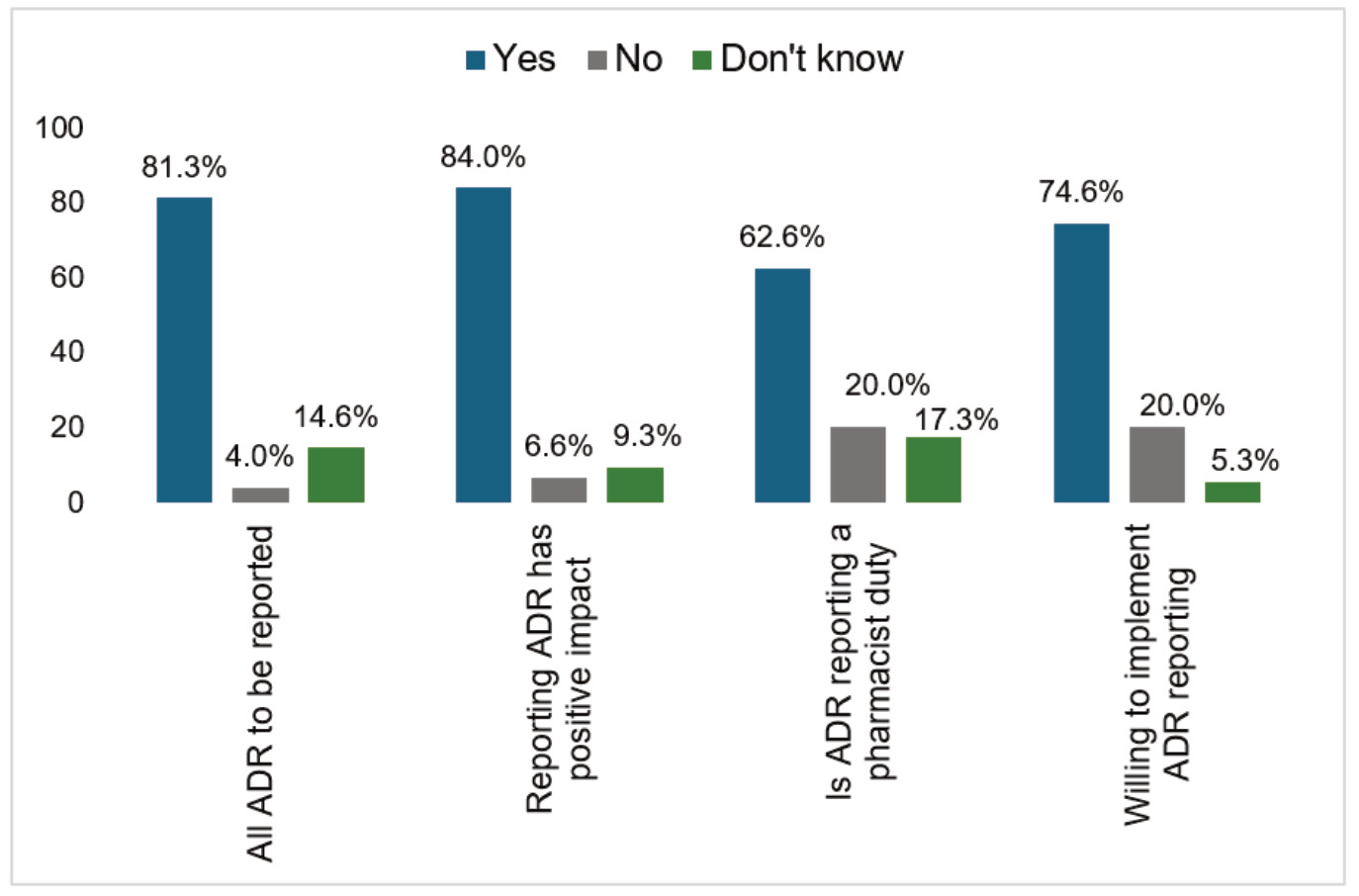
Figure 1
Summary of attitude questionnaire.
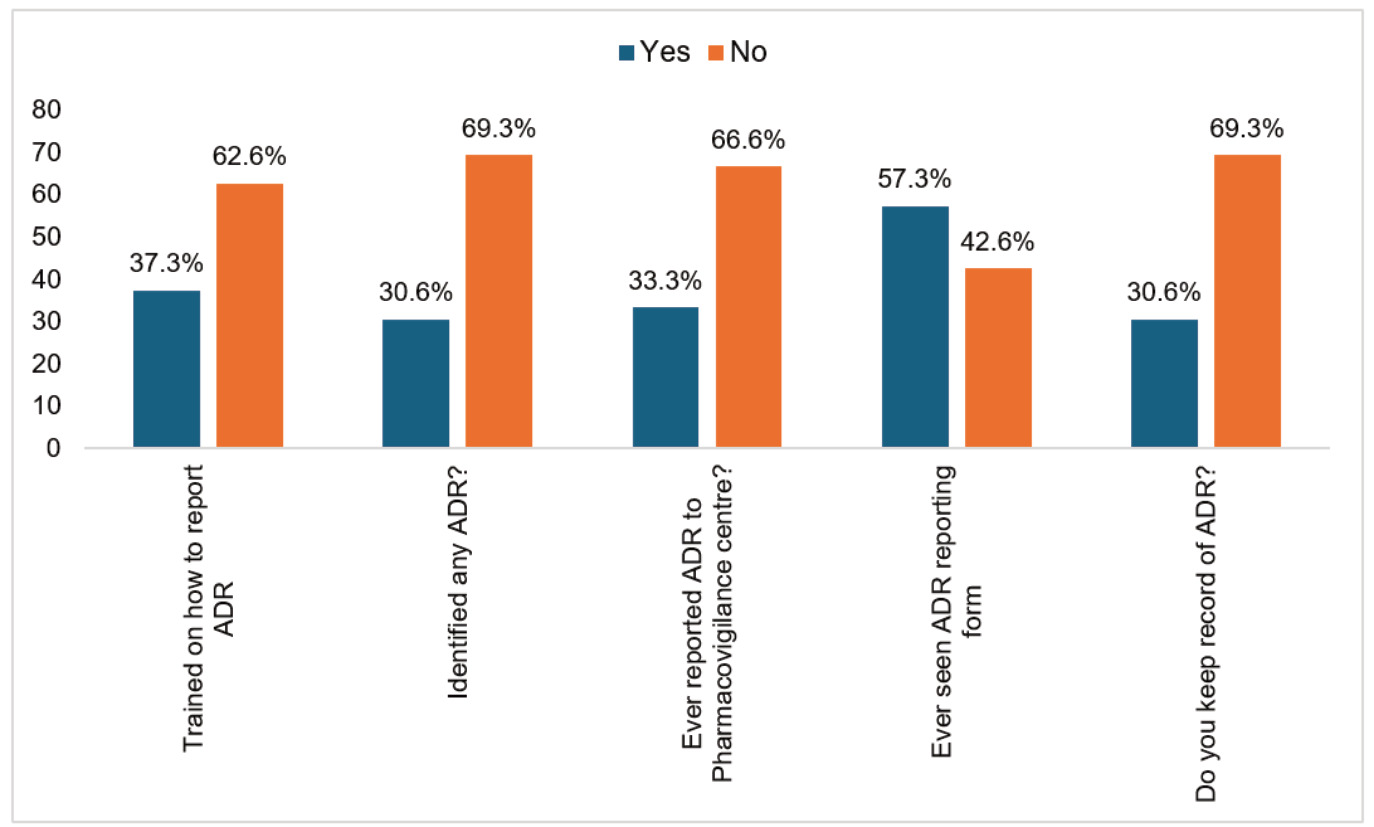
Figure 2
Summary of practice questionnaire.
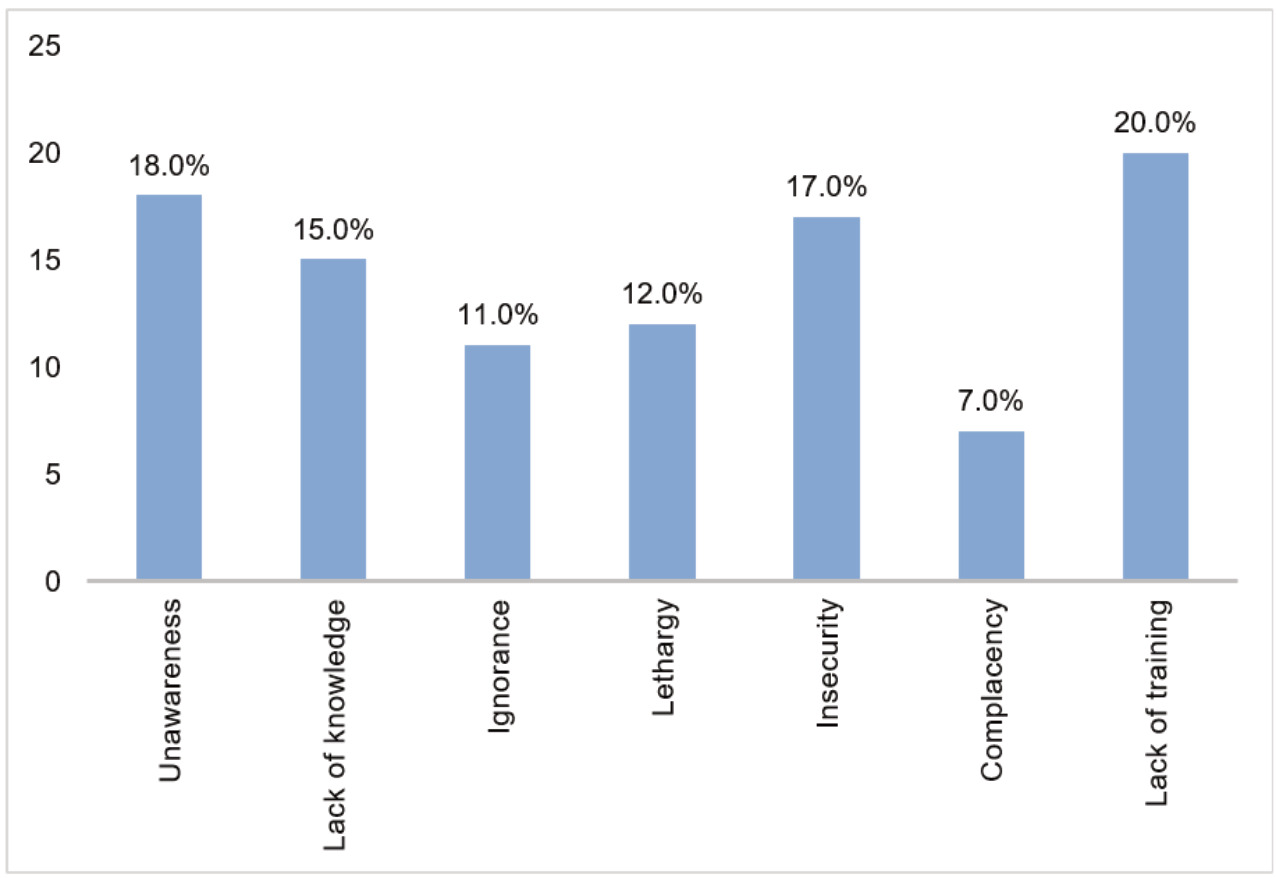
Figure 3
Factors affecting ADR reporting.
CONCLUSION
From our findings, it was concluded that many of the community pharmacists had a moderate level of knowledge regarding Adverse Drug Reactions, which contributed to the global concern about Adverse Drug Reactions. This survey laid a foundation for a better understanding of adverse drug reactions, which would help the policy makers design and tailor effective multifaceted interventions to improve adverse drug reaction reporting.
Hence, the study suggests the need for continuing public educational programs not only to improve knowledge but also to foster positive attitude and promote the practice of ADR reporting among community pharmacists.
CONTRIBUTION DETAILS
S.Ramalakshmi- Conceptualization, supervision, Reviewing
Suriya Prakash M- Data collection, data analysis, report preparation
Thamizhselvan R - Data collection, data analysis, report preparation
Mohammed Arshad Z- Data collection, data analysis, report preparationVarshnee E-Manuscript preparation
Akshaya G - Manuscript Writing
Abbreviations
ADR: Adverse Drug Reaction
ANOVA: Analysis of Variance
KAP: Knowledge, Attitude, and Practice
KQ1: Knowledge Questionnaire 1
KQ2: Knowledge Questionnaire 2
WHO: World Health Organization.
Acknowledgments
We would like to express our sincere gratitude to our Principal Dr.A.Meena and Dean of Academics Dr.A.Shanthy for her constant support, guidance and for providing the necessary facilities to successfully complete the study.
Conflict of Interest
The authors declare that there is no conflict of interest.
References
Abdel-Latif, M. M. M., Abdel-Wahab, B. A.. (2015). Knowledge and awareness of adverse drug reactions and pharmacovigilance practices among healthcare professionals in Al-Madinah Al-Munawwarah, Kingdom of Saudi Arabia.Saudi Pharmaceutical Journal, 23(2), 154-161. Saudi Pharmaceutical Journal. https://doi.org/10.1016/j.jsps.2014.07.005
Ahmad, A., Patel, I., Balkrishnan, R., Mohanta, G., Manna, P.. (2013). An evaluation of knowledge, attitude and practice of Indian pharmacists towards adverse drug reaction reporting: A pilot study.Perspectives in Clinical Research, 4(4), 204-210. Perspectives in Clinical Research. https://doi.org/10.4103/2229-3485.120168
Almaghaslah, D., Alsayari, A., Almaghaslah, S., Alsanna, H.. (2022). Patients' satisfaction with e-prescribing (Wasfaty) in Saudi Arabia: A survey of country-level implementation.Healthcare, 10(5), 806. Healthcare, 10. https://doi.org/10.3390/healthcare10050806
Alsaleh, F. M., Alzaid, S. W., Abahussain, E. A., Bayoud, T., Lemay, J.. (2017). Knowledge, attitude and practices of pharmacovigilance and adverse drug reaction reporting among pharmacists working in secondary and tertiary governmental hospitals in Kuwait.Saudi Pharmaceutical Journal, 25(6), 830-837.https://. Saudi Pharmaceutical Journal. https://doi.org/10.1016/j.jsps.2016.12.004
Bawazir, S. A.. (2006). Attitude of community pharmacists in Saudi Arabia towards adverse drug reaction reporting.Saudi Pharmaceutical Journal, 14(1), 75-83. Saudi Pharmaceutical Journal. https://www.researchgate.net/publication/289350007_Attitude_of_community_pharmacists_in_Saudi_Arabia_towards_adverse_drug_reaction_reporting
Christensen, S. T., Søndergaard, B., Honoré, P. H., Bjerrum, O. J.. (2011). Pharmacy student driven detection of adverse drug reactions in the community pharmacy setting.Pharmacoepidemiology and Drug Safety, 20(4), 399-404.https://. Pharmacoepidemiology and Drug Safety. https://doi.org/10.1002/pds.2069
Ganesan, S., Sandhiya, S., Reddy, K., Adithan, C.. (2017). The impact of the educational intervention on knowledge, attitude, and practice of pharmacovigilance toward adverse drug reactions reporting among health-care professionals in a tertiary care hospital in South India.Journal of Natural Science, Biology and Medicine, 8(2), 203-209. Journal of Natural Science, Biology and Medicine. https://doi.org/10.4103/0976-9668.210014
Hazell, L., Shakir, S. A. W.. (2006). Under-reporting of adverse drug reactions: A systematic review.Drug Safety, 29(5), 385-396. Drug Safety. https://doi.org/10.2165/00002018-200629050-00003
Joubert, M. C., Naidoo, P.. (2016). Knowledge, perceptions and practices of pharmacovigilance amongst community and hospital pharmacists in a selected district of North West Province, South Africa.Health SA Gesondheid, 21, 238-244.https://. Health SA Gesondheid, 21, 238-244. https://doi.org/10.1016/j.hsag.2016.04.005
Kalaiselvan, V., Srivastava, S., Singh, A., Gupta, S.. (2019). Pharmacovigilance in India: Present scenario and future challenges.Drug Safety, 42(3), 339-346.https://. Drug Safety. https://doi.org/10.1007/s40264-018-0730-7
Kane, S. L., Weber, R. J., Dasta, J. F.. (2003). The impact of critical care pharmacists on enhancing patient outcomes.Intensive Care Medicine, 29(5), 691-698.https://. Intensive Care Medicine. https://doi.org/10.1007/s00134-003-1705-3
Lazarou, J., Pomeranz, B. H., Corey, P. N.. (1998). Incidence of adverse drug reactions in hospitalized patients: A meta-analysis of prospective studies.JAMA, 279(15), 1200-1205. JAMA. https://doi.org/10.1001/jama.279.15.1200
Madu, E. P., Ineta, B. L.. (2017). A study on the knowledge and barriers towards ADRs reporting among community pharmacists in Enugu and Nsukka areas, South-Eastern Nigeria.Pharmacology Therapy and Biomedical Reports, 3(1), 1-6. Pharmacology Therapy and Biomedical Reports. https://www.researchgate.net/publication/315761002_A_Study_on_the_Knowledge_and_Barriers_Towards_ADRs_Reporting_among_Community_Pharmacists_in_Enugu_and_Nsukka_are-as_South-Eastern_Nigeria
Mahmoud, M. A., et al.. (2014). Community pharmacists' knowledge, behaviours and experiences about adverse drug reaction reporting in Saudi Arabia.Saudi Pharmaceutical Journal, 22(5), 411-418. Saudi Pharmaceutical Journal. https://doi.org/10.1016/j.jsps.2013.07.005
Opadeyi, A. O., Fourrier-Réglat, A., Isah, A. O.. (2019). Educational intervention to improve the knowledge, attitude and practice of healthcare professionals regarding pharmacovigilance in South-South Nigeria.Therapeutic Advances in Drug Safety, 10, 1-12. Therapeutic Advances in Drug Safety, 10. https://doi.org/10.1177/2042098618816279
Osanlou, R., Walker, L., Hughes, D. A., Burnside, G., Pirmohamed, M.. (2022). Adverse drug reactions, multimorbidity and polypharmacy: A prospective analysis of 1 month of medical admissions.BMJ Open, 12(7), e055551.https://. BMJ Open. https://doi.org/10.1136/bmjopen-2021-055551
Pirmohamed, M., et al.. (2004). Adverse drug reactions as cause of admission to hospital: Prospective analysis of 18,820 patients.BMJ, 329(7456), 15-19.https://. BMJ. https://doi.org/10.1136/bmj.329.7456.15
Prakasam, A., Nidamanuri, A., Kumar, S.. (2012). Knowledge, perception and practice of pharmacovigilance among community pharmacists in South India.Pharmacy Practice (Internet), 10(4), 222-226. Pharmacy Practice (Internet), 10. https://doi.org/10.4321/S1886-36552012000400006
Tandon, V., Mahajan, V., Khajuria, V., Gillani, Z.. (2015). Under-reporting of adverse drug reactions: A challenge for pharmacovigilance in India.Indian Journal of Pharmacology, 47(1), 65-71. Indian Journal of Pharmacology. https://doi.org/10.4103/0253-7613.150344
Upadhyaya, H. B., Vora, M. B., Nagar, J. G., Patel, P. B.. (2015). Knowledge, attitude and practices toward pharmacovigilance and adverse drug reactions in postgraduate students of a tertiary care hospital in Gujarat.Journal of Advanced Pharmaceutical Technology & Research, 6(1), 29-34. Journal of Advanced Pharmaceutical Technology & Research. https://doi.org/10.4103/2231-4040.150369
Usifoh, S. F., Aika, I. N., Odili, V. U., Nwokoro, J. O.. (2018). Community pharmacists knowledge, behaviours and practice of adverse drug reactions reporting in Lagos State, Nigeria.Indian Journal of Pharmacy Practice, 11(1), 7-13.https://. Indian Journal of Pharmacy Practice. https://doi.org/10.5530/ijopp.11.1.3
van Grootheest, A. C., de Jong-van den Berg, L. T. W.. (2005). The role of hospital and community pharmacists in pharmacovigilance.Research in Social and Administrative Pharmacy, 1(1), 126-133.https://. The role of hospital and community pharmacists in pharmacovigilance. https://doi.org/10.1016/j.sapharm.2004.12.009